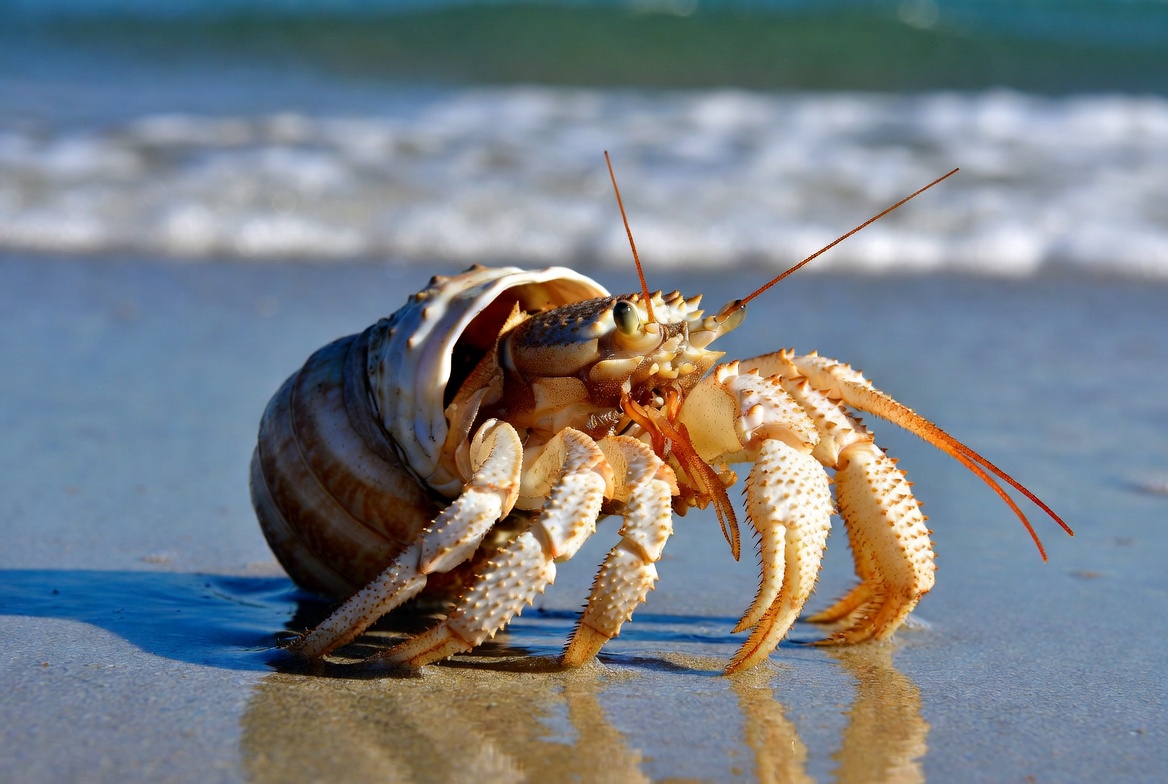
What Does a Hermit Crab Look Like Without a Shell?
Most people who own hermit crabs have never actually seen one outside its shell. And honestly, when you do see it for the first time, the answer is a little shocking. A hermit crab without its shell looks almost nothing like the cute little crab you are used to. The front half is normal – hard, crab-like, with claws and legs. But the back half? That part looks more like a soft, twisted shrimp tail than anything you would expect. Here is what is really going on under that borrowed shell.
The Short Answer
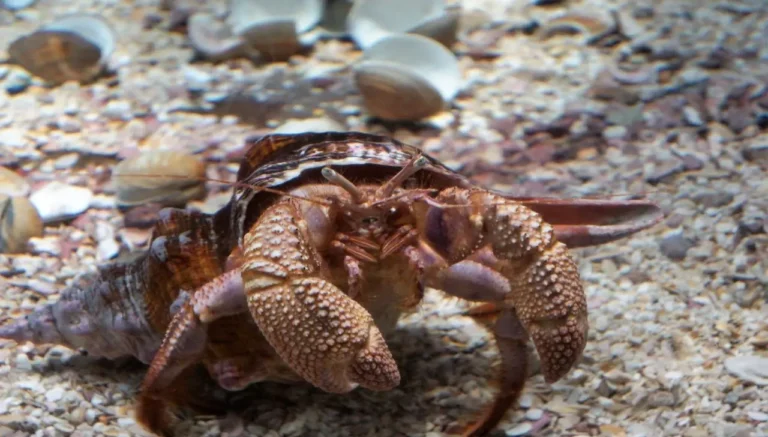
A hermit crab without its shell has two very different halves. The front half (head, claws, and legs) looks like a normal small crab with a hard outer shell. The back half is a soft, pink, curled tail that looks a lot like a shrimp. The tail twists into a spiral shape, which is why it fits perfectly inside snail shells. Without that protective shell, this soft tail is fully exposed and very easy for predators to attack.
Bonus: Why Do Hermit Crabs Need Shells?
The Front Half: What You’re Used to Seeing
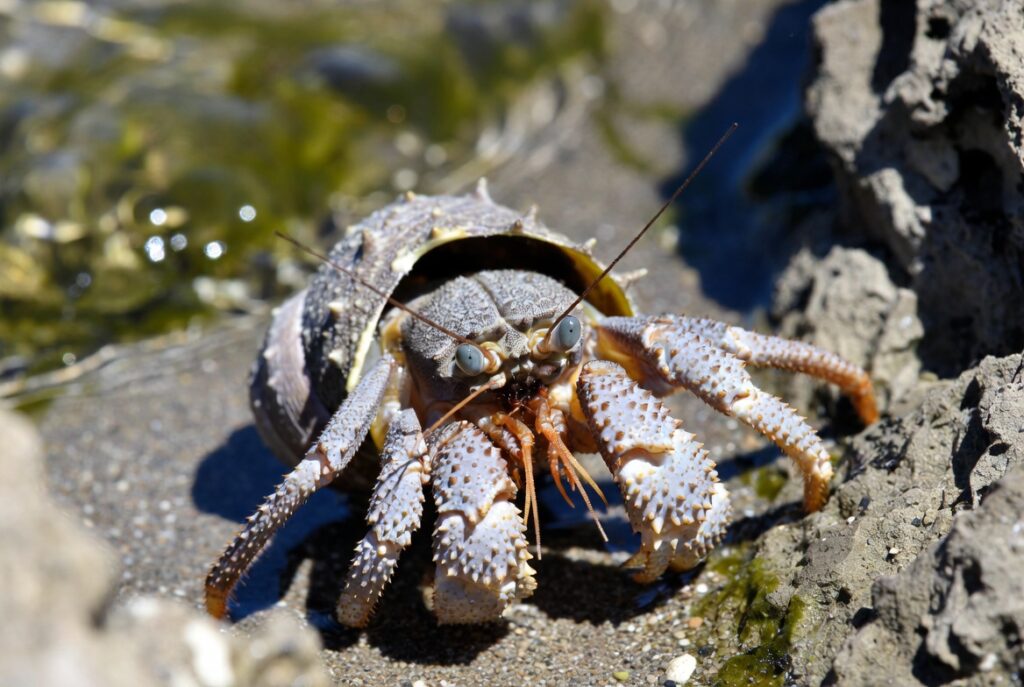
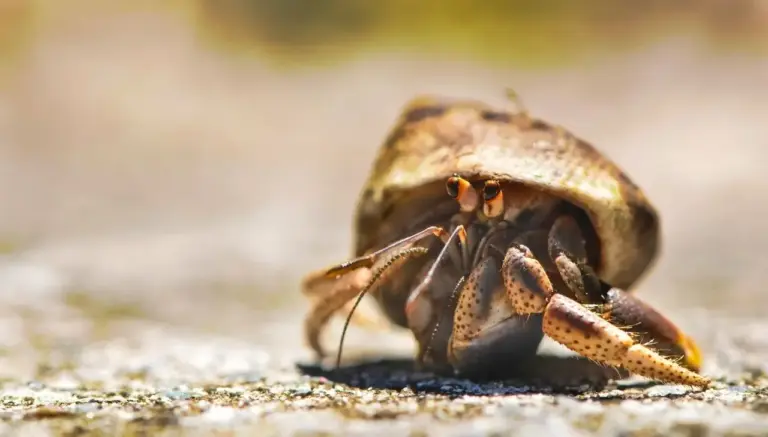
The front part of a hermit crab is the part you normally see sticking out of the shell. This part has a hard outer shell (called an exoskeleton) just like other crabs, lobsters, and shrimp. It includes:
- Two large claws. The big claw on the right is used for grabbing food, fighting, and blocking the shell opening like a door. The smaller left claw helps with eating.
- Eight walking legs. Hermit crabs have 5 pairs of legs total. The first pair has the claws, and the next 3 pairs are used for walking and climbing.
- Two eyes on stalks. These let the crab see in many directions. They have great eyesight for detecting movement and light.
- Two pairs of antennae. The long ones are for sensing things by touch, and the shorter ones help with smell and taste.
- A small mouth. Made of several tiny parts that work together to tear and chew food.
The Back Half: The Part That Surprises People
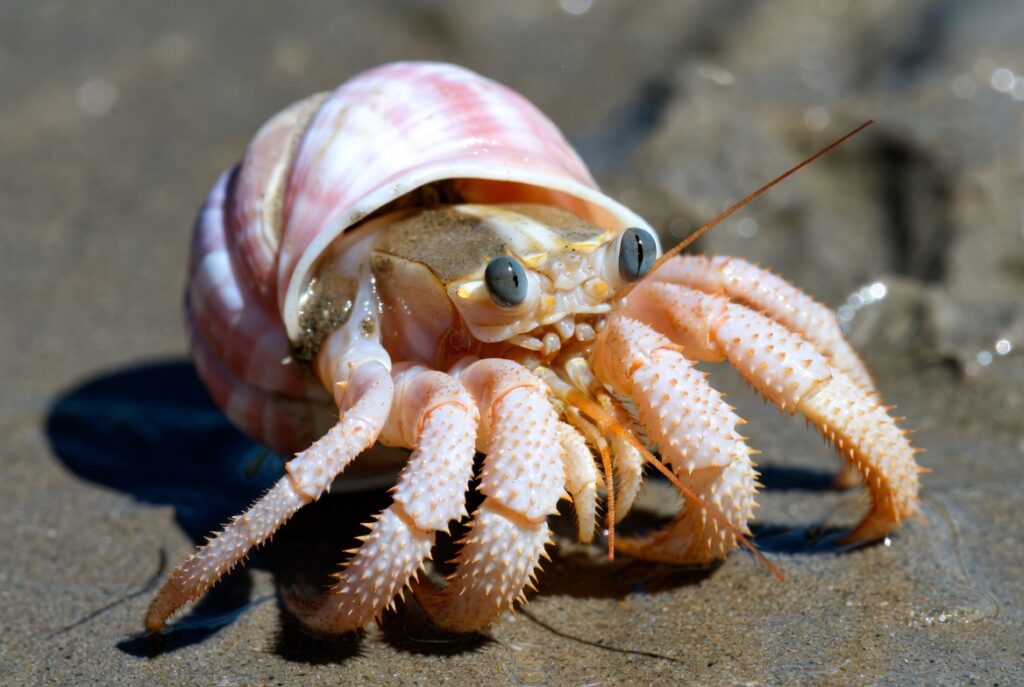
Now here is where it gets weird. The back half of a hermit crab (called the abdomen) does not have a hard outer shell at all. It is soft, fleshy, and curled into a spiral shape. The color is usually pinkish or pale gray. It looks more like a shrimp tail than part of a crab. This soft tail is the whole reason hermit crabs need borrowed shells in the first place. Without the shell, this part is wide open to attack.
At the very tip of the tail, there is a small hook. This hook is what hermit crabs use to grip the inside of their shell, locking them in place so tightly that pulling them out by force can rip them in half. Some hermit crabs would rather die than let go of their shell. The tail also has small leg-like parts called pleopods, which females use to carry eggs.
Bonus: Where Do Hermit Crab Shells Come From?
Why the Tail Is Curled
The spiral shape of the tail is not random. Hermit crabs evolved this curl to fit perfectly inside snail shells, which are also spiral. Their bodies and the snail shells they wear have shaped each other over millions of years. If you straightened out a hermit crab’s tail, it would not fit inside a shell at all. The curl is so important that it actually makes hermit crabs lopsided – one side of the body is bigger than the other to help fit the spiral.
Why You Almost Never See a Naked Hermit Crab
A hermit crab without a shell is in serious trouble. They will only leave their shell for a few reasons:
- To switch to a new shell. This swap usually takes less than 10 seconds. The crab is fully exposed during this short window.
- To molt. When a crab sheds its old hard skin to grow a new one, it sometimes leaves the shell briefly. This is the most dangerous time in a hermit crab’s life.
- To mate. Both crabs partly come out of their shells to reproduce, then quickly go back inside.
- When forced out. If another crab attacks them and steals their shell, or if they get sick or stressed, they may abandon the shell. This usually ends badly.
If you ever see your pet hermit crab fully out of its shell for more than a few minutes, something is wrong. It could be sick, stressed, or unable to find a shell that fits. Make sure there are extra shells in different sizes available, and check that the tank temperature and humidity are correct.
Bonus: How Do Hermit Crabs Get Their Shells?
Conclusion
A hermit crab without its shell is a strange-looking animal. The front half is a normal hard-shelled crab, but the back half is a soft, pink, curled tail that looks more like a shrimp. This soft tail is the reason hermit crabs spend their whole lives borrowing shells from dead snails. Without that borrowed home, they are completely defenseless. Now you know what is really hiding inside that shell.
Frequently Asked Questions
A: Not for long. Without a shell, a hermit crab is at risk from predators, drying out, and physical injury. They can survive for a few hours or days without one, but they will not last much longer than that.
A: Because hermit crabs are actually more closely related to lobsters and shrimp than to true crabs. Their soft, curled tail is a leftover from this lobster-like ancestry.
A: Place several extra shells in different sizes near the crab right away. Check the tank temperature and humidity. If the crab still will not go back into a shell after a few hours, it may be sick or stressed and needs help.
One Comment