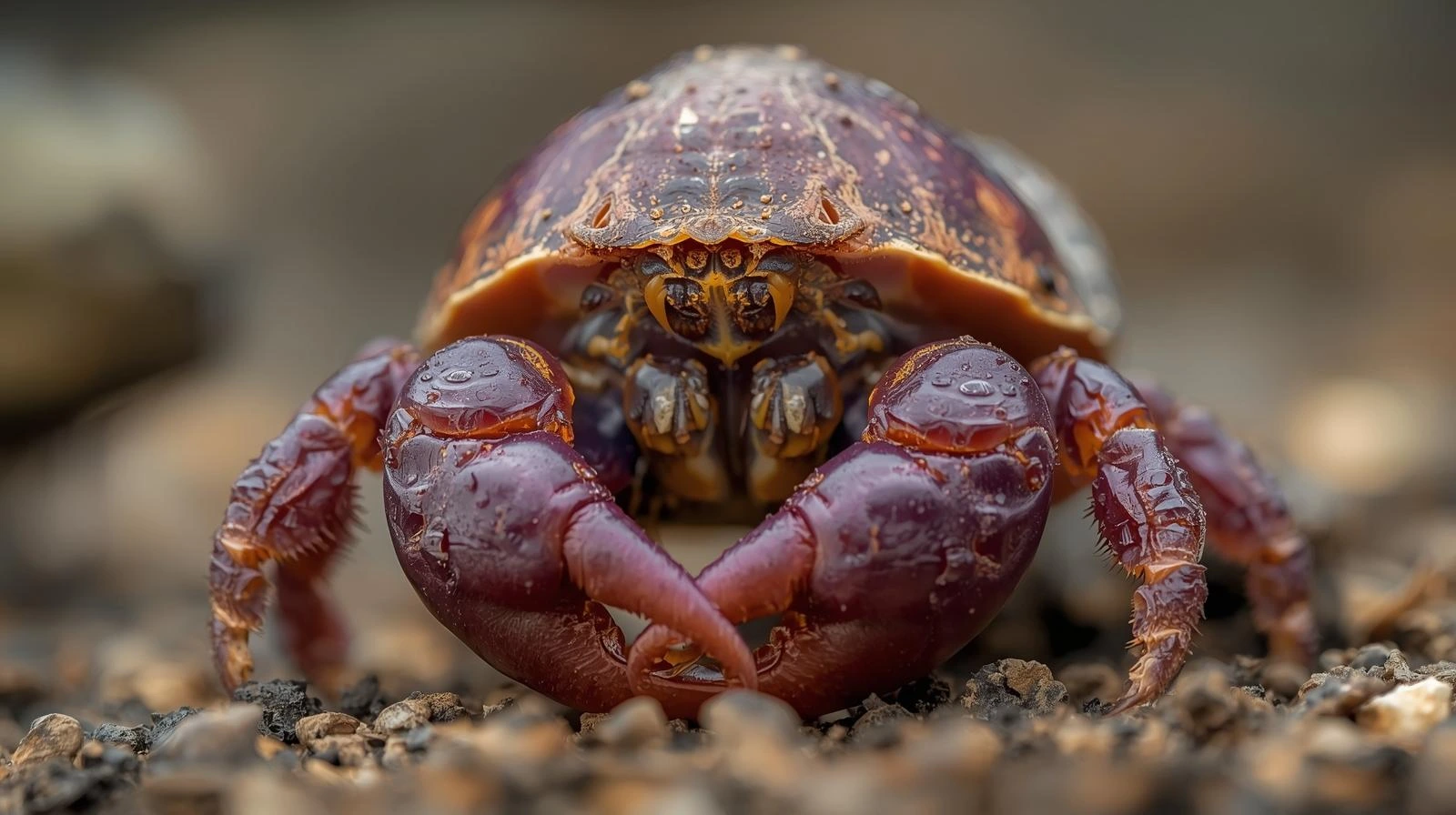
How Big Do Purple Pincher Hermit Crabs Get? [Size Chart]
Two purple pinchers from the exact same batch can grow into completely different animals. One stays small its whole life. The other outgrows every shell you buy and ends up the size of a baseball.
It has nothing to do with luck, and nothing to do with which crab you picked. A handful of fixable tank habits decide the entire outcome, and most owners never realize they are working against their own crab.
Purple Pincher Size at Full Growth:
It depends how you measure:
- Body length. A typical adult runs 2 to 3 inches. Older crabs reach 4 to 5 inches and occasionally more.
- Overall length including shell. Anywhere from 2 inches as a juvenile up to 6 inches for a large adult, about a baseball or softball.
- Weight. Between 0.22 and 1 pound, depending on size and shell.
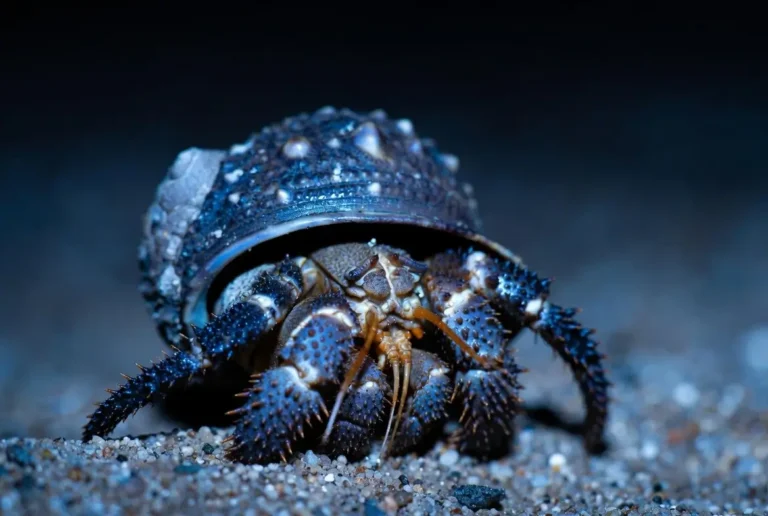
That makes Coenobita clypeatus the largest common pet hermit crab in the US trade. Only the giant Indonesian, Coenobita brevimanus, grows bigger in captivity.
Purple Pincher Size Chart:
| Growth stage | Body size | Notes |
|---|---|---|
| Juvenile | 0.4 to 0.8 in (1 to 2 cm) | Molts often, grows fastest |
| Sub-adult | 0.8 to 1.6 in (2 to 4 cm) | Molts less often, stronger exoskeleton |
| Adult | 2 to 3 in (5 to 7 cm) | Slow growth, lives for decades |
| Old adult | 4 to 5+ in (10 to 12+ cm) | Baseball sized, many years old |
How Fast Purple Pinchers Grow:
Slowly, and only during a molt. No molt means no growth at all.
Juveniles molt frequently and gain size quickly. Crabs under 2 to 3 years old rarely exceed 0.5 to 1 inch.
Adults slow right down, molting roughly every 4 to 12 months and gaining perhaps 0.5 to 1 inch a year. Reaching baseball size takes many years.
Worth knowing: most pet store crabs are already several years old when you buy them, so the small crab you bring home has a long road ahead either way.
What Affects Purple Pincher Size?
Six things decide how big your crab will get, and every single one is something you can control.
- Humidity. Hold it above 70 percent, ideally 75 to 85. Poor humidity stalls molting, which stalls growth entirely.
- Temperature. Keep it at 75 to 85 degrees Fahrenheit. Cold crabs turn sluggish and molt less often.
- Deep substrate. At least 6 inches of damp sand and coconut fiber so the crab can fully bury.
- Diet. Protein, fruit, vegetables and calcium fuel healthy molts. Purple pinchers eat more vegetation than other species and are especially fond of oak and maple leaves and bark.
- Shell supply. A crab can only grow into a shell that fits. Keep 3 to 5 slightly larger shells available at all times.
- Low stress. Calm, undisturbed tanks produce safe molts
Tank Setup for Growing Crabs:
Two more things round out the setup beyond what affects growth directly.
Tank size. A 20-gallon tank for a small group. Ten gallons handles only 1 to 2 small crabs, and you will outgrow it fast.
Two water dishes. Fresh and salt, both dechlorinated, both with an easy climb out. See how to make salt water for hermit crabs for the exact mix.
One Risk of Mixed Sizes
Something most size guides leave out. Purple pinchers are cannibalistic. A larger crab will eat a smaller one that is vulnerable during a molt.
They are also aggressive about shells, and will attack a tank mate to take a better fitting one.
This is why deep substrate and plenty of spare shells matter beyond growth. They keep molting crabs buried and out of reach, and give everyone an upgrade without a fight.
Conclusion:
Purple pinchers grow to 2 to 3 inches in body length, with old, well kept crabs reaching 4 to 5 inches or baseball size including the shell. They gain maybe an inch a year as adults and keep growing for decades.
Deep substrate, steady humidity, varied food, and plenty of larger shells. Get those right and yours will keep growing for a very long time.
(FAQs):
A: The biggest common one, yes. Only the giant Indonesian, Coenobita brevimanus, grows larger in captivity, and it is rarely sold.
A: It is probably not molting. Check humidity, substrate depth, and shell options, since any of the three will stall growth.
A: Yes, but growth slows sharply after maturity. An adult may add only half an inch a year, and some years none at all.
A: Yes, and they are the hardiest land species, which is why they suit beginners. They live 15 to 25 years and need a 20 gallon tank.

https://shorturl.fm/0A29o
https://shorturl.fm/SBt0e
https://shorturl.fm/19Mzj
https://shorturl.fm/7pGni