How to Keep Hermit Crab Tank Humid?
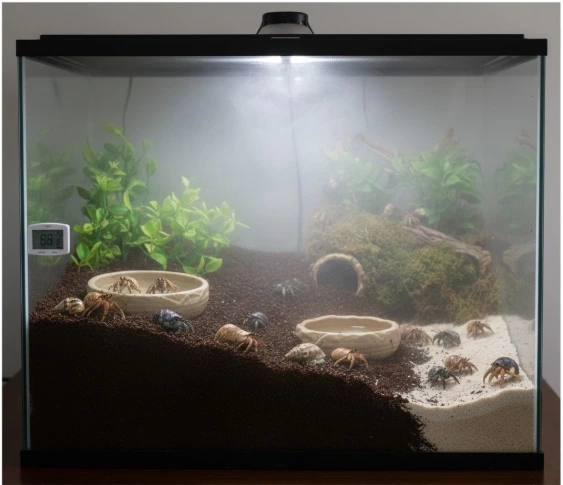
To keep a hermit crab tank humid, use damp substrate, add shallow water dishes, mist lightly when needed, seal the lid, and keep humidity at 70% to 80%. Humidity is one of the most important parts of hermit crab care because they breathe through modified gills that must stay moist. If the air gets too dry, their gills dry out and they slowly suffocate – often with no obvious warning signs. The good news is that holding steady humidity is simple once your tank is set up right. Here is exactly how to do it.
What Humidity Do Hermit Crabs Need?
Hermit crabs need a tank humidity of 70% to 80%. Below 70%, their gills begin to dry out, making it hard to breathe. Above 85%, the tank can get too wet and grow mold. The sweet spot of 70% to 80% keeps their gills working and their bodies healthy. Always track it with a digital hygrometer placed near substrate level, where the crabs actually live.
How to Increase Humidity in a Hermit Crab Tank
If your humidity is too low, here are the most effective ways to raise it:
- Seal the lid. A glass or acrylic lid is the single biggest factor. Wire or mesh tops let all the moisture escape and make proper humidity nearly impossible. Cover most of the top, leaving just a small gap for airflow.
- Dampen the substrate. Keep your sand and coconut fiber mix damp to sandcastle consistency. Moist substrate slowly releases water into the air and is your main humidity source.
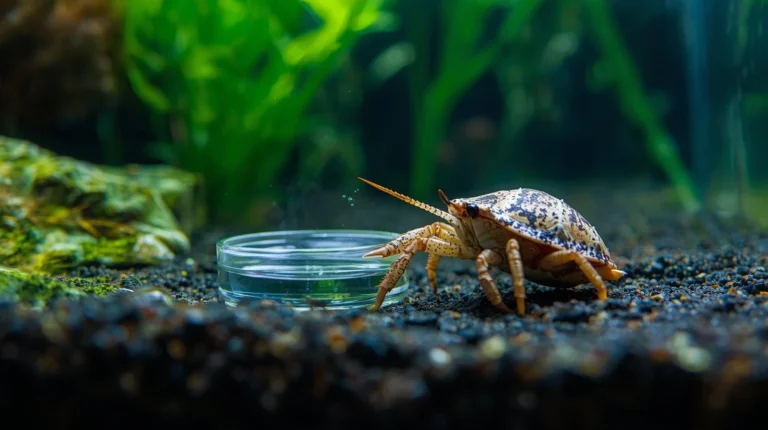
- Add or enlarge water dishes. Bigger water surfaces add more moisture to the air. Place shallow dishes in a couple of spots with easy climb-out ramps.
- Add a moss pit. A small dish of damp sphagnum or pillow moss raises humidity fast and gives crabs a cozy spot to burrow.
- Mist when needed. Lightly spray the substrate and walls with dechlorinated water. Do not soak it – misting is a quick boost, not the main method.
Tips to Maintain Steady Humidity
Once humidity is right, these habits keep it stable:
- Check the hygrometer daily. A quick glance tells you if you need to mist or adjust. Aim to keep it between 70% and 80% at all times.
- Refill water dishes daily. Top off and clean both dishes so they keep adding moisture and stay fresh.
- Keep substrate damp, not soggy. It should hold its shape when squeezed but not drip. Too wet causes mold; too dry drops humidity.
- Position the tank wisely. Keep it away from heaters, vents, air conditioners, and direct sun, which all dry out the air fast.
- Clean regularly. Remove old food and spot-clean waste to prevent the mold and bacteria that thrive in a humid tank.
Why Humidity Matters So Much
Hermit crabs do not have lungs like we do. They breathe through modified gills that only work when they stay moist. In low humidity, those gills slowly dry out and the crab struggles to get oxygen – a stressful, dangerous decline that often shows no clear signs until it is serious. Humidity is also critical for molting. A crab in dry conditions cannot molt properly and may get stuck mid-molt, which is often fatal. Getting humidity right is one of the kindest and most important things you can do for your crabs.
Conclusion
Keeping a hermit crab tank humid comes down to a sealed lid, damp substrate, water dishes, a moss pit, and light misting when needed – all aimed at holding humidity at 70% to 80%. Track it with a hygrometer, keep the substrate damp but not soggy, and place the tank away from anything that dries the air. Get this right and your crabs will breathe easily, molt safely, and stay active and healthy for years.
Frequently Asked Questions
A: Seal the lid, keep the substrate damp, use shallow water dishes and a moss pit, and mist lightly when needed. Track it with a hygrometer and keep it at 70% to 80%.
A: In very dry air, a crab’s gills can dry out within a day or two. Low humidity causes stress, breathing trouble, and failed molts, so it should be fixed right away.
A: Cover more of the lid, mist the substrate and walls, add a damp moss pit, and enlarge the water dishes. Sealing the lid gives the fastest, most lasting boost.

https://shorturl.fm/U3mIa