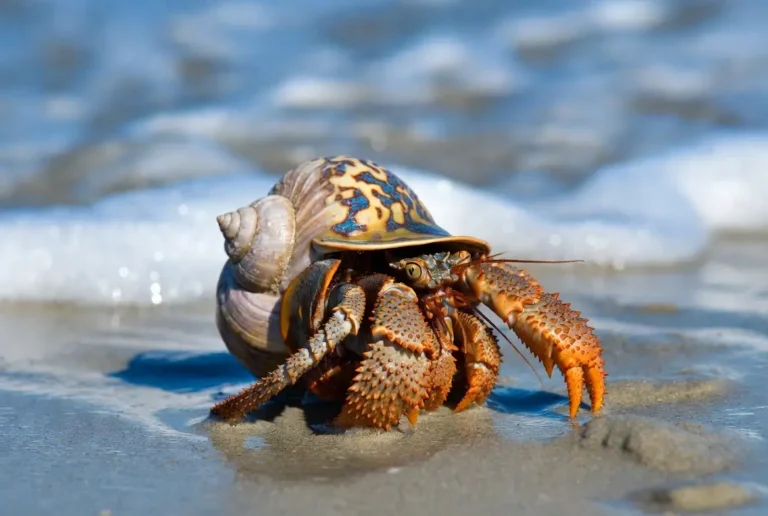
How to Get Hermit Crab Out of Shell? Expert’s Guide
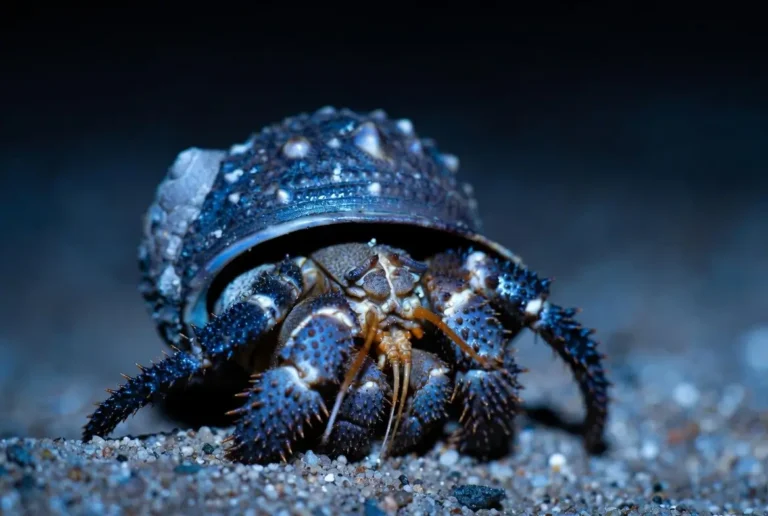
The safest way to get a hermit crab out of its shell is to never force it. Let it come out on its own, with a shallow tepid soak to encourage it if needed. A crab grips its shell so tightly that pulling can seriously injure or kill it, so it is worth asking why you want it out first, since most reasons have a gentler fix.
Why Do You Want It Out?
A healthy hermit crab should stay in its shell, and most reasons for wanting it out have a gentler fix.
- Want to switch shells? Offer a few clean, natural shells in the right size and let it switch on its own.
- Looks stuck? A tepid soak (covered below) is the safest way to help it move.
- Just want to check on it? Watch it in the tank instead. Pulling it out to inspect causes more harm than good.
- Came out on its own? That’s a different situation, covered further down.
How to Get a Hermit Crab Out of Its Shell Safely:

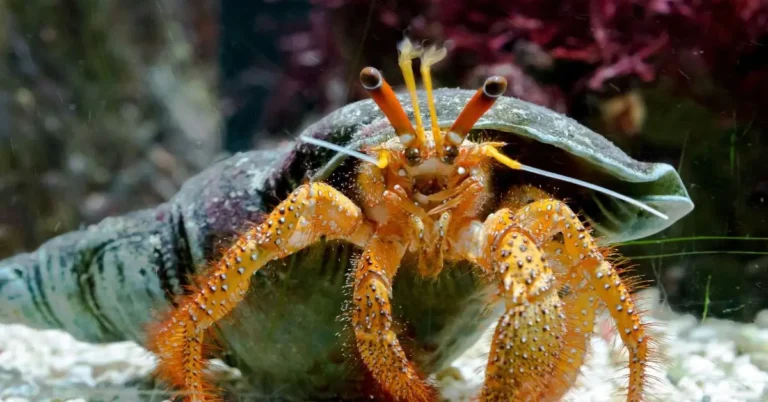
To move a crab from a cracked or unsafe shell, soak it in tepid water, roughly room temperature, never noticeably hot or cold. Water any warmer risks the opposite effect, since crabs sometimes abandon a shell specifically because they are overheating.
Keep the water shallow enough to breathe and climb out, and place a better-fitting shell right next to it. This can take minutes to an hour, so be patient.
Why You Should Never Pull It Out
A hermit crab grips the inner spiral of its shell with hooked legs and its tail so tightly that pulling tears its body apart rather than releasing it. Crabs will allow themselves to be ripped in half before letting go, so patience is the only safe tool. If it will not come out, it is telling you the environment feels unsafe, not asking to be pulled harder.
Hermit Crab Molting Out of Shell:
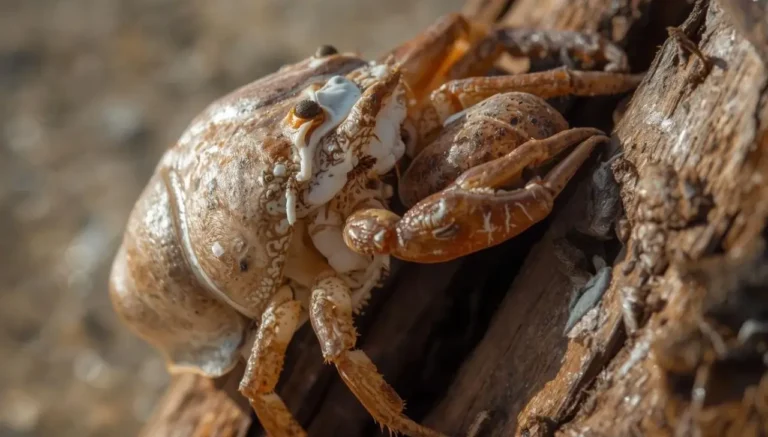
Molting is when a crab sheds its old exoskeleton, and it often partly leaves its shell during this time. A molting crab may stay out, or buried, for 2 weeks to 3 months depending on size. Never move, touch, or re-shell it, since the new exoskeleton is soft and disturbing it can be fatal. Keep the tank humid at 70 to 80 percent, warm, and quiet.
Why Is My Hermit Crab Out of Its Shell?
If you find a crab out of its shell, do not assume the worst. See why hermit crabs leave their shells for the full list of causes, from molting to stress to a bad fit. Most of the time, it is telling you something is off, not that it is dying, though a crab that stays out, limp, and unresponsive with a fishy smell may genuinely be in trouble.
How to Help a Hermit Crab Change Shells:
If a crab is out and will not go back in, it usually means the shell is wrong.
Place 3 to 5 clean, natural shells, slightly different sizes, openings about 1/8 inch larger than the old one. Boil them first, let them cool, and place them in a quiet, humid spot, then leave the crab alone to choose in peace.
Conclusion:
Do not force a crab out of its shell. Never pull, since it grips hard enough to be torn apart rather than let go. A tepid, shallow soak paired with a better shell nearby is the only safe method when one is genuinely needed. Most of the time, a crab out of its shell is telling you the shell does not fit or the tank needs attention, so fix the cause and let it move at its own pace.
(FAQs):
A: Offer a warm, shallow soak in dechlorinated water around 95°F to 100°F and place a better shell nearby. Then wait. Never pull or force the crab.
A: No. A crab grips its shell so tightly it would rather be torn apart than let go. Pulling can kill it. Patience and a gentle soak are the only safe options.
A: It varies. A relaxed crab may emerge in minutes; a nervous one can take an hour or more. Molting crabs may stay out or buried for 2 weeks to 3 months.
A: Sometimes, but leaving the shell does not always mean death. Crabs also leave to molt, switch homes, or from stress. Watch for a fishy smell and no movement before assuming the worst.