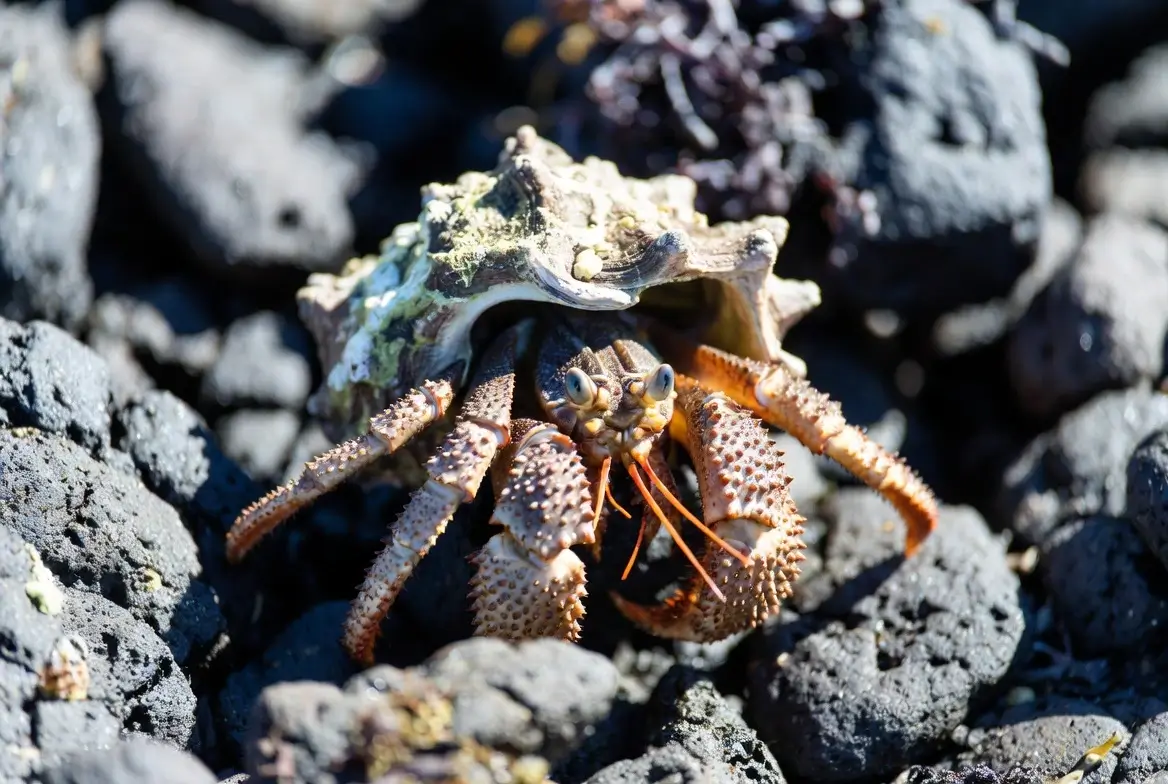
Do Hermit Crabs Make Noise? (Yes, and It’s Fascinating)
Yes, hermit crabs make noise, and the first time you hear it, you will not believe a tiny crab in a shell made that sound.
They produce a chirping, croaking, or clicking noise owners describe as a cricket chirp crossed with a tiny frog croak, called stridulation. Hold a chirping crab and you can feel the shell itself vibrate in your hand.
Here is the strange part. Scientists still cannot fully agree on how they actually do it.
What Does Hermit Crab Chirping Sound Like?
The sound is hard to describe until you hear it. Owners compare it to a creaky bed, a rusty door hinge, a croaking frog, or a squeaky floorboard.
Pitch and volume shift with the crab’s size and shell. A bigger shell makes a deeper, hollow sound. A smaller shell makes a higher-pitched chirp. Some crabs carry across a quiet room at night. Others only sound up close.
How Do Hermit Crabs Make Noise?
Scientists believe it comes from stridulation, rubbing hard body parts together inside the shell, similar to how a cricket rubs its wings. A claw, leg, or body part scrapes against the shell’s inner surface, and the shell amplifies it like a tiny speaker.
But here is the mystery. Freshly molted crabs, whose bodies are entirely soft with nothing hard to rub, have been heard chirping just as loudly as before. The mechanism is still not fully understood, even by scientists who study them closely.
Why Do They Make Noise? (6 Reasons)
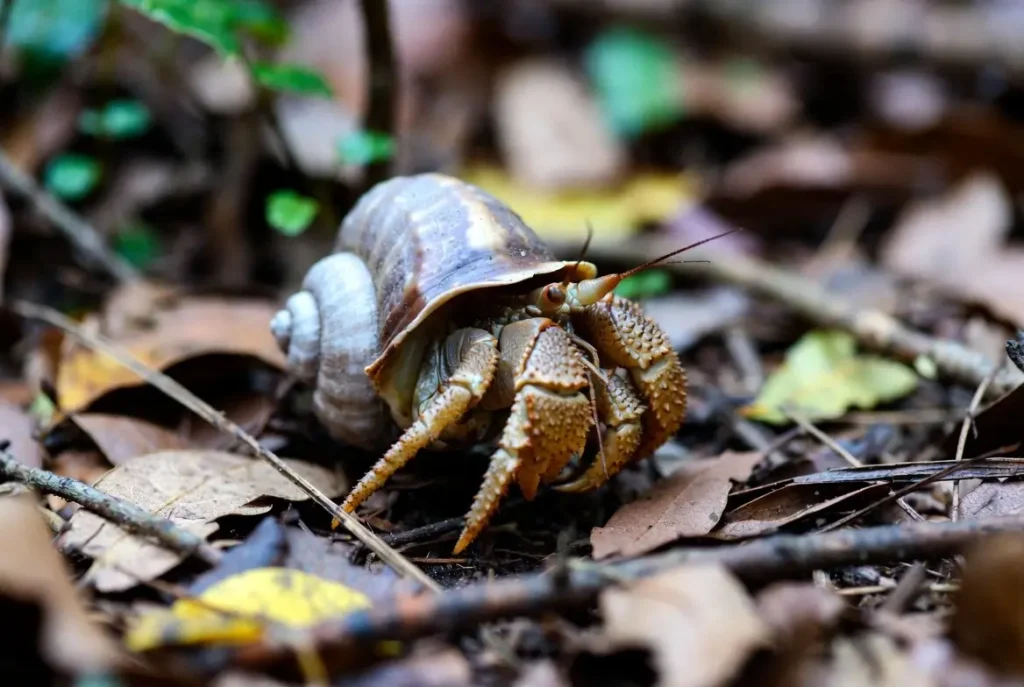
Chirping happens in specific situations, each meaning something different.
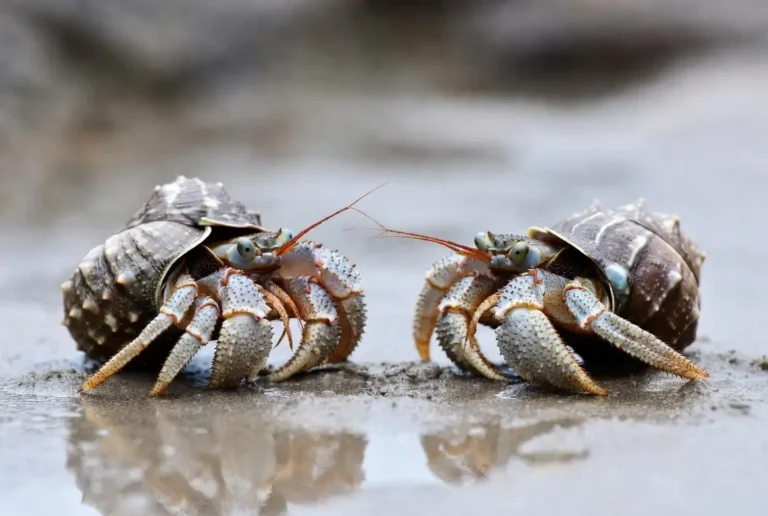
- Shell disputes. The most common trigger. When two crabs argue over a shell, one or both chirp as a warning.
- Fear or threat. Sudden handling, a loud noise, or something unfamiliar can trigger a stress chirp, common with a new crab.
- Disturbed sleep. Crabs are nocturnal and do not appreciate being woken during the day.
- Dominance. Some chirp to guard a favorite spot, food, or hiding place from others.
- Discomfort. Wrong humidity, temperature, or dirty water can trigger chirping. More chirping than usual is worth checking against tank conditions.
- Meeting a new tank mate. Loud chirping, even something like screaming, can follow a new crab’s arrival, usually settling within a day or two.
Other Hermit Crab Tank Sounds:
Chirping is not the only tank sound at night.
Shell clinking, as crabs bump each other exploring. Digging, a soft scratching sound before molting or finding a sleep spot. Climbing and falling, a small thud when a crab loses grip, usually harmless thanks to deep substrate. Shell dragging, a quiet scrape across glass or decorations. Water splashing, from dipping in and out of dishes at night.
Which Hermit Crab Species Chirp the Most?
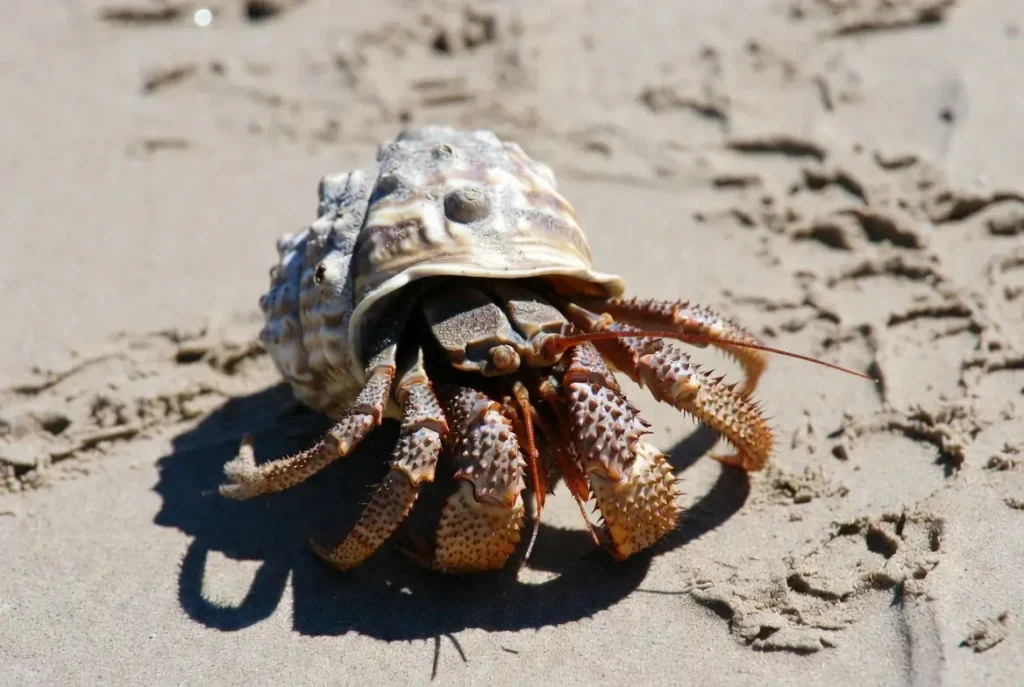
Not every species is equally vocal, though the honest answer is messier than most guides admit. Ecuadorian and Ruggie hermit crabs both carry reputations as the chattiest pet species, and sources genuinely disagree on which one actually chirps more. Caribbean hermit crabs chirp too, generally less often than either.
If a talkative tank matters to you, either Ecuadorian or Ruggie is a reasonable bet, not a settled winner.
Is Hermit Crab Chirping Normal?
Usually not. Chirping during a shell inspection, a bump from a tank mate, or handling is just normal behavior.
Worth checking if a normally quiet crab suddenly starts chirping often, or sounds more frantic than usual. Check temperature (75 to 85°F) and humidity (70 to 80%), and watch for shell fights or bullying.
Can Hermit Crabs Hear You?
Not the way a dog or cat does. Hermit crabs have no ears and cannot detect airborne sound.
What they do detect is vibration, through the ground, the tank glass, and the substrate. Loud music, heavy footsteps, or tapping the glass stresses them, not because they hear it, but because they feel it.
Conclusion:
Hermit crabs chirp, croak, and click through stridulation, warning off rivals, signaling stress, defending territory, and communicating with each other. Exactly how they produce the sound is still not fully understood, even by scientists. Once you hear it, a hermit crab never feels like a silent pet again.
(FAQs):
A: Yes, nighttime is when they are most active and vocal. Expect chirping, shell clinking, digging, and climbing sounds between 9 PM and 3 AM.
A: It is scared, uncomfortable, or asking to be put down. Hold it on a flat, steady palm and keep the session short.
A: Not usually. It more often signals annoyance, fear, or communication with other crabs. A relaxed crab tends to stay quiet, though chirping itself is still completely normal.


https://shorturl.fm/kqfIv
https://shorturl.fm/P9zlz
https://shorturl.fm/OTJ1A
https://shorturl.fm/cuvCk
https://shorturl.fm/0DSYd
https://shorturl.fm/xWBdD
https://shorturl.fm/nH3Ku
https://pesnimp3.net/1.html
https://shorturl.fm/bvbcS
https://shorturl.fm/2Jlim
https://shorturl.fm/r9MBc
https://shorturl.fm/WBGT0