Can Hermit Crabs Swim? (And Can They Drown?)
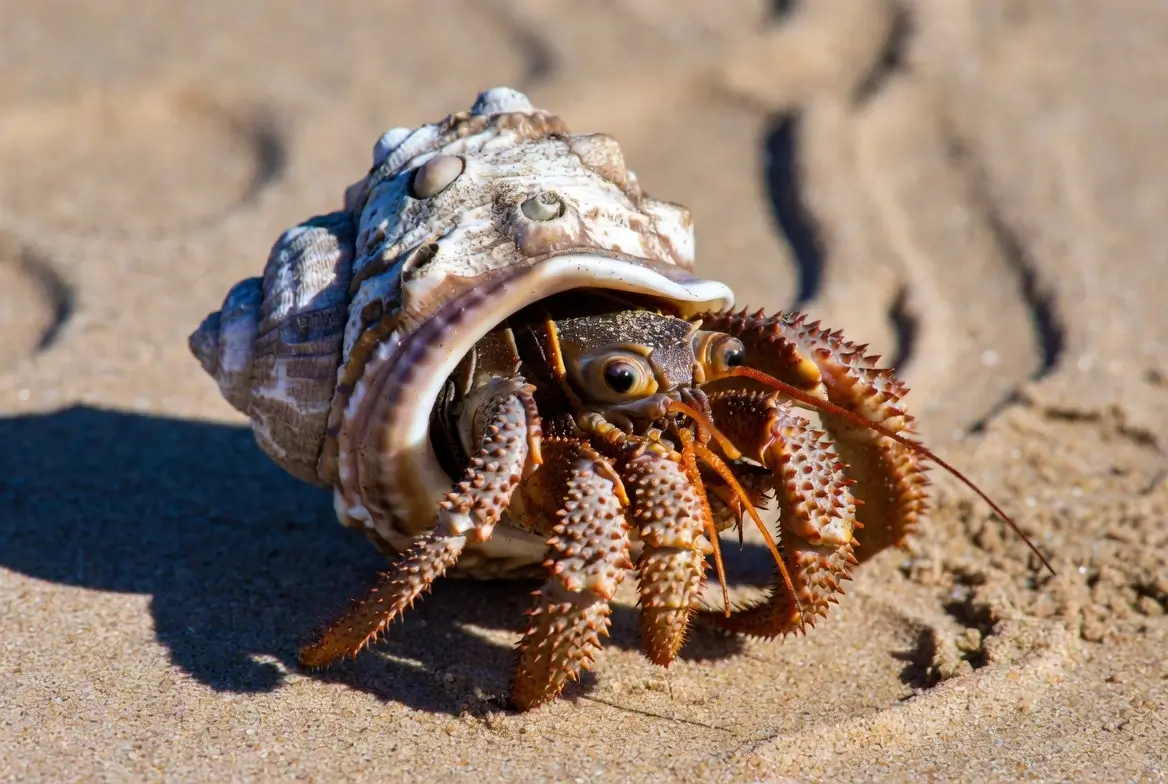
No, hermit crabs cannot really swim – and land hermit crabs can drown if they are left in deep water. They can paddle and wade for short bursts, but their legs are not built for swimming. The most important thing to know is this: the land hermit crabs kept as pets need water to soak and drink, but they breathe air. If they get stuck underwater and cannot climb out, they will drown in about 20 to 30 minutes. Here is the full picture of hermit crabs and water, and how to keep yours safe.
Why Hermit Crabs Can’t Swim:
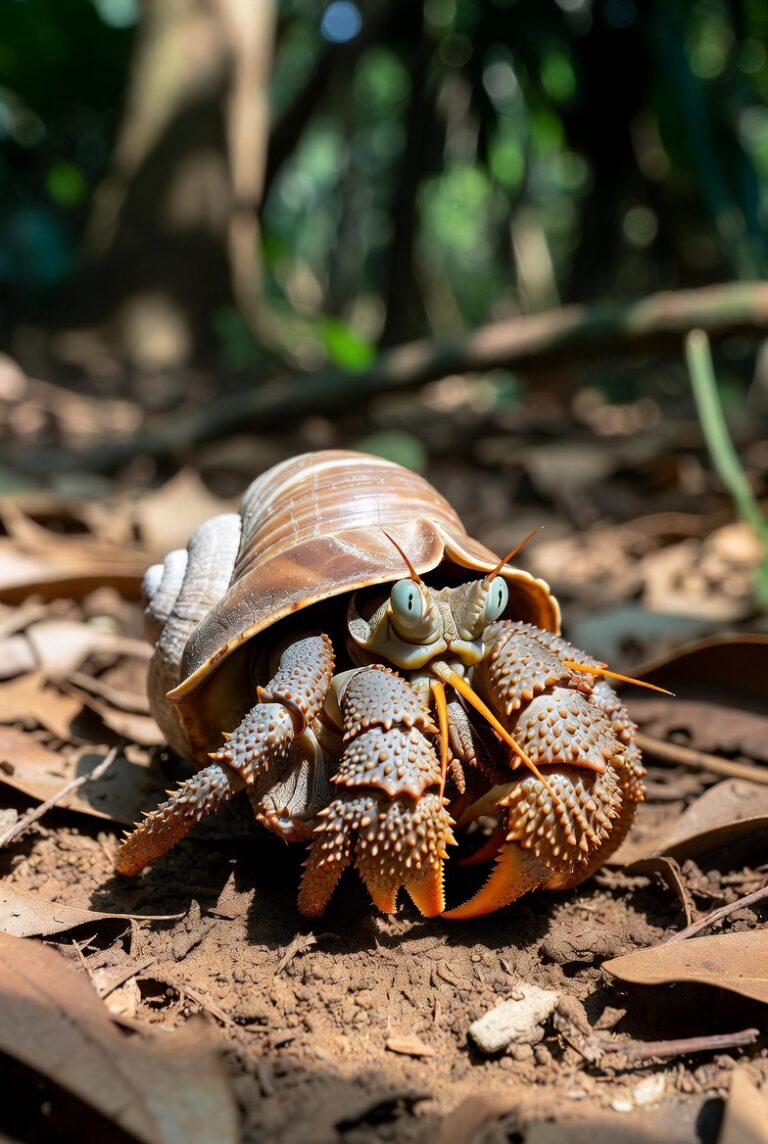
Hermit crabs are built for walking and climbing, not swimming. Their legs do not bend in a way that lets them paddle through open water like a fish or a true swimming crab. Some can flail their legs and move a short distance if they fall into water, but this is panic paddling, not real swimming. Even marine hermit crabs – the ones that live fully underwater – do not swim. They walk and climb along the ocean floor instead. So whether land or marine, hermit crabs are crawlers, not swimmers.
Land vs Marine: A Big Difference in Water:
How a hermit crab handles water depends entirely on what type it is:
- Land hermit crabs (pets). These breathe air through modified gills that must stay moist. They can submerge for a short time to drink, bathe, and refill the water stored in their shell, but they cannot breathe underwater. Left in deep water with no way out, they drown.
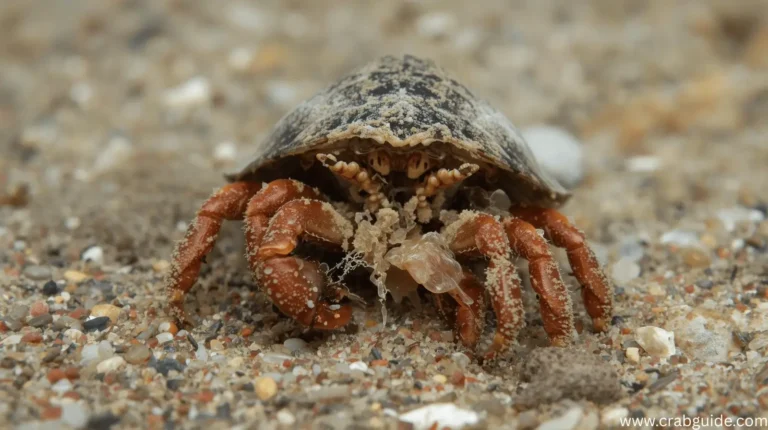
- Marine hermit crabs (reef tanks). These have full gills and breathe underwater their whole lives. They cannot drown. But flip the problem around – they suffocate if they are out of water too long, because their gills dry out and close up.
- Aquatic hermit crabs. A middle group that needs both shallow water and dry land areas. They split their time between the two.
How Long Can a Land Hermit Crab Stay Underwater?
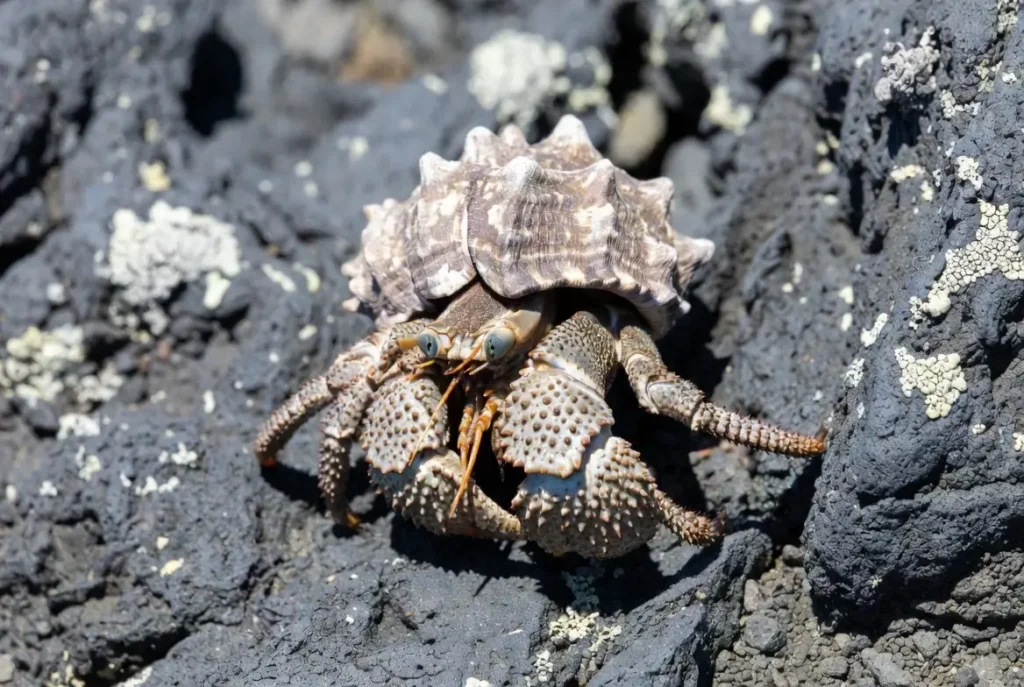
A healthy adult land hermit crab can typically stay submerged for 15 to 30 minutes. Weaker, sick, or juvenile crabs may be at risk much sooner, sometimes in as little as 10 to 15 minutes, so it’s always safest to assume the shorter window. After that, the crab runs out of oxygen and drowns. Think of it like a person holding their breath underwater – they can do it for a while, but they have to come up for air eventually. This is exactly why a deep water dish with no way to climb out is so dangerous. The crab goes in to soak, cannot get out, and drowns. It is one of the most common and heartbreaking accidents in hermit crab keeping, and it is completely preventable.
Why Do They Go in Water If They Can Drown?
Land hermit crabs need regular water access for several important reasons:
- To drink. They need both fresh and salt water to stay hydrated and balance their body chemistry.
- To moisten their gills. Their gills must stay damp to work. A quick soak keeps them breathing properly.
- To refill their shell water. Hermit crabs store a custom mix of fresh and salt water inside their shell. They top it up by dipping into their water dishes.
- To bathe. Soaking helps clean substrate, waste, and mites off their body.
- To cool down. A dip in water helps them regulate their temperature on warm days.
So water is not optional – it is essential. The goal is not to keep them away from water, but to make sure they can always get back out of it easily.
How to Keep Your Hermit Crab Safe Around Water:
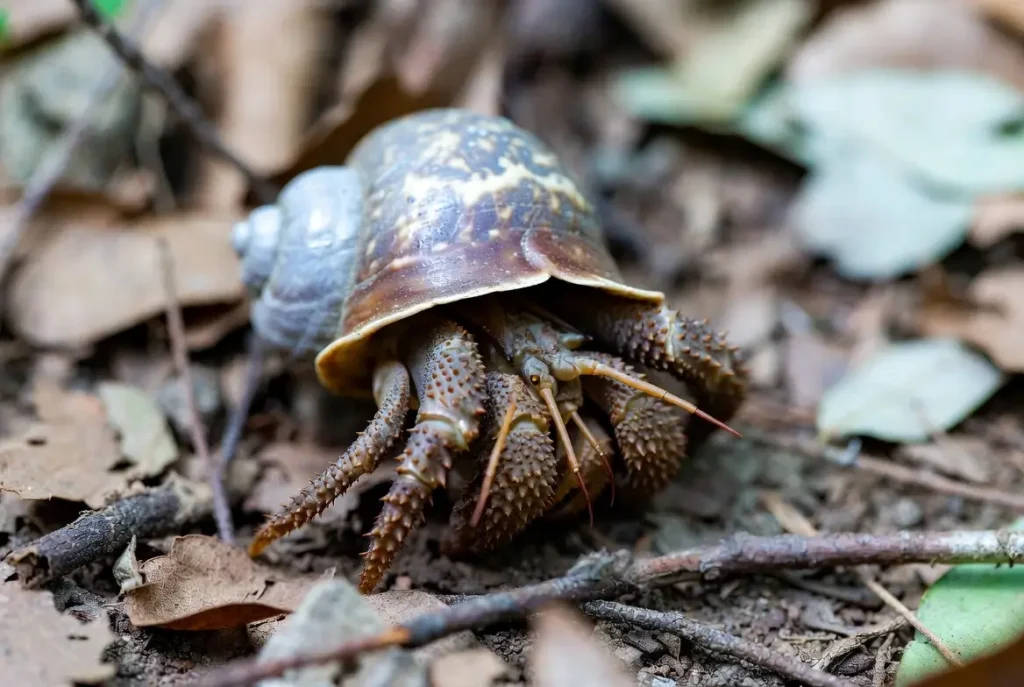
Preventing drowning is simple once you know what to do:
- Add a way to climb out. Put a ramp, mesh net, rocks, or plastic plants in every water dish so the crab can always climb out. This is the single most important safety step.
- Keep water deep enough to submerge, but safe. The water should be deep enough for the biggest crab to fully submerge (they like to dunk), but always with an easy exit. Bigger crabs need deeper water; small crabs need shallower.
- Use shallow dishes with gentle slopes. Avoid steep-sided bowls that trap crabs. Natural sloped dishes or ones with built-in steps are best.
- Never fill the whole tank with water. Land hermit crabs need air, not a swimming pool. The tank floor should be deep substrate, with only the water dishes holding water.
- Check the dishes daily. Make sure the climbing aids have not shifted and that no crab is stuck. A quick daily check prevents accidents.
What to Do If You Find a Crab Stuck in Water:
If you find a hermit crab submerged and not moving, do not panic and do not assume it has died. Gently lift it out and place it on a paper towel in a quiet, warm, humid spot, with the shell opening tilted slightly down so water can drain out. Give it time – sometimes several hours. Crabs that look gone have recovered after draining and resting. Do not bury it or put it back in deep water. Just keep it warm, humid, and calm, and watch for movement. There is real hope as long as you act quickly.
Conclusion:
Hermit crabs cannot swim – they crawl, climb, and paddle at best. Land hermit crabs breathe air and will drown if trapped underwater for more than 20 to 30 minutes, while marine hermit crabs live underwater but cannot swim either. The key for pet owners is simple: give your crab shallow water dishes deep enough to soak in, always with a ramp or rocks to climb out. Get that right and water becomes what it should be – a source of life, not a danger.
(FAQs):
A: Marine hermit crabs can. Land hermit crabs (the pet kind) cannot – they breathe air and can only hold their breath underwater for about 20 to 30 minutes before they drown.
A: Yes. Land hermit crabs enjoy soaking, drinking, and dipping in their water dishes. They just need to be able to climb back out easily. Many crabs love a good soak and will sit in the water for several minutes at a time.
A: No. Land hermit crabs do not need and cannot safely use a deep pool. Stick to shallow water dishes with easy exits. A deep pool is a drowning hazard, not a treat.

https://shorturl.fm/3VLsI
https://shorturl.fm/4zh5Q
https://shorturl.fm/Re8AN
https://shorturl.fm/f8hlP
https://shorturl.fm/z7TtW
https://shorturl.fm/ihIkP
https://shorturl.fm/LDMqi
https://shorturl.fm/5bRHs
https://shorturl.fm/ejn9h
https://shorturl.fm/urzha
https://shorturl.fm/gKhRZ
https://shorturl.fm/qQTA1
https://shorturl.fm/xmzKh
https://shorturl.fm/7G6IT
https://shorturl.fm/wN2Te