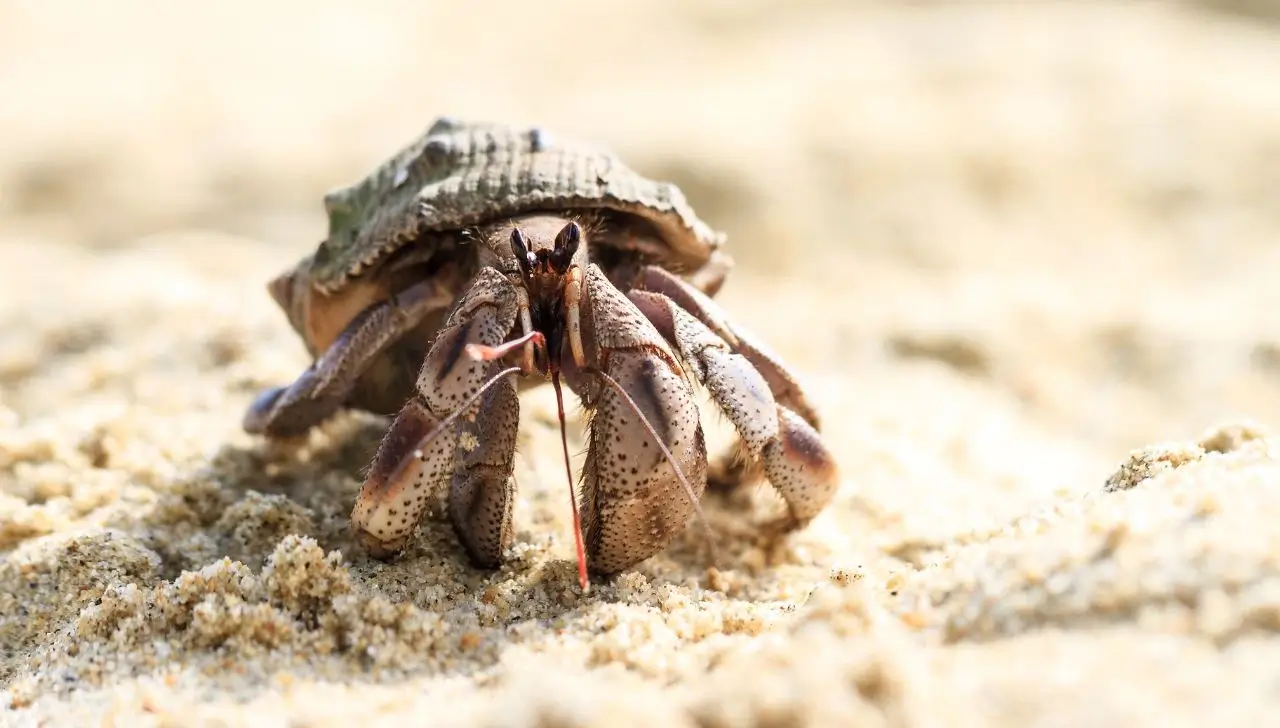
Do Hermit Crabs Have Feelings? [Yes, but Not Love]
Yes, but only the basic kind. Hermit crabs feel stress, fear, pain, and comfort, and they clearly react to how they are treated. What they do not have is love, jealousy, or grief the way people experience them.
The evidence for this is stronger than most owners realise. One set of experiments on hermit crabs helped change the law in an entire country.
Do Hermit Crabs Feel Emotions?
They feel states, not emotions. Scientists draw a line between simple feelings like stress and comfort, and the rich emotional life humans and some mammals have.
Hermit crabs sit firmly on the simple side. Poor conditions stress them, good conditions calm them, and they learn from both. There is no evidence at all for the complex end.
What Hermit Crabs Actually Feel:
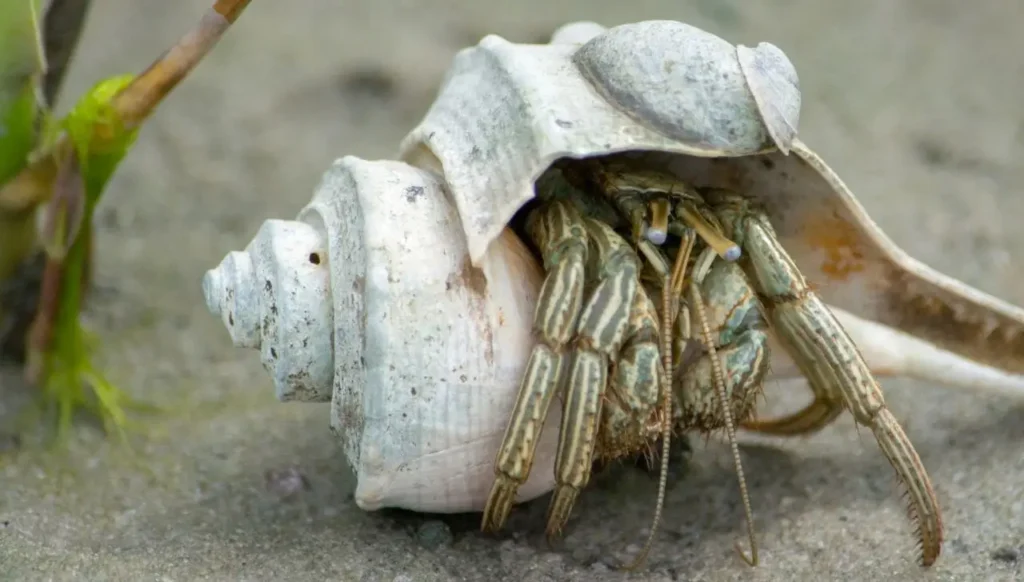
Four states show up consistently in research and observation.
- Stress. Bad tank conditions, overcrowding, and rough handling all stress them, and sustained stress can kill.
- Fear. They are prey animals. A large shape moving overhead triggers an immediate hiding response.
- Pain. They have pain sensors and change their behaviour after being harmed, not just reflexively.
- Comfort. In a calm, well-built tank they relax, explore, and behave naturally.
Do Hermit Crabs Feel Pain?
The evidence says probably yes, and the key study was done on hermit crabs specifically.
Robert Elwood and Mirjam Appel gave hermit crabs small electric shocks inside their shells in 2009. Only the shocked crabs abandoned their shells, which showed the shock was genuinely unpleasant.
The important part came next. Crabs in a preferred shell type were much less willing to leave. They weighed the pain against the value of what they would lose, which is a decision, not a reflex. That trade-off is exactly what separates pain from an automatic response.
Are Hermit Crabs Protected by Law?
In the United Kingdom, yes. In 2022 the government added crabs, lobsters, and their relatives to its animal welfare law, formally accepting that these animals can suffer.
Can Hermit Crabs Recognize You?
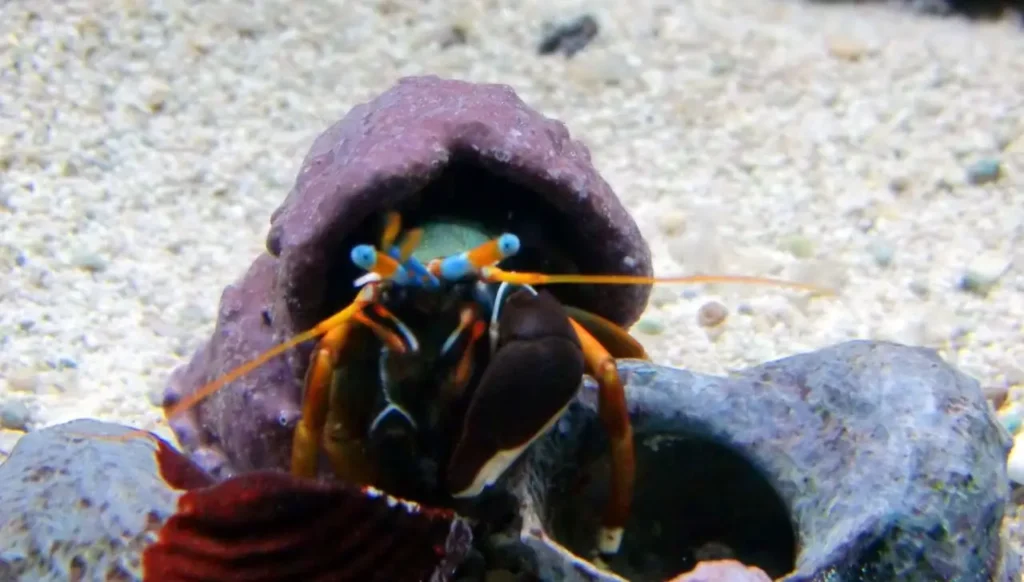
They can learn, but they cannot love. No hermit crab bonds with an owner the way a dog does, and affection is not something they are built for.
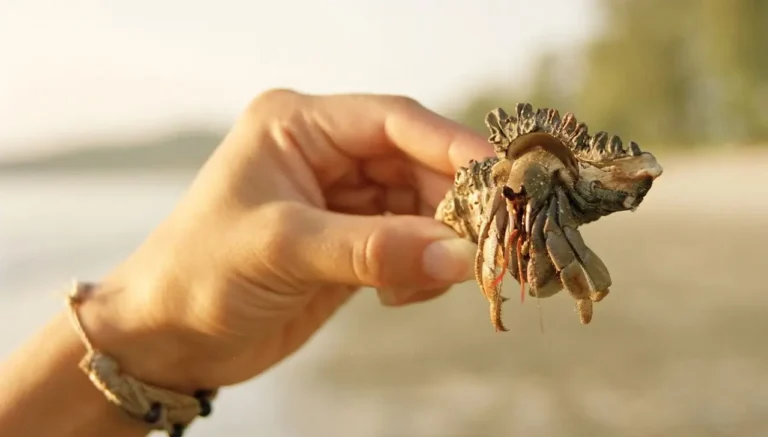
What they do is associate. Handle a crab calmly and it links you with food, water, and safety rather than danger. Over weeks it becomes less skittish around you.
Their memory is better than the “simple animal” label suggests. Elwood’s later work found they remember which shells might become available and wait for them, which is a form of planning ahead.
Do Hermit Crabs Get Lonely?
Not lonely in the human sense, but isolation stresses them. In the wild they live in colonies of dozens or hundreds, and they depend on each other for shells.
They even queue. Crabs gather in size order so a shell passed down the line fits each one in turn. That only works in a group.
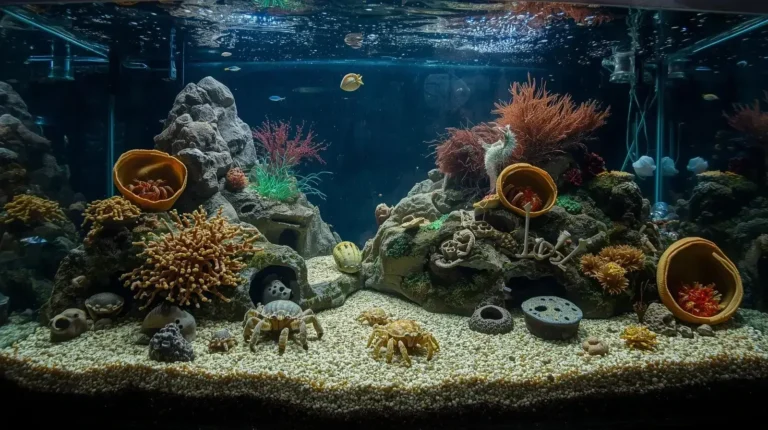
Keep two at absolute minimum, three or more preferably. A lone crab is not heartbroken, it is just stressed and less active.
Signs of Hermit Crab Stress
Stress is the feeling you most need to spot.
- Leaving the shell. A crab out of its shell is usually in trouble.
- Dropping legs or claws. A classic stress response, almost always from tank conditions.
- Hiding constantly. Different from molting, this is ongoing avoidance.
- Not eating. A stressed crab goes off food and water.
- Low activity. Withdrawn and still is a warning sign.
Check the tank first. Most stress traces back to low humidity, wrong temperature, missing salt water, overcrowding, or too few shells, and the same causes appear in why hermit crabs die.
Conclusion:
Hermit crabs feel stress, fear, pain, and comfort, and they remember what caused them. They will not love you back, but the science on that first list is solid enough that UK law now treats them as sentient.
That is the real takeaway for an owner. Gentle handling and a proper tank are not just good practice. Your crab can tell the difference.
(FAQs):
A: Research supports it. Studies on hermit crabs found consistent individual differences in boldness, so some really are shyer or more adventurous than others.
A: The sound, called stridulation, shows up in shell fights and when a crab feels threatened. It is a defensive signal, not a happy one.
A: Yes. They sense touch through fine hairs on their legs and pick up vibrations through the ground. A hand from above reads as a predator.
A: Yes. Prolonged stress weakens them, and severe stress makes a crab drop limbs or abandon its shell, both of which are dangerous.

One Comment