What Eats Hermit Crabs? (Predators + How They Stay Safe)
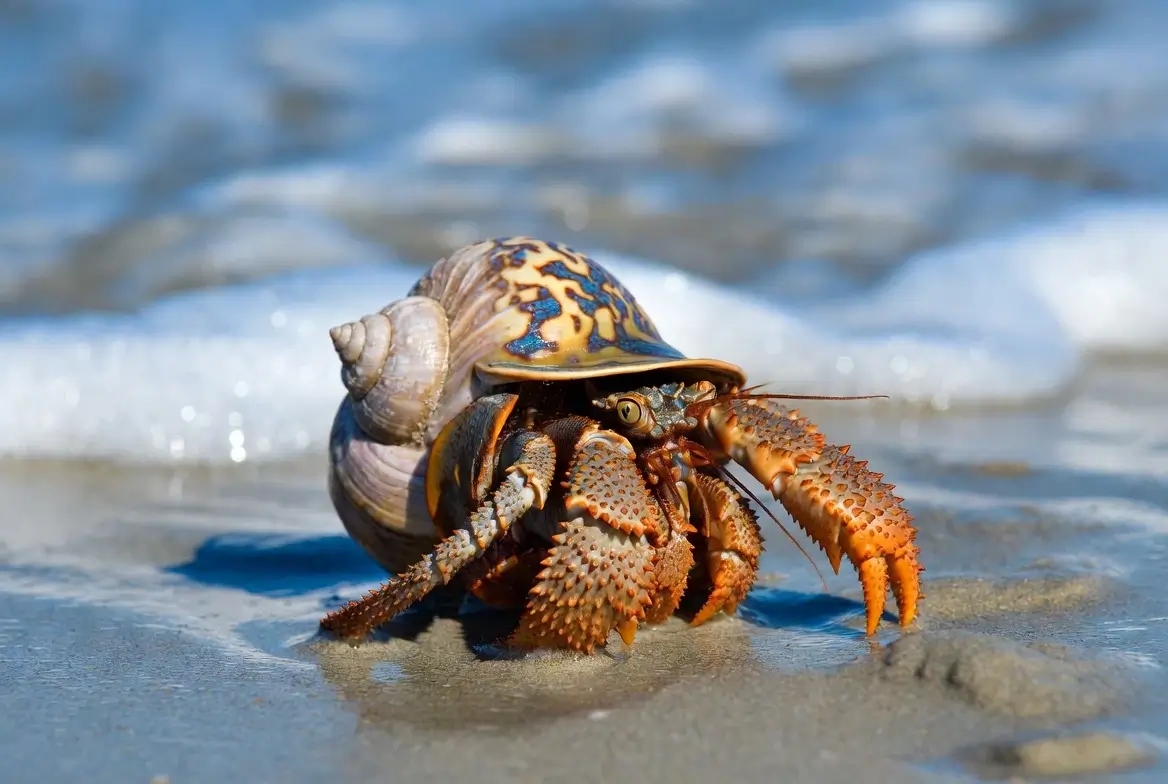
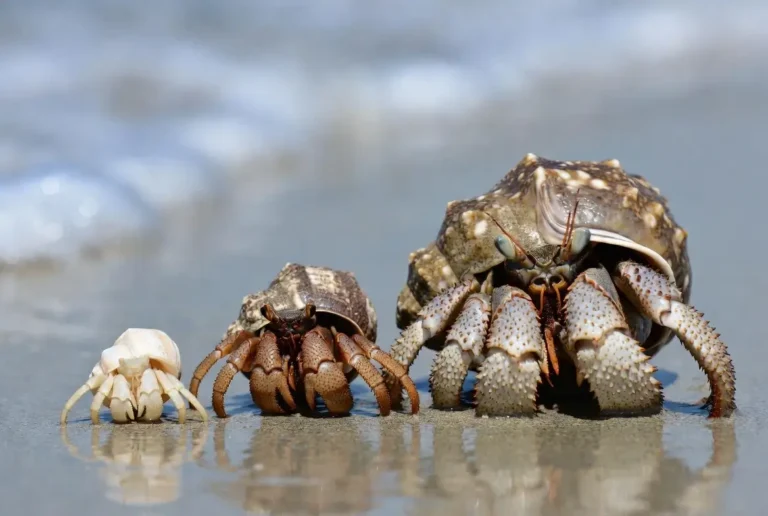
Hermit crabs are eaten by birds, fish, octopuses, larger crabs, sea stars, sharks, lizards, raccoons, and snakes. Pretty much anything bigger than them with a strong enough jaw or beak considers them a snack. But here is what makes hermit crabs special – despite being on the menu for dozens of animals, they have survived for over 150 million years. Their borrowed shell, their ability to hide, and some genuinely clever tricks have kept them going since the age of dinosaurs. Here is who eats hermit crabs, when they are most at risk, and how they have learned to outsmart their predators.
Predators in the Ocean
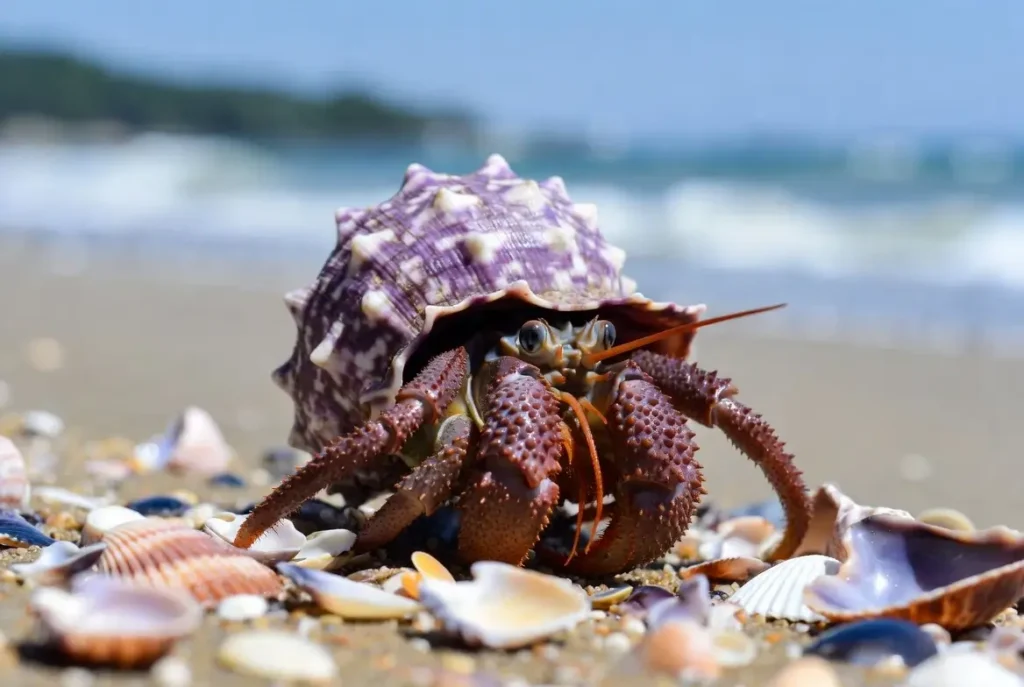
Marine hermit crabs face the most predators because the ocean is full of animals with strong jaws and crushing power. Here are the main ones:
- Octopuses. These are some of the smartest predators hermit crabs face. An octopus can wrap its arms around the shell, pry the crab out, and eat it in seconds. Their intelligence makes them especially hard to escape.
- Fish. Many types of fish eat hermit crabs, including triggerfish, pufferfish, wrasses, cobia, and drum. Some of these fish have powerful jaws built to crush shells open. Others swallow small hermit crabs whole and spit out the empty shell.
- Sharks and rays. Larger sharks and sea rays eat hermit crabs as part of their bottom-feeding diet. They are not picky and will scoop up anything small on the ocean floor.
- Sea stars (starfish). Sea stars can slowly pry open a shell and digest the crab inside. They are slow but patient, and a hermit crab that cannot run fast enough becomes an easy meal.
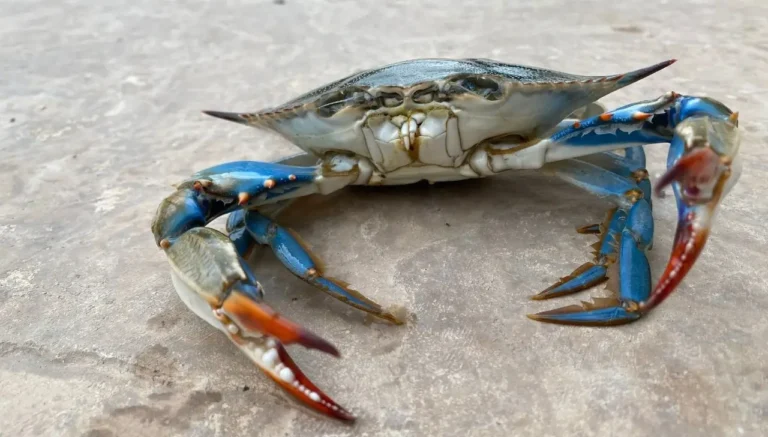
- Larger crabs. True crabs like blue crabs are natural enemies of hermit crabs. A blue crab can crush a hermit crab’s borrowed shell with one pinch of its powerful claw.
- Cuttlefish and squid. These fast-moving hunters grab hermit crabs from the ocean floor and pull them out of their shells using their tentacles.
Bonus: What Do Hermit Crabs Need to Survive?
Predators on Land
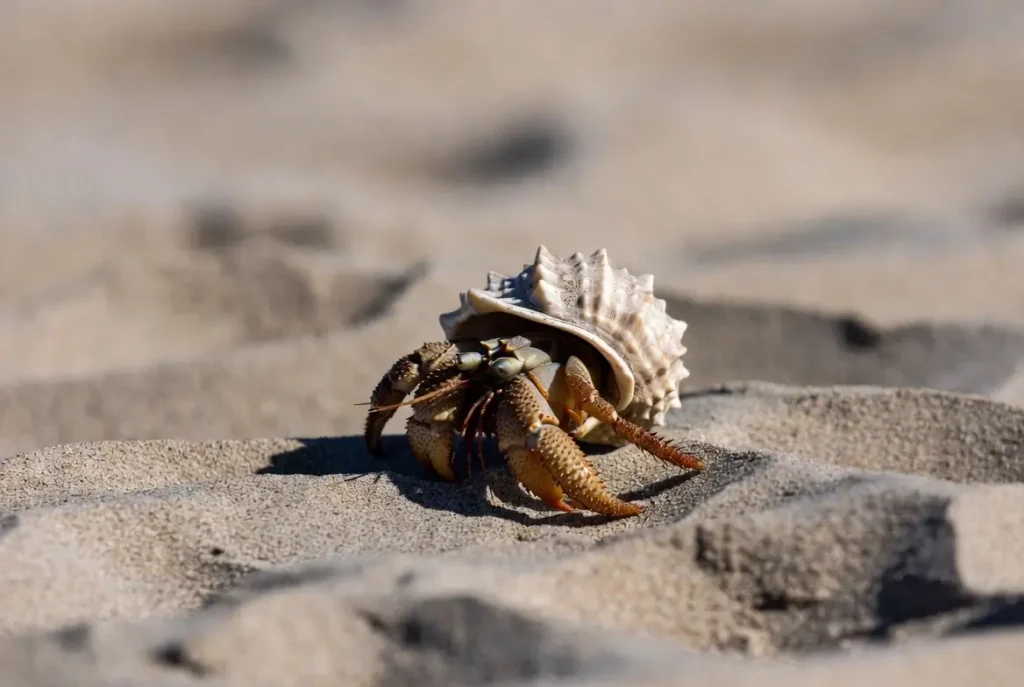
Land hermit crabs – the kind most people keep as pets – face a different set of predators:
- Birds. Seagulls, crows, herons, and other coastal birds are the biggest threat to land hermit crabs. Birds can spot a crab from the air, swoop down, and pick it up before the crab even knows what happened. Some birds are clever enough to drop the crab from a height to crack the shell open.
- Lizards and iguanas. In tropical areas, large lizards will eat hermit crabs if they catch them out in the open. Monitor lizards are especially good at this.
- Raccoons and foxes. In coastal areas, these mammals will dig up and eat hermit crabs, especially at night when the crabs are most active.
- Snakes. Some species of snakes eat hermit crabs, particularly in tropical island habitats where other food sources are limited.
- Other hermit crabs. Hermit crabs do not usually eat each other while alive, but they will eat a crab that has already died. In rare cases, a stressed or desperate crab may attack a molting crab that is soft and defenseless underground.
Bonus: How Long Does a Hermit Crab Sleep?
When Are Hermit Crabs Most at Risk?
Hermit crabs are not equally at risk all the time. There are a few moments when they are especially easy targets:
- During a shell swap. When a hermit crab switches shells, its soft body is fully exposed for about 10 seconds. That short window is when many predators strike.
- During molting. A molting crab buries itself underground and sheds its entire outer skin. For weeks or months, it is completely soft, unable to move, and has no defense at all. This is why deep substrate is so important in a pet tank.
- As babies. Hermit crab larvae are tiny, clear, and float in the open ocean like plankton. They are eaten by fish, jellyfish, and filter feeders in huge numbers. Out of thousands of larvae, only a handful survive to become adult crabs.
- Without a shell. A hermit crab that has lost its shell or been forced out by another crab is completely defenseless. Without the shell, it can survive only a few hours to a couple of days before drying out or being eaten.
How Hermit Crabs Stay Safe (5 Clever Tricks)
Despite being small and soft-bodied, hermit crabs have developed some genuinely smart survival strategies:
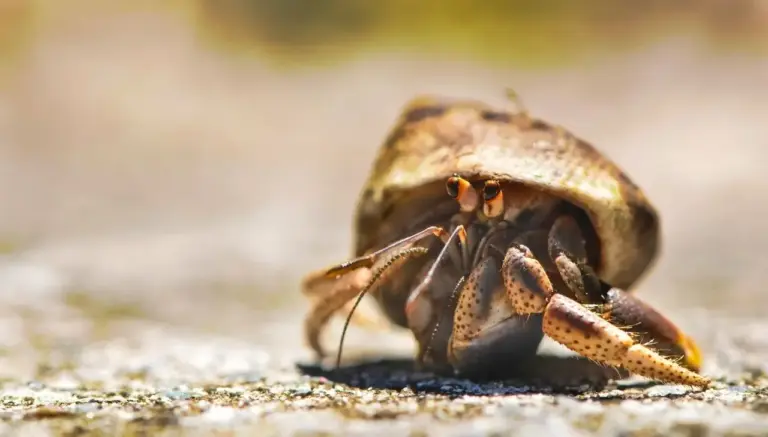
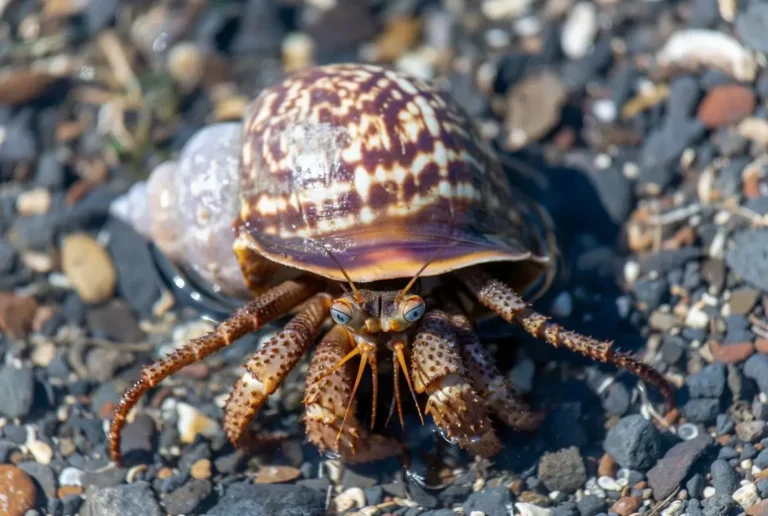
1. The shell door. When a hermit crab pulls inside its shell, it uses its big claw to block the opening like a door. Many predators cannot get past this seal. The claw fits the opening so perfectly that nothing can reach inside.
2. Burying. Land hermit crabs dig into sand to sleep, molt, and hide from danger. A crab buried 6 inches underground is invisible to birds, lizards, and most other predators.
3. Being nocturnal. By only coming out at night, hermit crabs avoid the most dangerous daytime predators – especially birds. Most bird species cannot hunt in the dark.
4. Dropping legs to escape. If a predator grabs a hermit crab by the leg, the crab can drop the leg on purpose and run away. The lost leg grows back during the next molt. It is a clever trade – lose a leg now, save your life.
5. Sea anemone bodyguards. Some marine hermit crab species carry live sea anemones on their shells. The anemones have stinging tentacles that scare away predators like octopuses and fish. In return, the anemone gets free transportation and access to the crab’s leftover food. It is one of the best partnerships in the animal kingdom.
Why Hermit Crabs Matter in the Food Chain
Hermit crabs play a double role in their ecosystem. As scavengers, they clean up dead plants, dead animals, and rotting food from beaches and ocean floors – keeping the environment healthy. As prey, they are an important food source for dozens of animals up the food chain. Without hermit crabs, coastal ecosystems would have more waste buildup and fewer food options for birds, fish, and other predators. They are small but they play a big role.
Bonus: How Old Is My Hermit Crab?
Conclusion:
Hermit crabs face predators from every direction – octopuses underwater, birds from the sky, and larger crabs on the ground. But they have survived for 150 million years thanks to their borrowed shells, their ability to hide, and some truly clever defense strategies. From blocking their shell door with a claw to carrying stinging anemones as bodyguards, these little animals are tougher and smarter than they look. That is a big reason why they are so fun to keep and watch
FAQs:
A: Yes. Seagulls, crows, and herons are among the biggest threats to land hermit crabs. Some birds drop the crabs from high up to crack the shell open.
A: Yes, in several ways. They hide inside their shell and block the opening with their big claw, bury themselves in sand, come out only at night, drop legs to escape, and some marine species even carry stinging sea anemones on their shells for protection.
A: Not while alive. Hermit crabs are scavengers and will eat a crab that has already passed away, but they do not hunt each other. In rare cases, a molting crab can be attacked by a tank mate, which is why deep substrate and enough space are important.
https://shorturl.fm/42fsi
https://shorturl.fm/9zBSi
https://shorturl.fm/nNkk7
https://shorturl.fm/KVvnf
https://shorturl.fm/G2nvO
https://shorturl.fm/VYo2W
https://shorturl.fm/9Ls1P
https://shorturl.fm/DnL2F
https://shorturl.fm/Dzrch
https://shorturl.fm/n9TT3
https://shorturl.fm/EG6zy
https://shorturl.fm/Dj96P