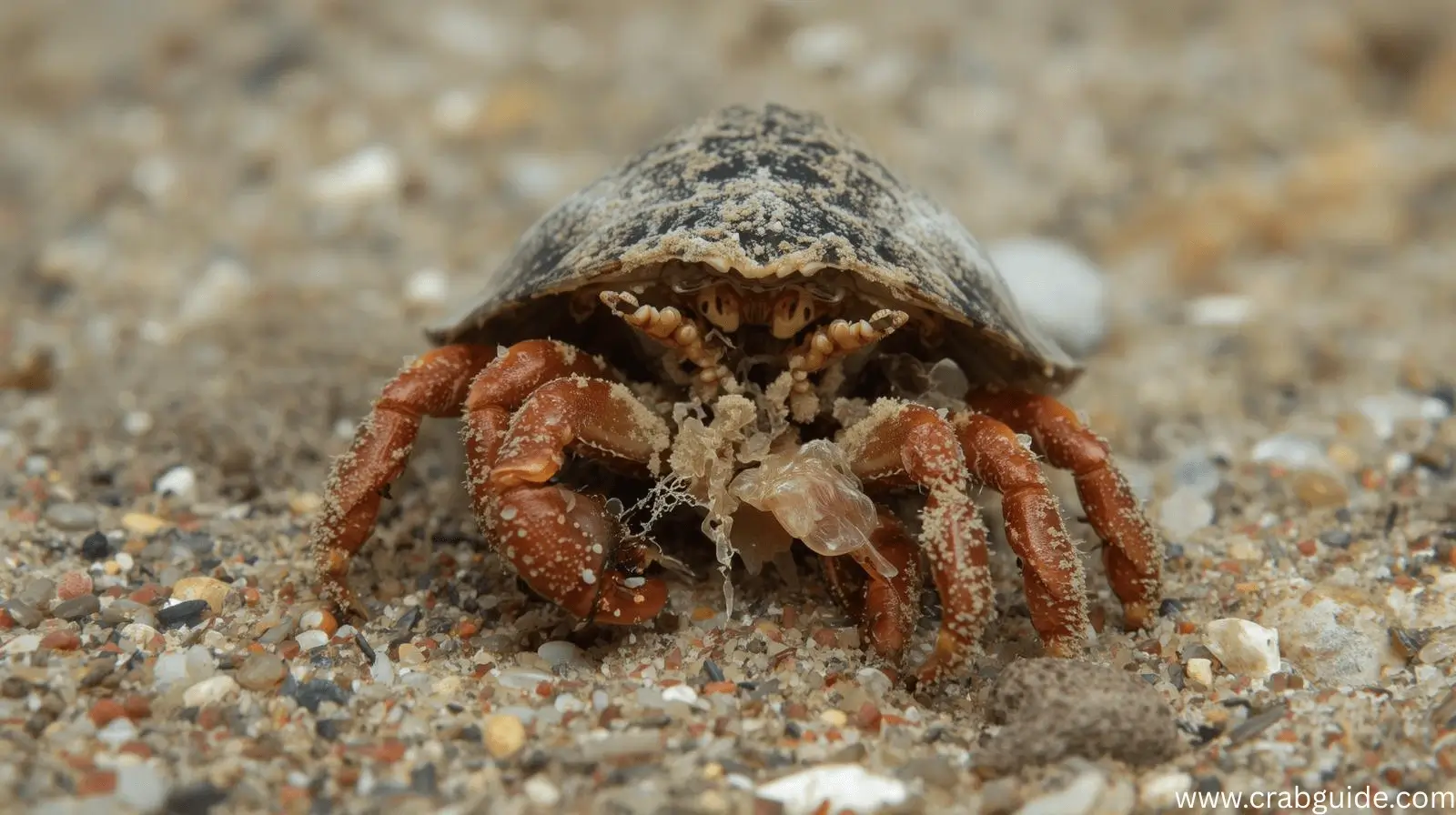
How Do Hermit Crabs Poop? Everything You Need to Know
Most owners assume a hermit crab steps halfway out of its shell to use the bathroom, keeping its home clean from the start. The truth is closer to the opposite.
Where the waste actually goes first, and how the crab deals with it afterward, explains a lot about why a “clean” tank still needs regular spot-checking.
How a Hermit Crab’s Digestive System Works
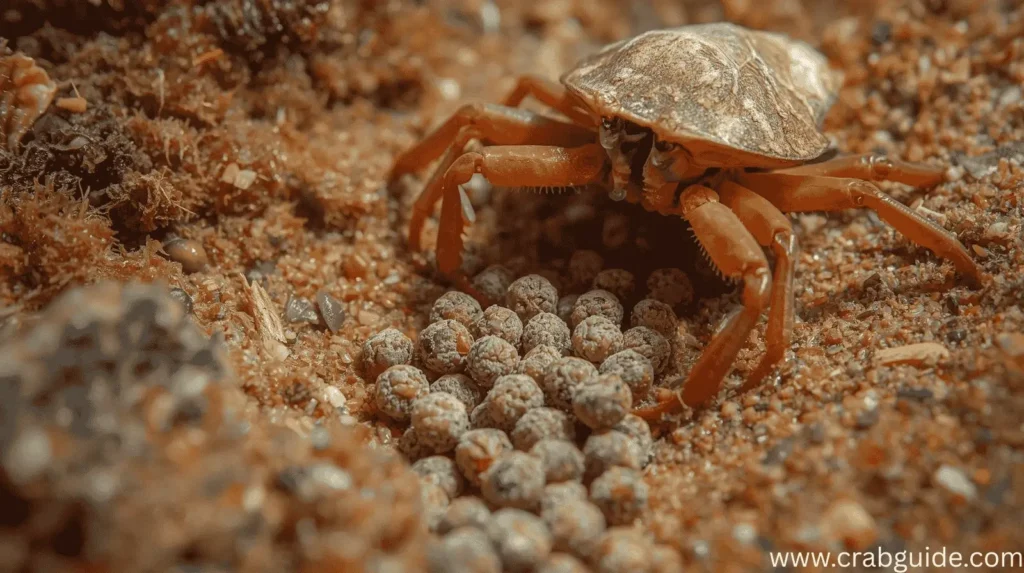
Food passes through several stages before it becomes waste.
- The mouth. Claws and mouthparts tear food into pieces small enough to swallow.
- The stomach. Food travels down a short esophagus, where enzymes break it down.
- The intestines. Nutrients get absorbed here, fueling movement, growth, and molting.
- Waste exit. Leftover material reaches the anus at the tip of the abdomen, inside the shell. Digestion to waste typically takes 1 to 2 days.
What Healthy Hermit Crab Poop Is:
Healthy waste is small, dark brown or black, dry, and solid. Some owners describe it as sand-covered thread.
Colour often shifts with diet, and one odd-colored dropping is not a health crisis on its own.
It should be odorless. A strong smell from the tank almost always means rotting food or waste buildup, not the pellets themselves.
Signs of Unhealthy Hermit Crab Poop:
Watch for changes as an early warning.
- Watery or runny poop. Often digestive upset or stress.
- Persistent discoloration. Unusual green or yellow waste alongside other symptoms can point to diet or illness.
- Foul-smelling poop. May signal infection or poor diet.
- No poop for days, without molting. Can mean stress, dehydration, or illness.
Check tank conditions first, temperature, humidity, and water. Most digestive issues trace back to poor conditions. See a vet if problems continue
Do Hermit Crabs Pee Too?
Yes, from a completely different spot. Urine exits near the base of the antennae, not through the anus. The amount is tiny and rarely noticed. This is a separate system from digestion entirely.
Conclusion:
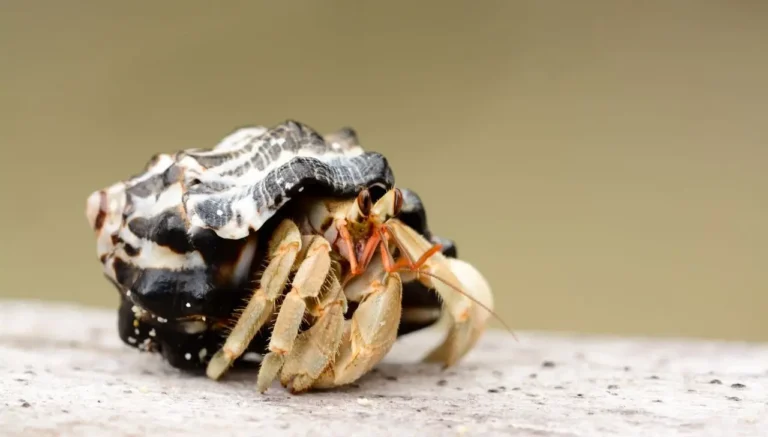
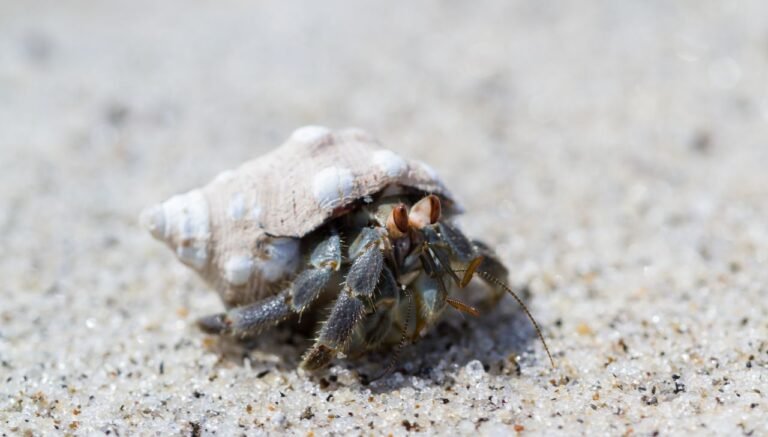
Hermit crab poop inside their shell, then clear it out afterward using their rear legs as they move. Healthy waste is small, dark, dry, and odorless, usually produced daily.
Watery, discolored, or foul waste, or none for several days outside a molt, is worth checking. Spot-clean regularly and most tank odour problems disappear.
(FAQs):
A: They defecate inside the shell, then use their small rear legs to flick or scrape the pellets out while moving or swimming.
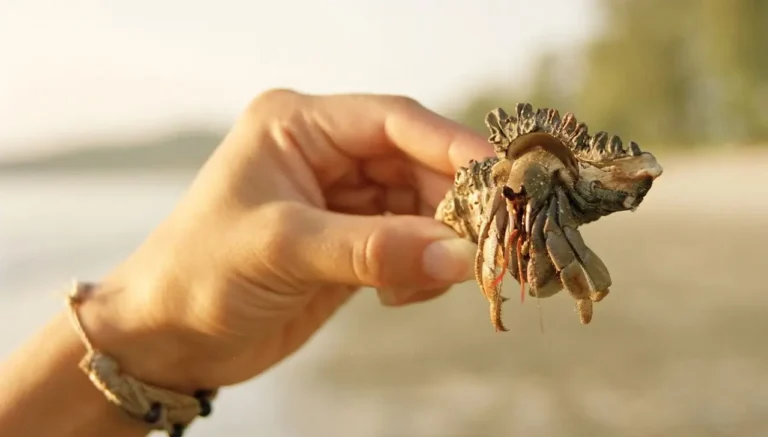
A: Gentle, occasional handling is fine. Too much stresses them. Keep sessions short and never pull a crab from its shell.
A: Yes. Waste buildup raises bacteria and ammonia. Spot-clean every 1 to 2 days to keep the tank healthy.
A: Almost never the poop itself, which is odorless when healthy. Check for rotting food or waste buildup instead.

2 Comments