Do Hermit Crabs Have Blood? [Blue, Not Red]
Yes, hermit crabs have blood, but it looks nothing like ours. Theirs is a pale blue fluid called hemolymph, and it carries oxygen using copper where our blood uses iron.
The strange part is that it is not always blue. The color comes and goes inside the body, and there is one moment when an owner is most likely to see it.
What Hermit Crab Blood Is:
Hermit crabs run on a fluid called hemolymph. It handles the same core jobs your blood does: moving oxygen, delivering nutrients, and fighting infection.
The difference sits in the oxygen carrier. Human blood uses iron inside a protein called hemoglobin, and iron plus oxygen reads as red. Hermit crab blood uses copper inside a protein called hemocyanin, and copper plus oxygen reads as blue.
Why Hermit Crab Blood Turns Blue:
Because the color depends entirely on oxygen. Hemolymph turns blue only while carrying oxygen. Drop the oxygen and it fades to almost clear.
That pickup only works while the gills stay damp, which is covered in how hermit crabs breathe.
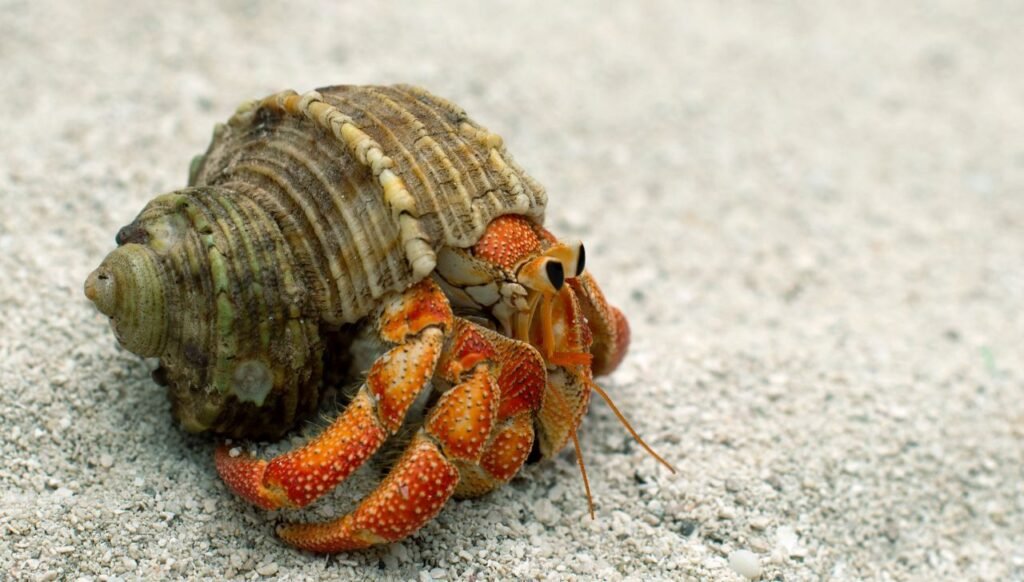
This is why most people never see it. The blue shows clearly when hemolymph hits open air, which usually means the crab is injured. If you have spotted blue fluid in a tank, that is what you are looking at.
Hermit Crab Blood vs Human Blood:
| Feature | Hermit crab | Human |
|---|---|---|
| Fluid name | Hemolymph | Blood |
| Color | Pale blue | Red |
| Oxygen carrier | Copper, in hemocyanin | Iron, in hemoglobin |
| Circulatory system | Open | Closed |
| Where it flows | Loose through body cavities | Sealed inside vessels |
How Hermit Crab Blood Circulates:
Through an open system, which works nothing like ours. Human blood stays sealed inside veins and arteries from start to finish.
A hermit crab’s heart pumps hemolymph straight out into open spaces, where the fluid washes directly over the organs. It then drains back toward the heart through small openings called ostia and starts the loop again.
So their blood bathes the body rather than being piped around it. That design matters when something goes wrong.
Do Hermit Crabs Bleed When Injured?
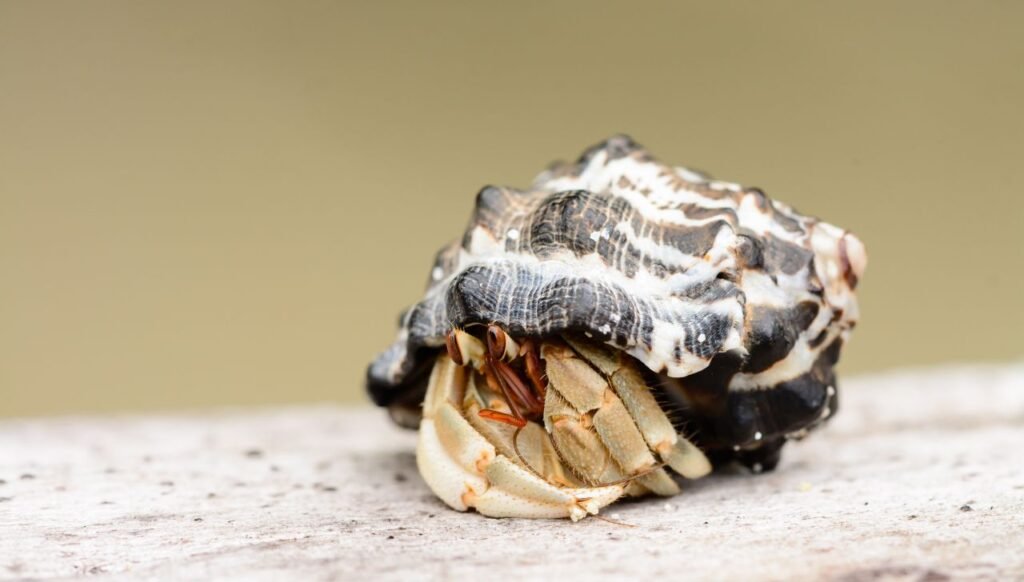
Yes, and an open system makes it worse. Because hemolymph is not sealed inside vessels, a wound can drain fluid fast with nothing to pinch it off.
The common cases are a dropped limb and a crack in the exoskeleton. A stressed crab sometimes sheds a leg on purpose, which is survivable, but it still costs fluid.
Heavy loss weakens a crab badly and can kill it. Small losses usually heal, and the limb grows back over the next few molts.
Treating an Injured Hermit Crab:
Act on the environment, not the wound. Very little can be safely applied to a hermit crab, so the goal is clean, stable conditions that let it heal itself.
- Separate it from tankmates. Other crabs are drawn to an injured one.
- Hold humidity and temperature steady. This matters more than anything else you can do.
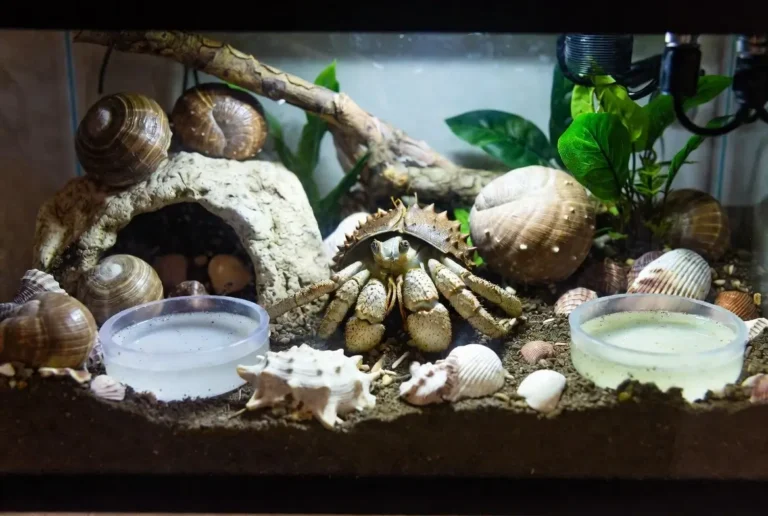
- Keep the substrate clean. An open wound plus dirty sand is how infection starts.
- Leave it alone. Handling causes stress, and stress causes more limb loss.
- Keep food and both water dishes available. It needs to rebuild fluid and shell material.
- Skip human antiseptics and ointments. These are not made for an animal that absorbs through its exoskeleton.
If the crab buries itself afterward, that is usually a good sign. Leave it buried.
What Else Hemolymph Does:
More than carry oxygen. Hemolymph is also the immune system, and specialized cells in it move to any wound to block infection and start repair.
It also does heavy work during molting, when the crab shifts fluid around to split the old exoskeleton and harden the new one. That is why an injured crab and a molting crab need the same thing: calm, humid, undisturbed conditions.
So hermit crabs have blood, just not the kind you would recognize. Pale blue hemolymph, copper instead of iron, flowing loose through the body instead of sealed in vessels.
It looks primitive next to ours, but it moves oxygen, fights infection, and drives the entire molting process.
Conclusion:
Blue blood is the least interesting part. Hemolymph carries oxygen, fights infection, and powers every molt, all at once. That is why an injured hermit crab and a molting one need the exact same care: humidity, quiet, and time.
(FAQs):
A: Yes, and it is common. Crabs, lobsters, spiders, scorpions, octopuses, and squid all use copper-based blood.
A: Both are copper-based and blue, but horseshoe crab blood contains a clotting agent used to test medical equipment. Hermit crab blood has no such use.
A: Not the way an injury drains it. Molting shifts fluid inside the body rather than out, though it leaves them weak for weeks.
A: Copper-based blood suits cool-bodied invertebrates and moves oxygen well in low-oxygen conditions. A different evolutionary path, not a worse one.