Hermit Crab Molting: Everything You Need to Know
If your hermit crab has buried itself and stopped moving, it is almost certainly molting. That is the natural process of shedding an old exoskeleton and growing into a larger one, and it means the crab is healthy and growing.
It also means the crab is completely defenceless underground. In the wild, roughly 90 percent of invertebrate deaths are connected to molting, and there is one thing owners do that makes those odds far worse.
What Is Hermit Crab Molting?
A hermit crab is wrapped in a hard exoskeleton that does not stretch. To grow, it has to crack the old one open, pull out backward, and harden a new one underneath.
The shedding itself takes under an hour. The full cycle of preparing, shedding, recovering and hardening runs weeks to months.
Here is the part most owners never hear. Once out, the crab pumps stored water into its soft new body to stretch it larger before it sets. That is what the molt sac was for.
They almost always do this underground, digging a small cave and staying down until it is finished. Depth, darkness, moisture and heat are all needed for it to work.
Signs Your Hermit Crab Is About to Molt:
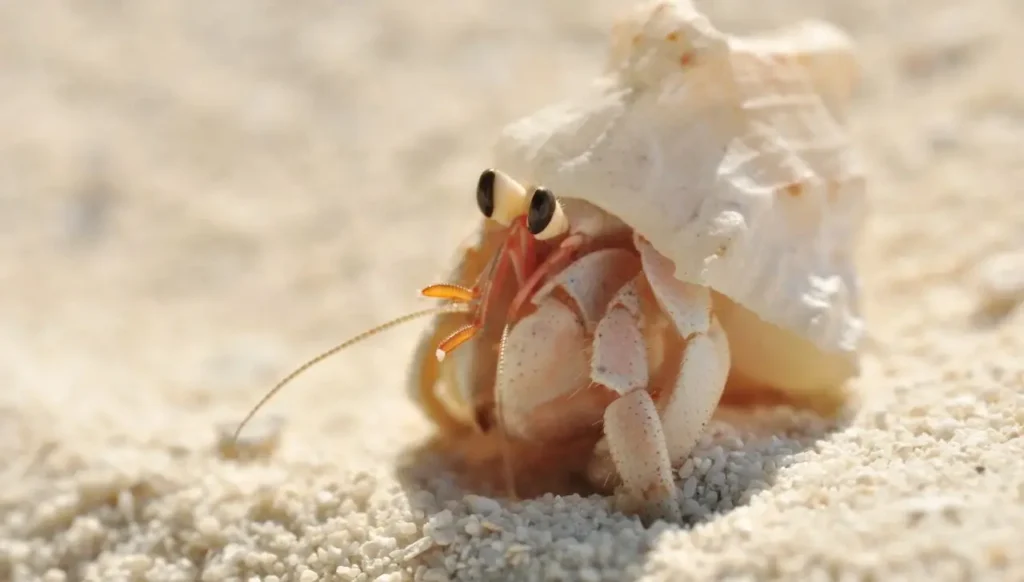
A crab preparing to molt eats and drinks heavily, digs constantly, slows down, and grows a gray molt sac on its abdomen. The exoskeleton goes dull and the eyes turn cloudy.
Not every crab shows all of them, and the same crab can behave differently from one molt to the next. Full list in how to tell if your hermit crab is molting.
How Long Molting Takes:
Small crabs finish in 1 to 3 weeks. Large and jumbo crabs can stay under for 2 to 4 months, sometimes longer.
There is no schedule. Newly bought crabs often take extra time while recovering from shipping. Full breakdown in how long hermit crab molting takes.
What the Shed Exoskeleton Looks Like:
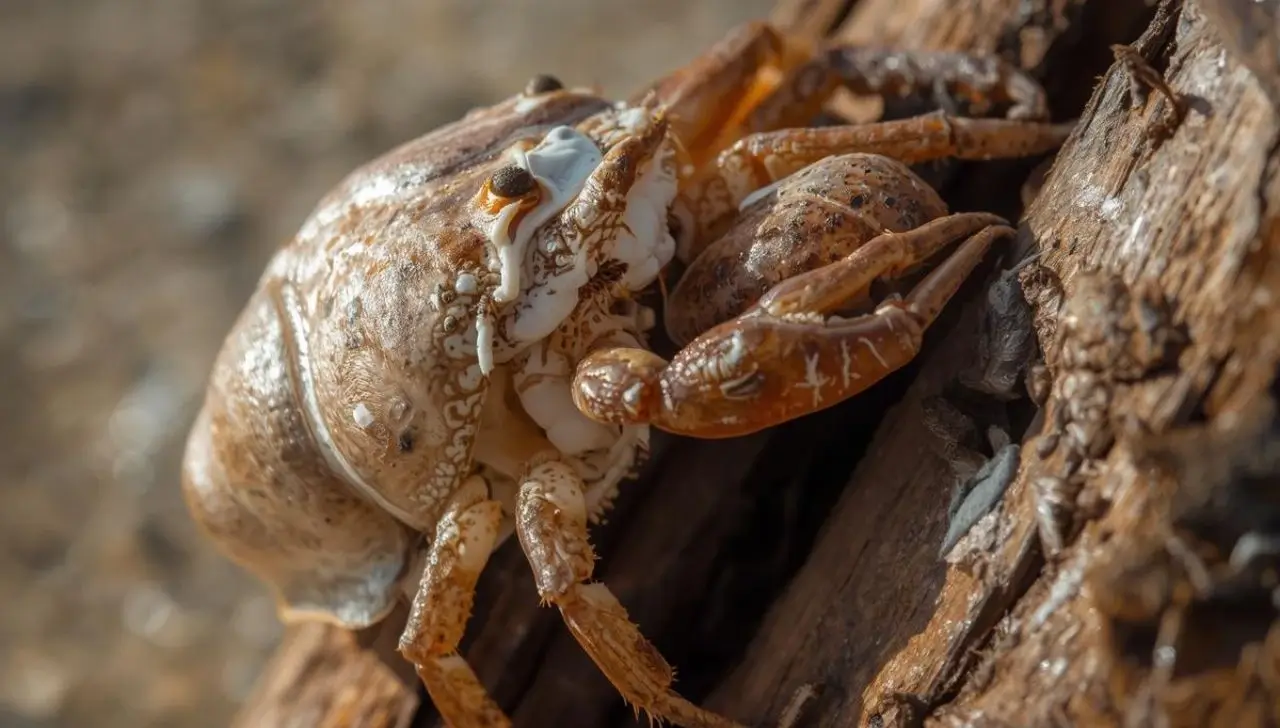
You will not see the molt itself, since it happens underground. What you may see is something that looks like a dead, hollow crab near the shell.
Do not throw it away. That is the shed exoskeleton. It is whitish, hollow, and crumbles easily if gently squeezed.
Leave it exactly where it is. The crab eats its own shed over the following days for the calcium it needs to harden the new exoskeleton, and removing it interferes with normal recovery.
What to Expect After Molting:
A resurfaced crab looks different. Extra hairy legs, sharp black claw tips, and possibly a brand new limb where one was missing.
Colour changes too, but not always the same way. It can come back lighter or darker than before, so do not worry if your crab looks unfamiliar.
Two things to watch. Do not mist a freshly molted crab directly, because moisture on soft tissue invites bacterial and fungal problems. And if a crab surfaces early looking pale and soft, separate it until it hardens, because other crabs will attack it.
The One Rule of Molting:
Digging up a molting hermit crab is the number one cause of molt-related death. Straight after shedding, the crab is soft enough that a gentle touch tears the new skin, and the stress alone can kill it.
Hold the temperature at 75 to 85 degrees Fahrenheit and humidity never below 70 percent, ideally 75 to 85. Keep food and water available.
One caution on darkness. Crabs need it to molt, but do not put a molting crab in total darkness. Deep substrate and a quiet tank are enough.
That is the entire job. The best help you can give a molting crab is no help at all.
Conclusion:
Molting looks alarming and it is completely normal. It is also the most dangerous period in a hermit crab’s life, which is why interference does so much damage.
Deep substrate, steady humidity of 75 to 85 percent, temperature of 75 to 85 degrees Fahrenheit, good food, and patience. Then leave it alone.
Frequently Asked Questions
A: No. They come out of the shell to molt, which is why a shell sitting empty near a buried crab is normal rather than alarming.
A: Yes. Failed molts come from poor nutrition, wrong humidity, disturbance, or existing weakness. Stable conditions and patience prevent most of them.
A: Calcium. Cuttlefish bone, oyster shell, and sand dollar all work, alongside the shed exoskeleton it is already eating.

https://shorturl.fm/I8lRM