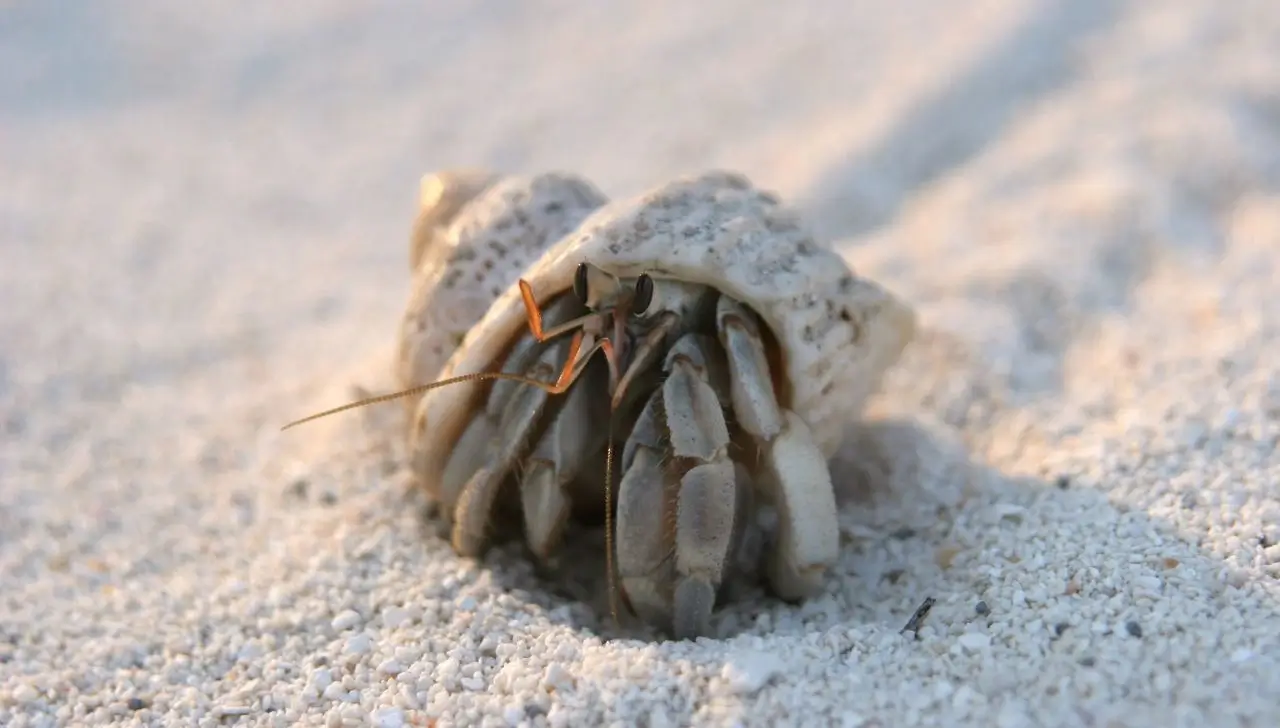
How to Tell If Your Hermit Crab Is Molting (8 Signs)
A hermit crab about to molt eats and drinks heavily, digs constantly, slows down, and grows a gray sac on its abdomen before disappearing underground.
The signs build over days or weeks, and most owners miss the early ones. There is also one test that separates a molting crab from a dead one, and it takes no equipment at all.
Signs a Hermit Crab Will Molt:
No crab shows every sign. Spotting two or three together is a strong clue.
- Eating and drinking heavily. Crabs load up beforehand to build a reserve that lasts the entire time underground.
- A gray or dark sac on the abdomen. This is the molt sac, a pouch of stored water and fat. Seeing it almost guarantees a molt is close.
- Constant digging. The crab tunnels around hunting for the right spot to go down in.
- Slowing down. An active crab turns sluggish and stays still, conserving energy.
- A dull, ashy exoskeleton. The old shell looks faded and chalky before it is shed.
- Cloudy eyes. The eyes turn milky in the days before a molt.
- Gel-like limb buds. Clear or pale nubs where a limb was lost. These can be grey, orange or pink, and often darken just before the molt.
- Pale leg joints. A washed-out look around the joints is another pre-molt clue.
Hermit Crab Molt Stages:
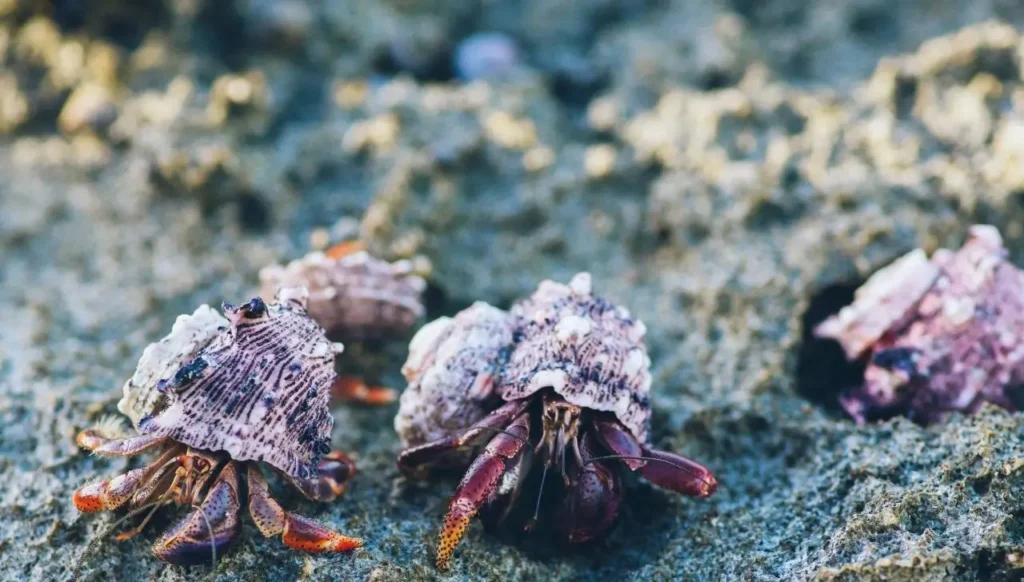
| Stage | What happens | What you see |
|---|---|---|
| Pre-molt | Stores food and water | Eating more, molt sac, digging |
| Burrowing | Digs underground | Crab disappears below the sand |
| The molt | Sheds exoskeleton | Happens underground, unseen |
| Recovery | New skin hardens | Stays buried, eats old shell |
| Resurfacing | Returns to the surface | Clean bluish color, new limbs |
How Long Does a Molt Take?
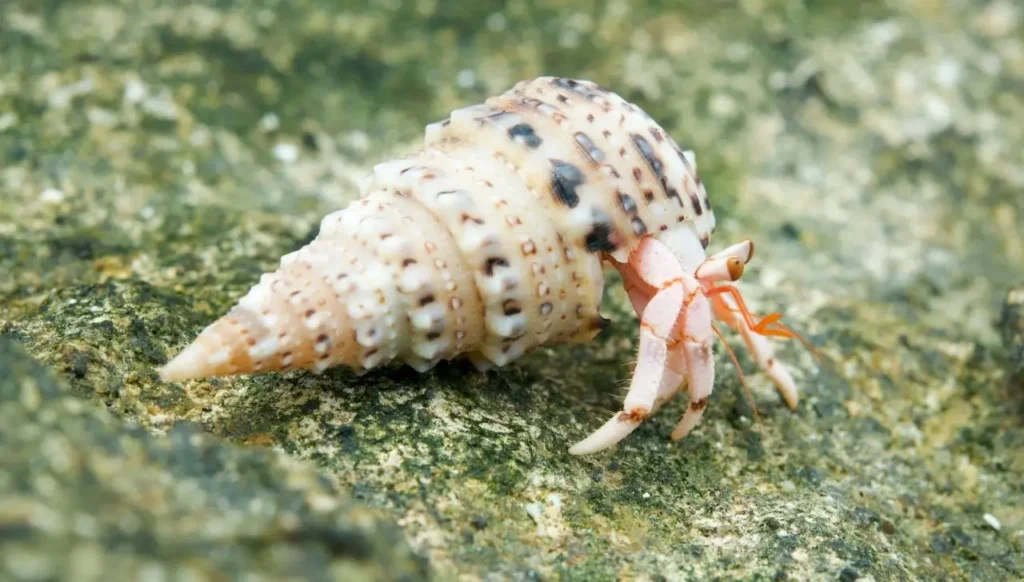
It depends on size. Small crabs finish in 1 to 3 weeks, large or jumbo crabs can stay under for 2 to 4 months. The actual shedding takes under an hour, and the rest is recovery.
Some crabs even go back down for a second molt before surfacing, which doubles the time. Full breakdown by size in how long hermit crab molting takes.
When Hermit Crabs Molt on Top:
Most crabs molt underground. A surface molt usually means the substrate is too shallow, too dry, or the tank is overcrowded.
It is riskier because the crab is exposed to tank mates while defenceless. Do not move it.
Instead, cover it with a clear plastic barrier, a cut soda bottle works, to block other crabs. Keep the area humid and leave the shed exoskeleton where it is.
If it keeps happening, add substrate. At least 6 inches of damp sand and coconut fiber.
Molting or Dead? How to Tell:
Smell is the test. A molting crab has little to no odor. A dead crab gives off a strong rotting fish smell within a day or two.
Position tells you more. A molting crab dug down on purpose and backfilled its tunnel. A dying crab usually stays limp on the surface.
Buried, pre-molt signs, no foul smell means molting. Leave it completely alone. If the other signs worry you, see why hermit crabs die.
What to Do While It Molts
Your job is simple. Protect and wait.
- Never dig it up. This is the leading cause of molt death. The new skin is paper thin.
- Hold conditions steady. Temperature 75 to 85 degrees Fahrenheit. Humidity never below 70 percent, ideally 75 to 85.
- Leave the shed skin. The crab eats its old exoskeleton for the calcium to harden the new one. Never remove it.
- Protect from tank mates. Smooth the sand over the spot so nobody digs down.
- Check your food. Ethoxyquin and BHT in commercial crab food are known molt inhibitors. Check the label.
- Keep food and water available for when it resurfaces.
Conclusion:
Watch for heavy eating, a gray molt sac, constant digging, sluggishness, a dull exoskeleton, and finally burrowing. The molt itself happens out of sight.
If there is no rotten smell, it is a molt. Keep the tank warm and humid, leave the shed skin where it is, and do not dig.
(FAQs):
A: Very likely. New crabs often molt as soon as they can to repair damage from shipping, and may stay under for weeks or months.
A: Small crabs every 1 to 3 months, medium every 2 to 5 months, large every 4 to 12 months. Younger crabs molt more often because they grow faster.
A: Not usually. A molt and a shell change are separate events, though a crab may want a bigger shell once it resurfaces larger.
A: New exoskeleton. A freshly molted crab looks clean and bluish, and any regrown limb often comes back a different shade until later molts even it out.


https://shorturl.fm/ZjaHh
https://shorturl.fm/bTRf0
https://shorturl.fm/pXJdK
https://shorturl.fm/KpgGF
https://is.gd/d7aUgB
https://shorturl.fm/KqDbR
https://shorturl.fm/z9yG0
https://shorturl.fm/WqAUA
https://shorturl.fm/8uHys
https://shorturl.fm/tcaoS
https://shorturl.fm/dwooa
https://shorturl.fm/FkFOd
https://shorturl.fm/N1MZh