Why Do Crabs Walk Sideways? (One Joint Explains It)
A crab’s shoulder joint barely bends forward or back. The next joint down bends easily, but only sideways. That single limitation decides the whole gait.
The stranger part is where this habit came from. A 2026 study traced sideways walking to one single ancestor, roughly 200 million years ago, and not every crab kept it.
The Joint Behind Sideways Walking:
Crabs carry five pairs of jointed legs, the front pair modified into claws. The joint where each leg meets the body allows almost no forward motion.
The second joint in each leg works differently. It bends readily, but only outward and sideways, which makes lateral movement the efficient option.
Moving sideways also keeps the legs from tangling with each other, which would trip the crab moving any other way.
Why Crab Steering Favors Sideways:
The main advantage is speed in either direction. A crab moving sideways travels left or right at nearly equal speed, with no need to turn around first.
That unpredictability is what actually matters. A predator cannot guess which way the crab steers next, and the flattened body shape also fits narrow crevices and sandy pits most other animals cannot use.
One Ancestor, 200 Million Years Ago:
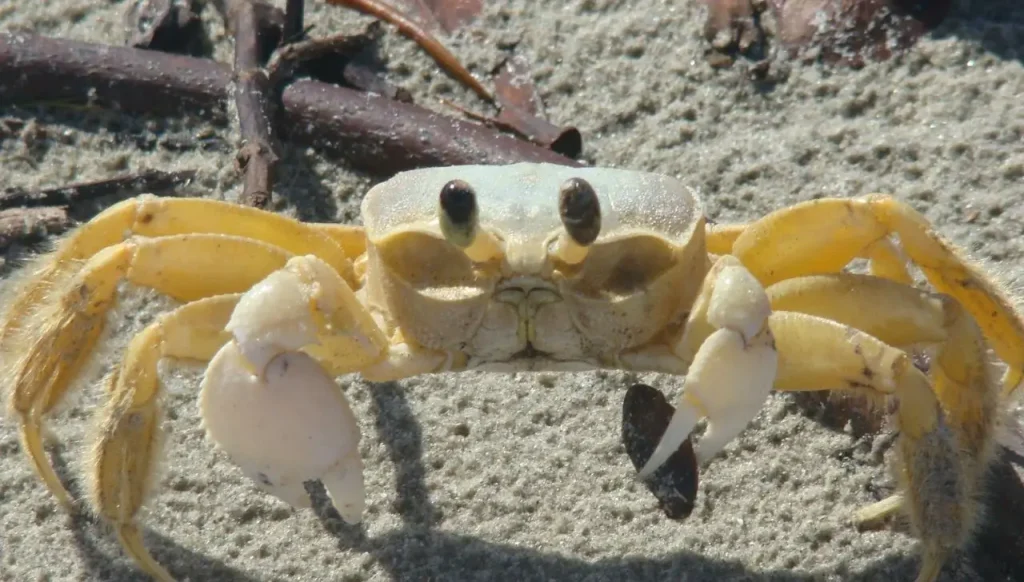
In 2026, researchers at Nagasaki University filmed 50 crab species moving inside arenas built to match their natural habitat. 35 walked sideways. 15 walked forward.
Mapped onto their family tree, the pattern was clear. Sideways walking evolved just once, from a forward-walking ancestor at the base of Eubrachyura, around 200 million years ago, just after a mass extinction.
That is unusually rare. Crab-shaped bodies have evolved independently many times across unrelated animals, a process called carcinization. Sideways walking did not. It happened once and spread through one family line.
Do Crabs Walk Backward Too?
Rarely, and only briefly. Most crabs can push themselves backward if startled, but researchers found it happens so seldom that it barely counted as a behavior category in the 2026 study.
Some lineages reverted to forward walking after evolving other defenses, like hiding inside clam shells or camouflage. Once the need to dart sideways faded, a few groups switched back.
Which Crabs Walk Forward, Not Sideways:
Not every crab in the sideways-walking family stayed that way, and several relatives never adopted it.
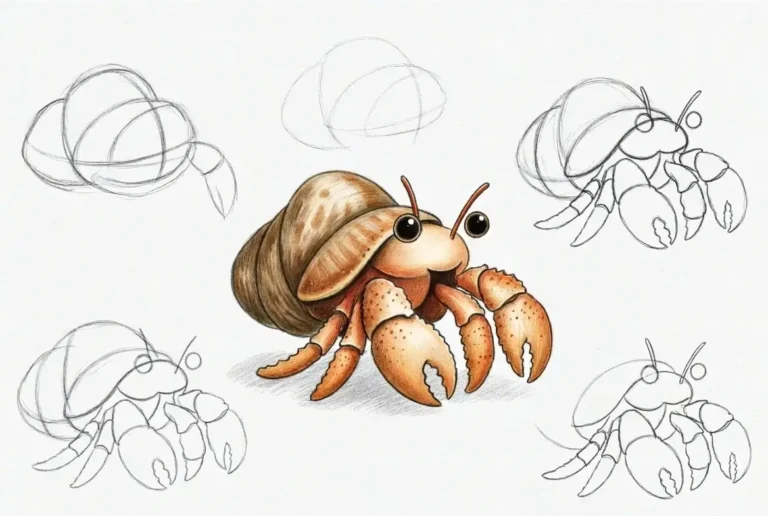
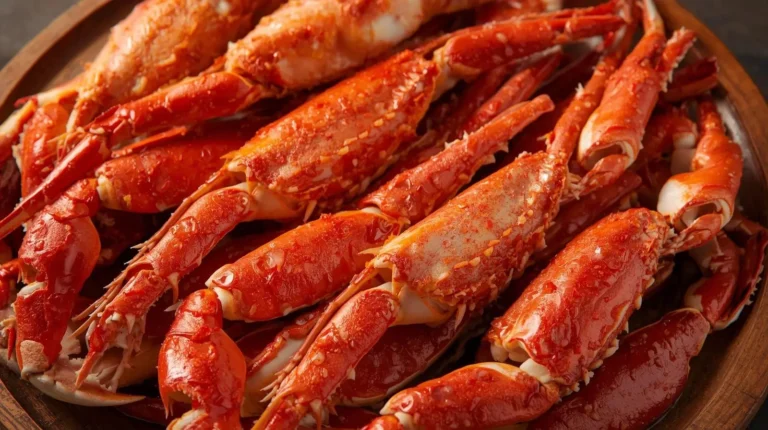
Spider crabs climb rock faces forward, using sharp leg tips for grip. King crabs, porcelain crabs, and coconut crabs all walk forward. Hermit crabs generally move forward and backward, not sideways, since they carry a shell rather than dodge predators laterally.
How Fast Do Crabs Move Sideways?
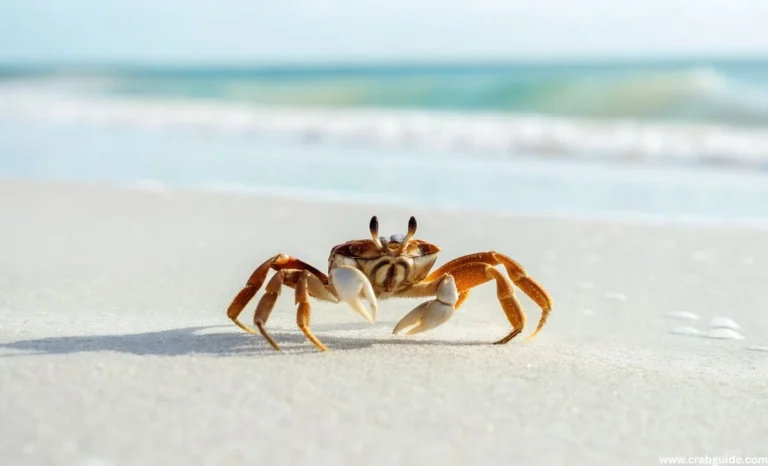
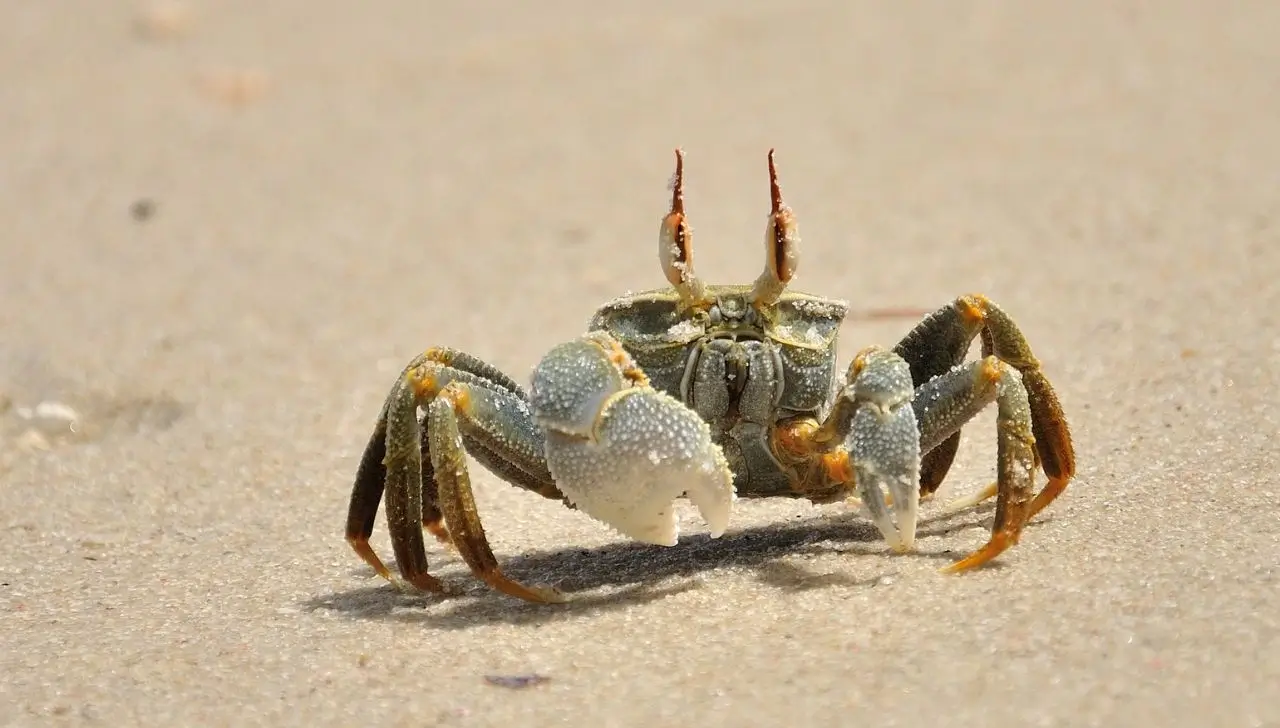
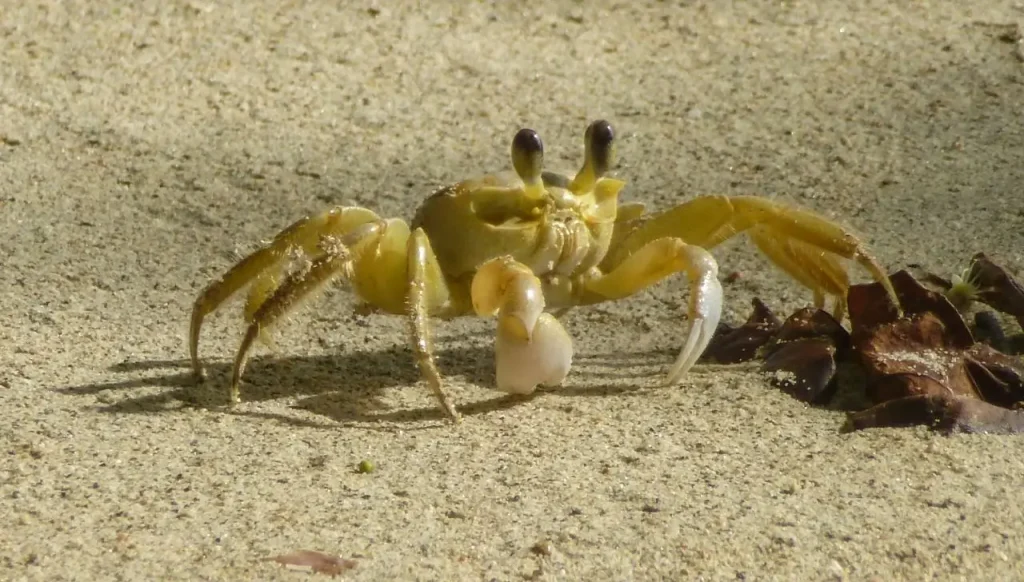
Ghost crabs hold the record. These pale, sand-colored runners hit 10 miles per hour, among the fastest of any crab on land.
Can Crabs Jump?
Yes, some genuinely can. The lightfoot crab, common on rocky shorelines, has been observed making vertical leaps several times its own body length to escape eels and octopuses.
A 2014 study confirmed crabs of all ages and both sexes could do it, using powerful rear legs and a lightweight shell for lift.
Conclusion:
A crab walks sideways because one leg joint only bends that way, and the habit traces back to a single ancestor 200 million years ago. Not every crab kept it. Spider crabs, king crabs, and hermit crabs all walk forward instead.
(FAQs):
A: No. Larvae drift and swim for weeks, and the sideways scuttle only appears once they molt into their first true crab form after settling on the seabed.
A: Yes. The exercise mimics a crab’s gait, hands and feet on the ground, hips lifted, moving sideways rather than forward.
A: No, the opposite. Forcing a sideways-built crab to walk forward is what costs extra energy, since it works against how the leg joints are made to bend.