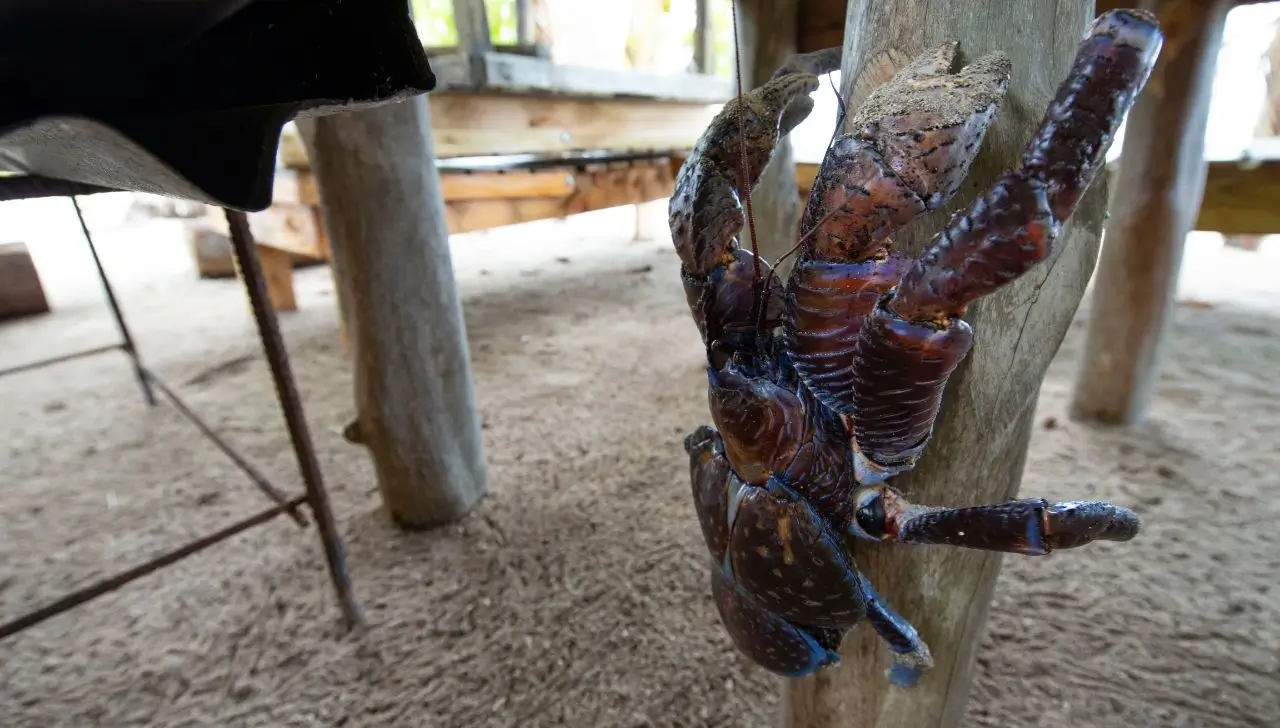
What Is a Coconut Crab? [World’s Largest Land Crab]
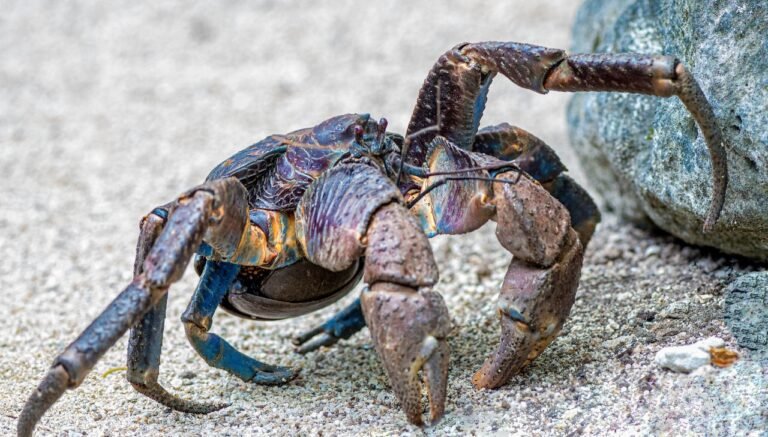
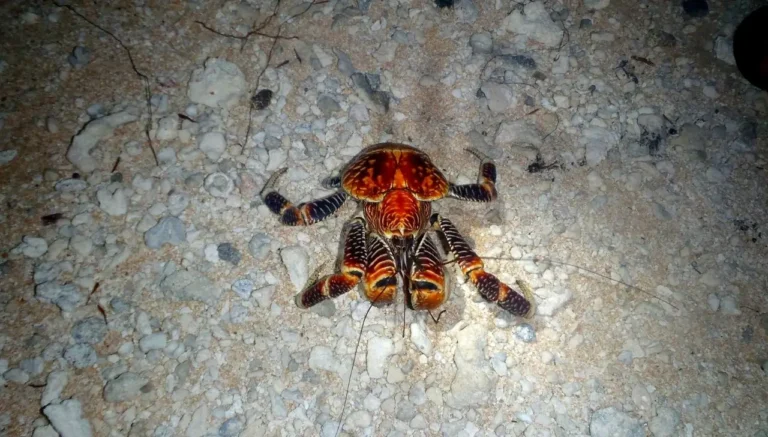
A coconut crab is the largest land-living crab on Earth, weighing up to 9 pounds with a leg span reaching 3 feet. Its scientific name is Birgus latro.
It is also not really a crab in the way most people mean. It started life as something much smaller and more familiar, and it gave that life up on purpose.
Coconut Crab Quick Facts:
| Feature | Detail |
|---|---|
| Scientific name: | Birgus latro |
| Weight: | Up to 9 pounds (4.1 kg) |
| Leg span: | Up to 3 feet 3 inches (1 meter) |
| Lifespan: | 40 to 60 years |
| Where it lives: | Indian and Pacific islands |
| Diet: | Fruit, nuts, seeds, carrion |
| Conservation status: | Vulnerable (IUCN, 2020) |
Are Coconut Crabs Hermit crab?
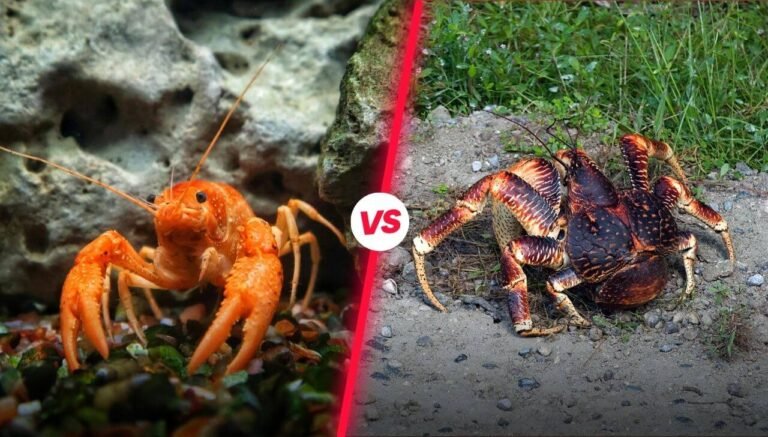
Yes, coconut crabs are hermit crabs, and this is the part that surprises people. A coconut crab is a hermit crab that outgrew the whole hermit crab arrangement.
Young ones behave exactly like the hermit crabs in a pet tank. They find an empty snail shell, move in, and carry it everywhere.
Then they abandon it. Once a crab outgrows the shells available to it, its abdomen hardens into permanent armor and the borrowed shell becomes dead weight. From that point it never needs another one.
How Big Coconut Crabs Get
Bigger than a house cat. Measured leg to leg, a full-grown one spans about the width of a car tire.
That makes it the largest land arthropod anywhere on the planet, a Guinness record holder for heaviest land crustacean. The Japanese spider crab is bigger overall, but it lives in the sea.
Getting there takes decades of slow growth, which is exactly why hunting hurts them so badly. The full picture is in how long coconut crabs live.
Where Do Coconut Crabs Live:
Remote tropical islands across the Indian and Pacific Oceans, from Zanzibar in the west out to the Pacific.
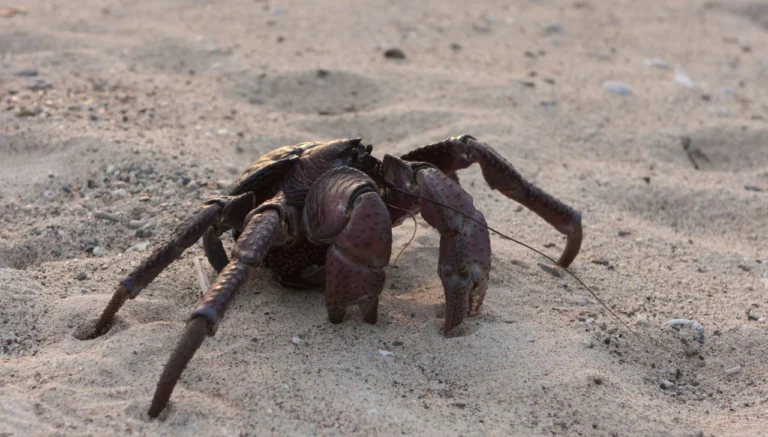
They dig burrows in sand or rock and shelter there through the heat of the day, then come out at night to feed. See the full range in where coconut crabs live.
What do Coconut Crabs Eat?
Despite the name, coconuts are an occasional meal rather than a staple. Most of their diet is fallen fruit, nuts, and seeds.
They also scavenge dead animals and take almost any food left within smelling range. They even hunt live prey, which is covered in what coconut crabs eat.
Coconut Crab Strength and Claws:
They have the strongest pinch of any crustacean, strong enough to crack a whole coconut open. They can also lift objects weighing around 66 pounds (30 kg).
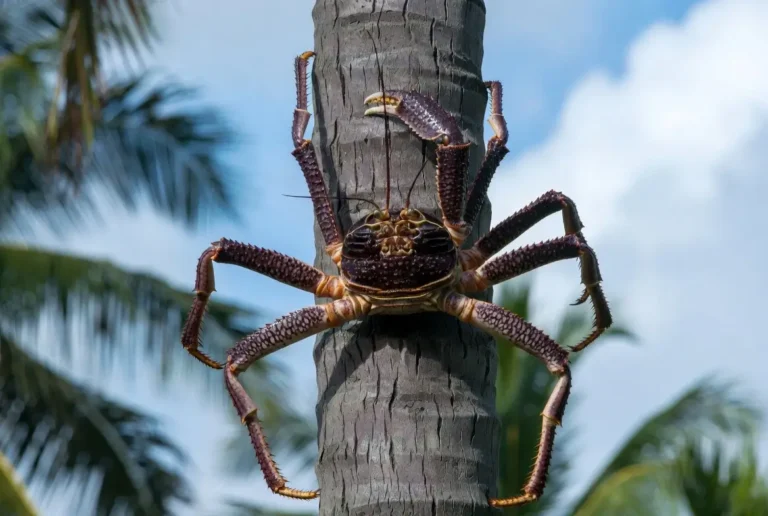
That grip plus real climbing ability lets them scale palm trees for food. The measured figures are in how strong a coconut crab is.
Why Coconut Crabs Steal Things:
Because they steal. A coconut crab will grab a spoon, a pot, a shoe, or a bottle and drag it off into the bushes.
There is nothing malicious about it. Their sense of smell pulls them toward anything that might be food, and checking usually means taking it. The habit earned them two nicknames, robber crab and palm thief.
Are Coconut Crabs Endangered?
Not endangered, but the IUCN moved them to vulnerable in 2020 after surveys found breeding populations down roughly 30 percent over 15 to 20 years.
Hunting, coastal habitat loss, and their slow growth all work against them. Many islands now limit harvest. It is also why keeping one as a pet is a bad idea and often illegal.
Conclusion:
A coconut crab is a hermit crab that grew out of its shell and never looked back. It climbs trees, cracks coconuts, and steals cutlery. The small crab in a pet tank has a very large cousin living on islands most people never visit.
Frequently Asked Questions
A: They are not aggressive, but their claws are extremely strong and can badly injure a hand. They usually flee from people, so they pose little danger if you leave them alone.
A: Yes, a tapping or clicking sound. They make it by beating a thin gill-ventilating appendage, and the pattern changes during mating.
A: Yes, they are excellent climbers. They scale palm trees and rocks to reach food and can even drop coconuts from a height to help crack them open.
A: No. They live for decades, reach 3 feet across, need constant tropical humidity, and are legally protected across much of their range.
A: Females carry eggs to the shoreline and release them into the sea. The larvae drift for weeks before coming ashore and finding their first shell.
3 Comments