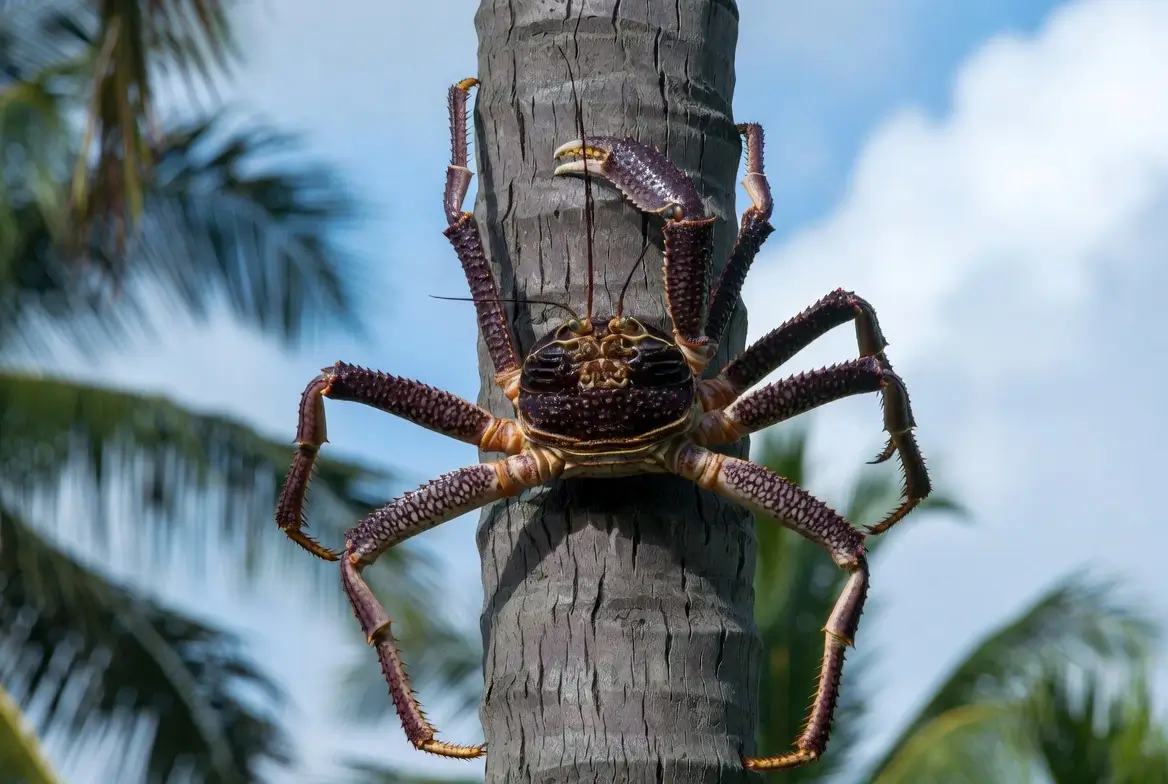
How Long Do Coconut Crabs Live? [Longer Than Most Crabs]
Coconut crabs live 40 to 60 years in the wild, which puts them among the longest-living land animals with a hard shell.
Nobody can prove the ceiling either way. A coconut crab destroys the evidence of its own age every time it grows, and that single problem is why the estimates stretch so far apart.
How Coconut Crab Age Is Estimated:
Mostly by guesswork. A tree leaves rings and a fish leaves marks in its bones, but a coconut crab sheds its entire exoskeleton every time it molts. Every growth record it built up goes with the old shell.
So researchers work backward from size instead. They track how much a crab grows between molts, then use that rate to estimate how many years it took to reach its current size. The biggest crabs get counted as the oldest.
That method gives a range, not a number. It is also why sources land anywhere between 40 and 60 years, with no way to settle it from a living crab.
Coconut Crab Life Stages:
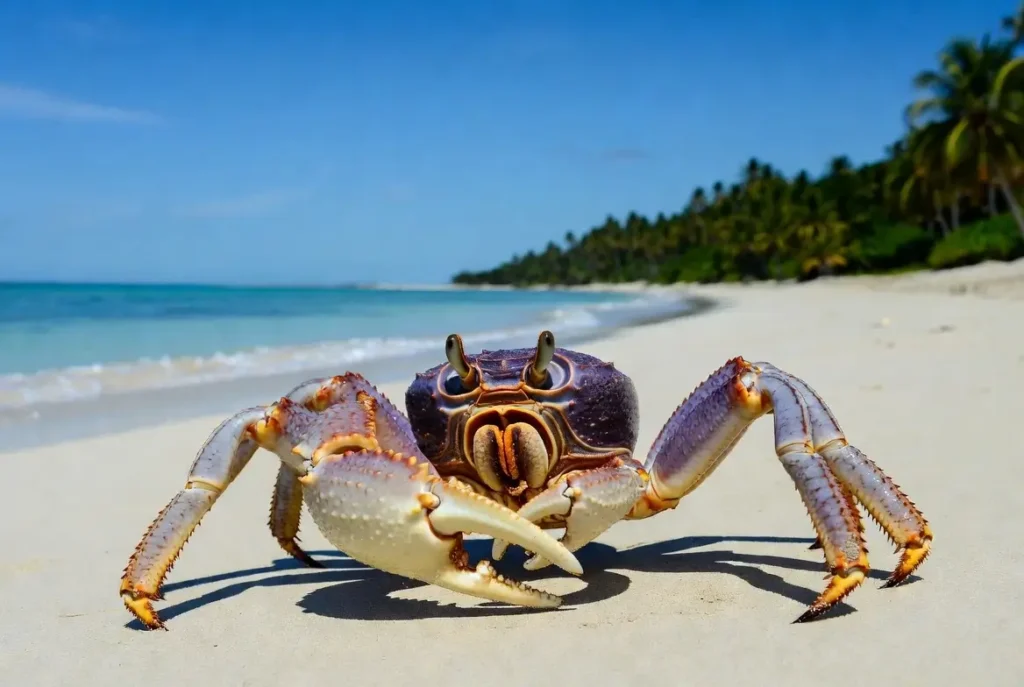
Coconut crabs grow slowly, and that is the whole story of their lifespan.
| Life stage | Age |
|---|---|
| Larvae drifting at sea | First 3 to 4 weeks |
| Young crab in a borrowed shell | First few years |
| Reaches adulthood | Around 5 years |
| Reaches maximum size | Decades of slow growth |
| Full lifespan | 40 to 60 years |
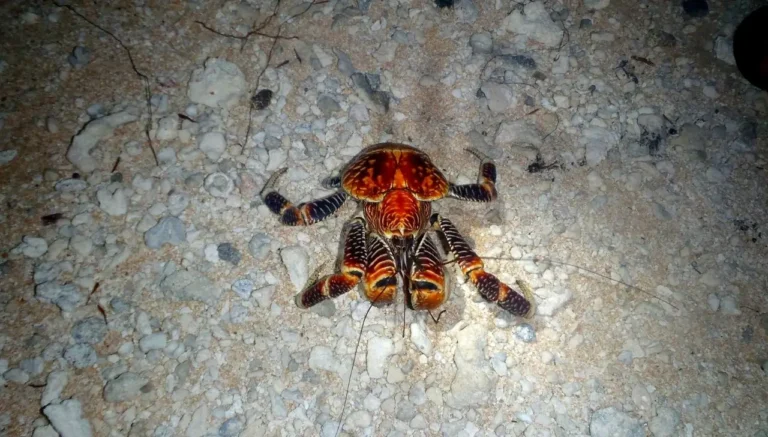
A coconut crab spends decades still growing. Most animals hit full size in a few years and then coast. This one keeps adding weight and reach long after most creatures its size are dead.
Why Do Coconut Crabs Live So Long?
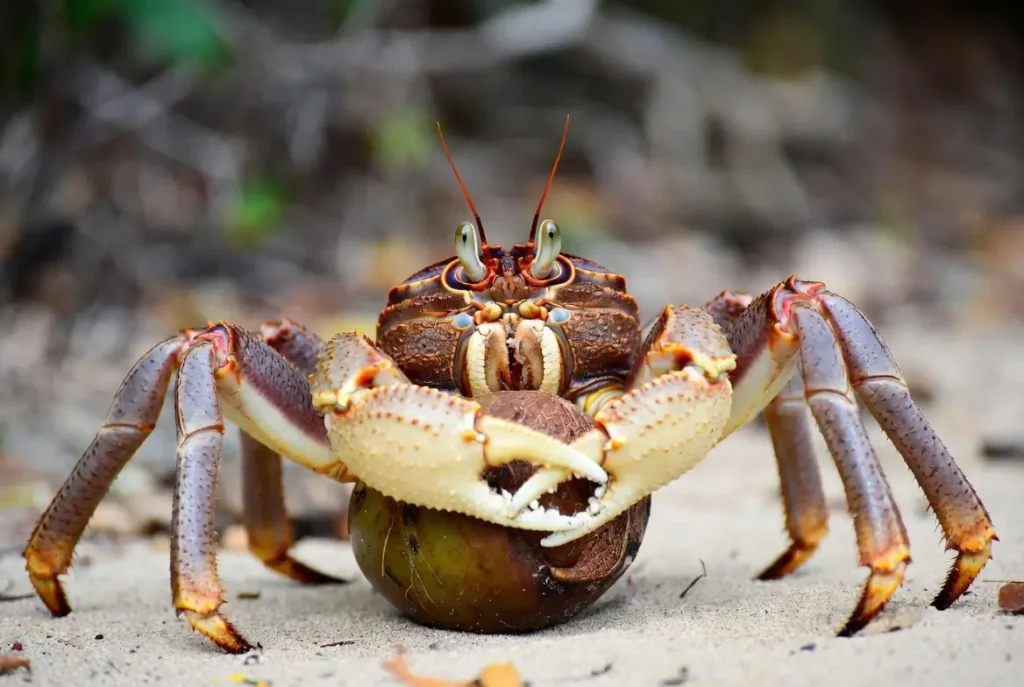
Four things stack up in their favor.
- They grow slowly. Slow growth and long life go together across the animal world, and coconut crabs take it to an extreme.
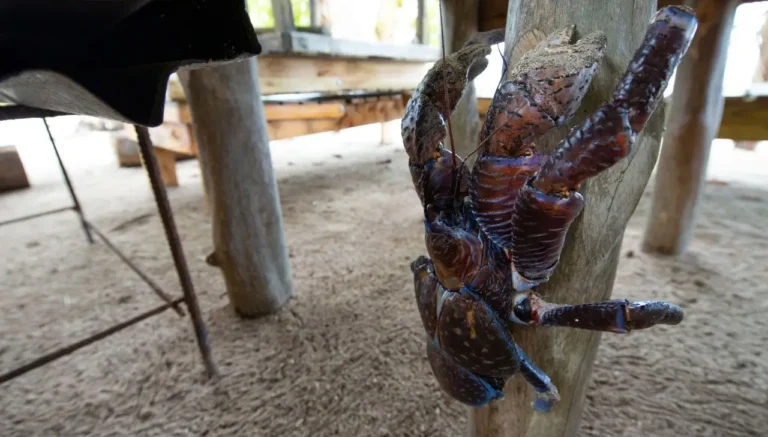
- Almost nothing hunts them. A full-grown coconut crab is huge and armored, with a claw powerful enough to end most confrontations.
- Their islands stay stable. Warm, humid, year-round conditions mean no harsh winter and no seasonal starvation.
- They rebuild themselves. Molting lets them replace a lost limb over successive shells, so an injury that would kill another animal becomes temporary.
Food helps too. They eat almost anything they find, so a bad year for one food source does not starve them.
What Shortens a Coconut Crab’s Life?
Nearly every real threat traces back to people.
- Hunting. They are caught and eaten as a delicacy across many islands, and the biggest crabs get taken first.
- Habitat loss. Coastal development and cleared forest remove the burrow ground and tree cover they need.
- Collection as pets. Taking wild crabs pulls breeding adults out of a population that replaces them very slowly.
Here is the part that makes it serious. A crab that needs 40 years to reach full size cannot bounce back from heavy hunting. Kill the big ones and the population takes half a century to recover, which is why conservation groups list coconut crabs as vulnerable.
Coconut Crab Lifespan in Captivity:
Far shorter than in the wild, and this is worth knowing before anyone tries. Coconut crabs do badly in captivity.
They need constant tropical humidity, deep substrate to burrow into, and the space to grow for decades. Home setups rarely provide any of it, and captive crabs often die during molting when conditions are wrong.
Many islands also protect them by law, so keeping one is illegal across much of their range.
Conclusion:
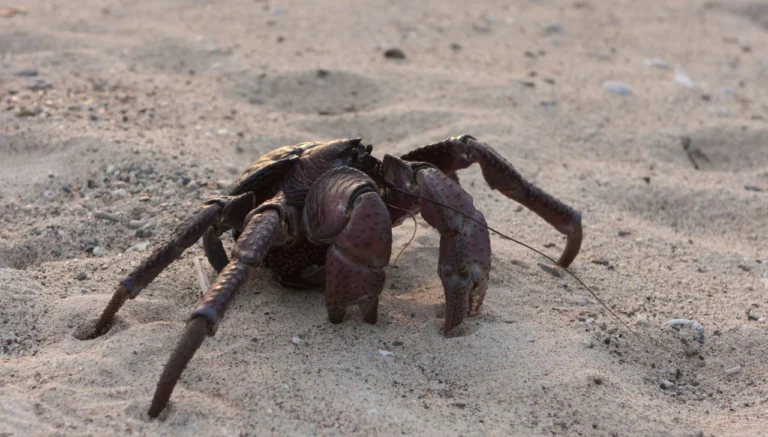
Coconut crabs outlive nearly every other land crab on Earth, and plenty of mammals too. Forty to sixty years is the working figure, and nobody can prove the true ceiling.
That long life is also their weak point. An animal that takes four decades to reach full size has no fast recovery available to it, so every big crab removed is a gap that stays open for a very long time.
(FAQs):
A: Much longer. Pet hermit crabs generally reach 15 to 25 years, while coconut crabs reach 40 to 60. Both are hermit crabs, just on completely different scales.
A: It happens, and molting is the most dangerous period in their lives. They stay soft and defenseless for weeks, which is why they seal themselves in a burrow first.
A: Around five years, once they reach adulthood. They keep breeding for decades after that, which is a large part of why losing older crabs hurts a population so much.
4 Comments