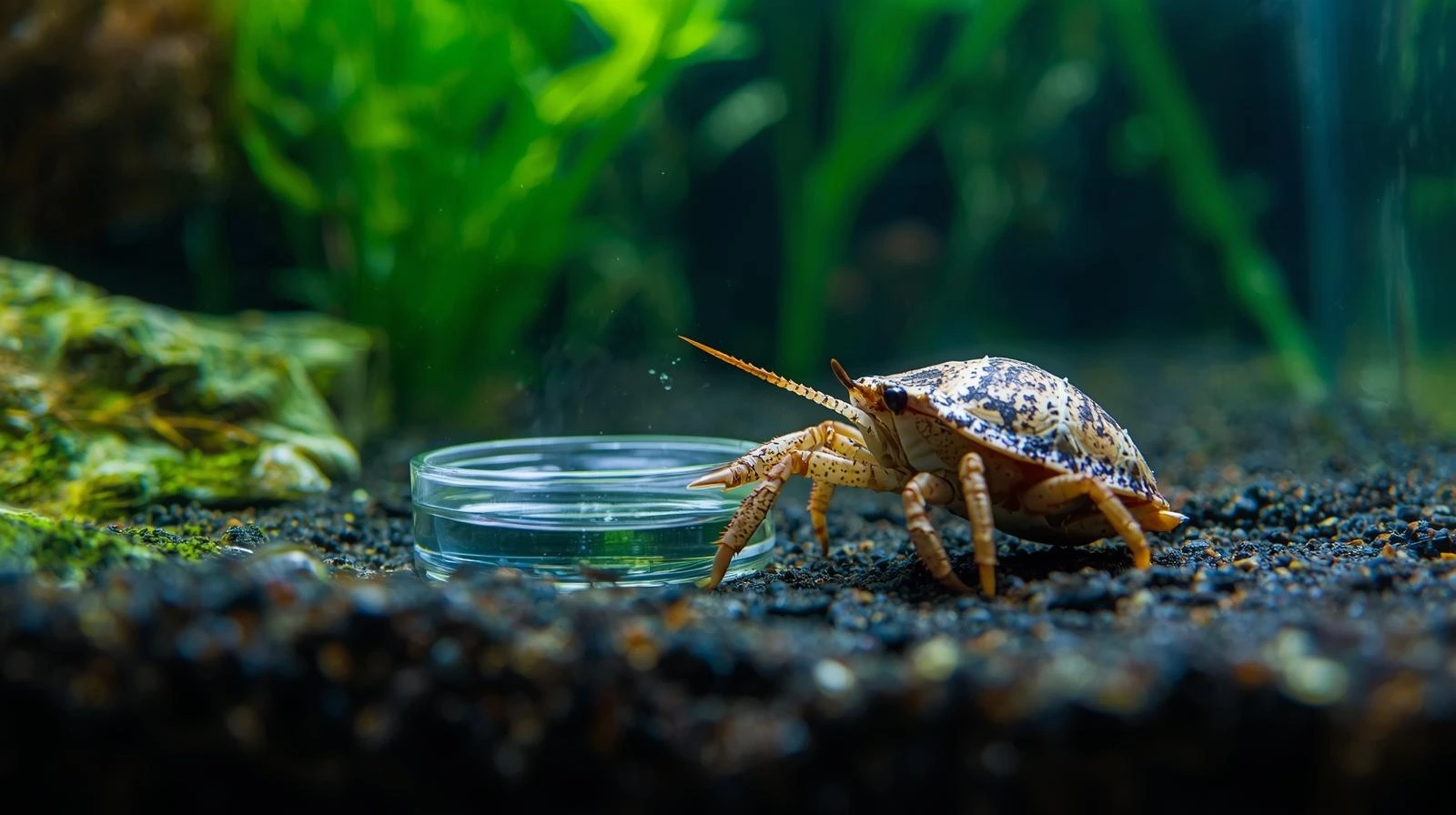
How Do Hermit Crabs Drink Water? Two Separate Systems
Hermit crabs do not sip or lap. They collect water using fine hairs on their mouthparts and carry it straight to the mouth, a few small mouthfuls at a time.
Filling the shell is a completely different operation, and researchers only worked out how it happens by using see-through shells and dye.
How Hermit Crabs Drink:
Drinking is simple and it uses one body part.
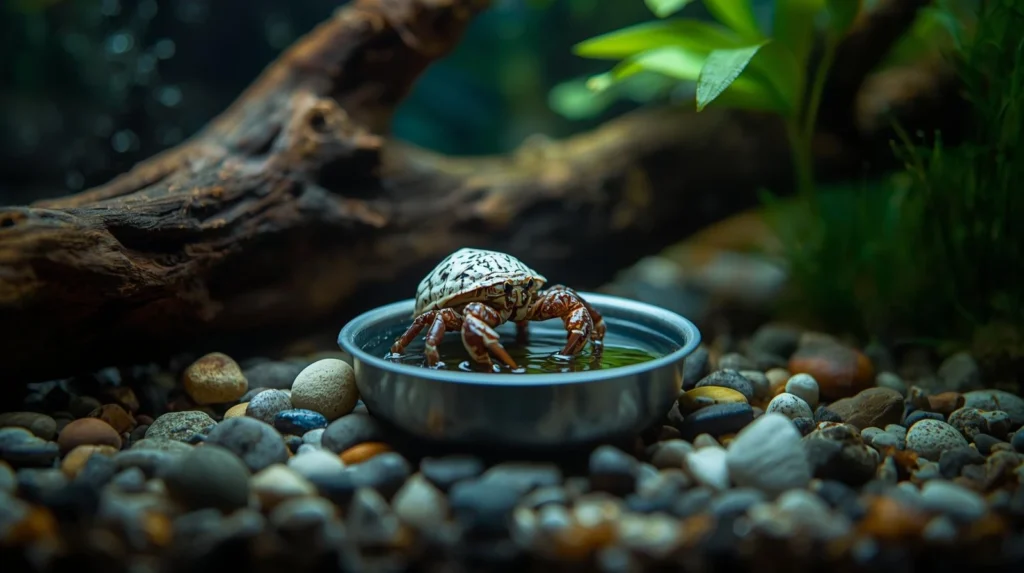
A hermit crab approaches water, often climbing right into the dish, and lowers its third maxillipeds into it. Those are small mouthparts sitting just in front of the mouth.
The maxillipeds are covered in setae, fine hair-like structures that pick up water on contact. The crab then lifts them to the mouth.
They can do this from wet sand too, not just standing water. And each visit takes on very little, so a crab sitting in a bowl for a while is only managing a handful of sips.
How Hermit Crabs Fill Their Shell:
This is the part most people get wrong. Shell water is not the same process as drinking, and it uses more of the body.
Both claws join in alongside the third maxillipeds, all covered in setae that gather water.
Then comes the pump. The crab beats its scaphognathite, a structure in the gill chamber, in reverse. That creates negative pressure which draws water back through the gill chamber and into the shell.
Researchers proved this using transparent shells and coloured dye to track where the water actually went.
Why Shell Water Matters:
That reservoir does four jobs at once.
- Keeps the gills wet. Without moisture on the gill surface, the crab cannot take in oxygen at all.
- Prevents dehydration. The crab draws on it when no bowl is reachable, which matters most during molting, when it may stay buried for weeks.
- Cools the crab. Evaporation from the shell reservoir lowers body temperature in heat.
- Balances salt. The reservoir is where osmoregulation happens, keeping internal salt levels correct.
What Water Hermit Crabs Need:
Land hermit crabs need both, at all times, in separate dishes.
Fresh water: handles hydration and tops up the shell supply.
Salt water : drives osmoregulation, supports gill health, and enables molting. Without it crabs suffer failed molts, getting stuck in the old exoskeleton, which is usually fatal.
Use true marine salt. This matters more than most guides admit. Products labelled aquarium salt are often just sodium chloride and lack the mineral balance of sea water. Table salt is never acceptable. You want a marine or reef aquarium salt mix.
Dechlorinate first, then add salt. Marine salt does not neutralise chlorine or chloramine. Treat the water first, always.
Keep both dishes deep enough to submerge in with an easy way out, and change them every 1 to 2 days. Skip sponges, since they harbour bacteria.
Signs of a Dehydrated Hermit Crab:
Catch this early and it is fixable.
- Barely moving. Sluggish, and may refuse to leave the shell.
- A dry, dusty shell. It can look faded or lighter than normal.
- Limp limbs. Legs and claws seem weak.
- A stuck molt. A crab caught partway through a molt is very often short on water.
- Constant burrowing. It is hiding to hold onto moisture.
Check both dishes first, then humidity, which should never drop below 70 percent and ideally sits at 75 to 85.
Conclusion:
Hermit crabs run two water systems. They drink through setae on the third maxillipeds, and they fill the shell using both claws plus a reversed gill pump.
Give them fresh and salt water in separate dishes, use real marine salt on dechlorinated water, change it every day or two, and hold humidity above 70 percent.
Frequently Asked Questions
A: Yes, mostly at night. They top up shell water and keep the gills moist, though each visit takes on only a small amount..
A: Roughly 24 to 48 hours. The gills dry out and the crab suffocates, which makes an empty dish more dangerous than an empty food bowl.
A: No. Most aquarium salt is plain sodium chloride. You need a marine or reef salt mix that recreates the mineral balance of sea water.


https://shorturl.fm/YurmM