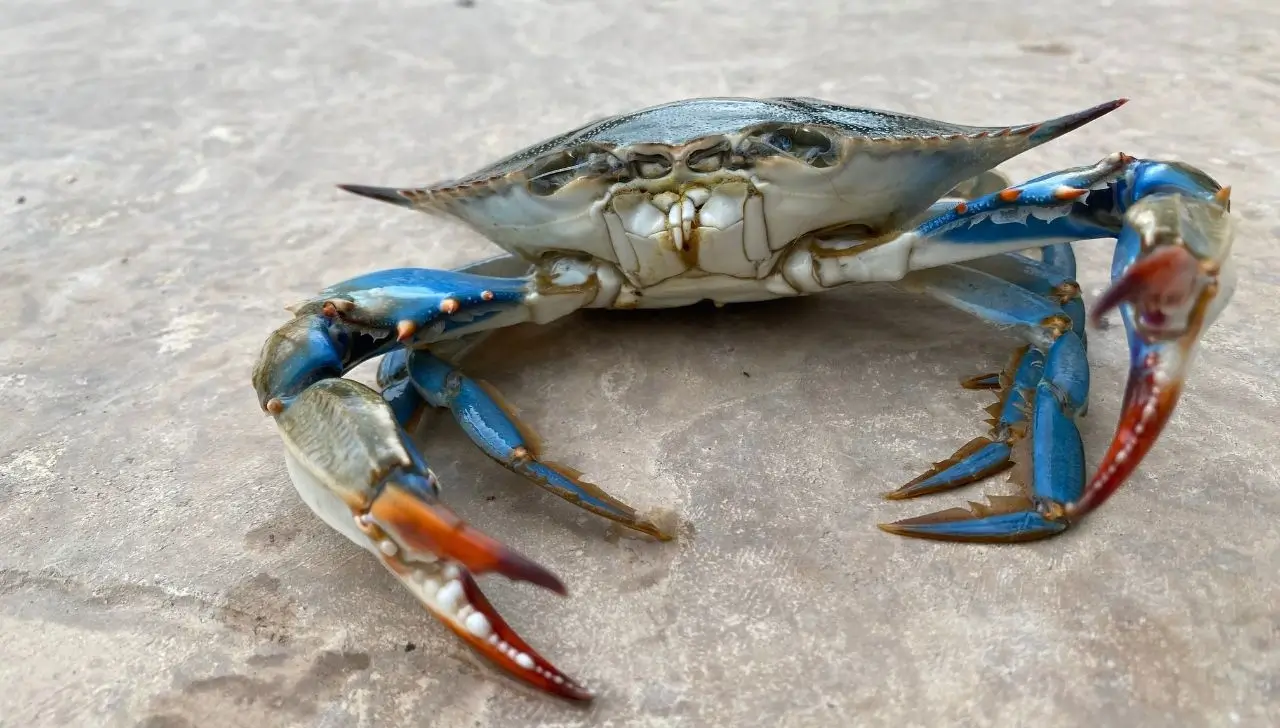
How Long Do Hermit Crabs Live? [Decades, Not Years]
With proper care, pet hermit crabs live 15 to 25 years, and some pass 40. These are decades-long companions, not short-term pets.
Most never get close. The gap between a crab that lives two years and one that lives forty comes down to a handful of tank conditions, and one crab proved exactly how far that gap stretches..
Hermit Crab Lifespan in Captivity:
Well kept pet hermit crabs typically reach 15 to 25 years.
The record holder is Jonathan Livingston Crab, bought from a boardwalk shop in 1976 by Carol Ann Ormes. He died in February 2021 at around 45 years old. His companion, Crab Kate, reached 35.
In the wild, hermit crabs live around 30 years. So the best kept captive crabs actually outlive wild ones, while most pet store crabs die within one to two years from poor tank conditions
What Shortens a Hermit Crab’s Life:
They depend entirely on their environment, and small mistakes compound.
Low humidity and wrong temperature. They breathe through moist gills, so they need humidity never below 70 percent, ideally 75 to 85, and temperature of 75 to 85 degrees Fahrenheit. Dry or cold tanks are the leading cause of early death.
- Shallow substrate. They need at least 6 inches of damp sand and coconut fiber to bury and molt safely.
- Stress. Overhandling, loud noise, bright light and overcrowding all shorten life. Calm crabs live longer.
- Poor diet. A varied diet of protein, fruit, vegetables and calcium builds a strong exoskeleton. Weak nutrition shows up over years.
- Missing salt water. Both fresh and salt water must be available at all times, both dechlorinated.
Why Old Hermit Crabs Die:
Here is something most owners never hear. Age itself rarely kills a hermit crab. Molting does.
Shedding an exoskeleton takes enormous energy, and that cost rises as a crab gets larger and older. Eventually the effort becomes too much, and a failed molt is what ends most long-lived crabs.
Lobsters die the same way. It is the price of an animal that has to rebuild its own armor over and over for decades.
Why Pet Store Crabs Die Young:
Rarely old age. Almost always bad starting conditions.
Pet store crabs are wild caught, shipped in dry conditions, and sold with genuinely harmful gear: painted shells, wire cages, and gravel. None of it suits the animal.
New owners then house them too dry, too cold, or without salt water, and the crab declines slowly over months. Every one of those causes is preventable.
Hermit Crabs Without Food or Water:
A healthy hermit crab manages roughly 2 to 3 weeks without food, though that is survival, not health. During a molt it may go longer, eating its own shed exoskeleton instead.
Water is the tighter limit. A crab lasts only about 24 to 48 hours without it, which is why both dishes matter more than the food bowl.
How to Help Yours Live Longer
Six things, and none of them are complicated.
- Hold warmth and humidity. Temperature 75 to 85 degrees Fahrenheit, humidity above 70 percent, ideally 75 to 85.
- Provide both water types. Fresh and salt, dechlorinated, deep enough to submerge in with an easy exit.
- Keep spare shells. Three to five per crab in a range of sizes so they can upgrade as they grow.
- Feed varied natural food. Rotate protein, fruit, vegetables and calcium rather than repeating one thing.
- Never disturb a buried crab. It is almost certainly molting, which is the most fragile stage of its life.
- Keep them in groups. Two at absolute minimum, three or more preferably. They are social and isolation stresses them.
Conclusion:
Hermit crabs live 15 to 25 years with proper care, sometimes past 40, and around 30 years in the wild. They are long-term animals sold as novelty pets, which is the whole problem.
Stable warmth, humidity, deep substrate, both water types, spare shells, and a calm tank. Get those right and decades are realistic.
(FAQs):
A: Jonathan Livingston Crab, who lived roughly 45 years after being bought in 1976 and died in 2021. He is widely considered the captivity record.
A: Wild crabs average around 30 years. Well kept captive crabs can beat that, but most pet store crabs die within one to two years.
A: It is active, eating regularly, and molting normally. Long inactivity outside of molting, or a foul fishy smell, both signal trouble.
A: Generally, yes. Research found crabs with greater body mass were more likely to reach adulthood, though large old crabs face harder molts.
https://is.gd/d7aUgB