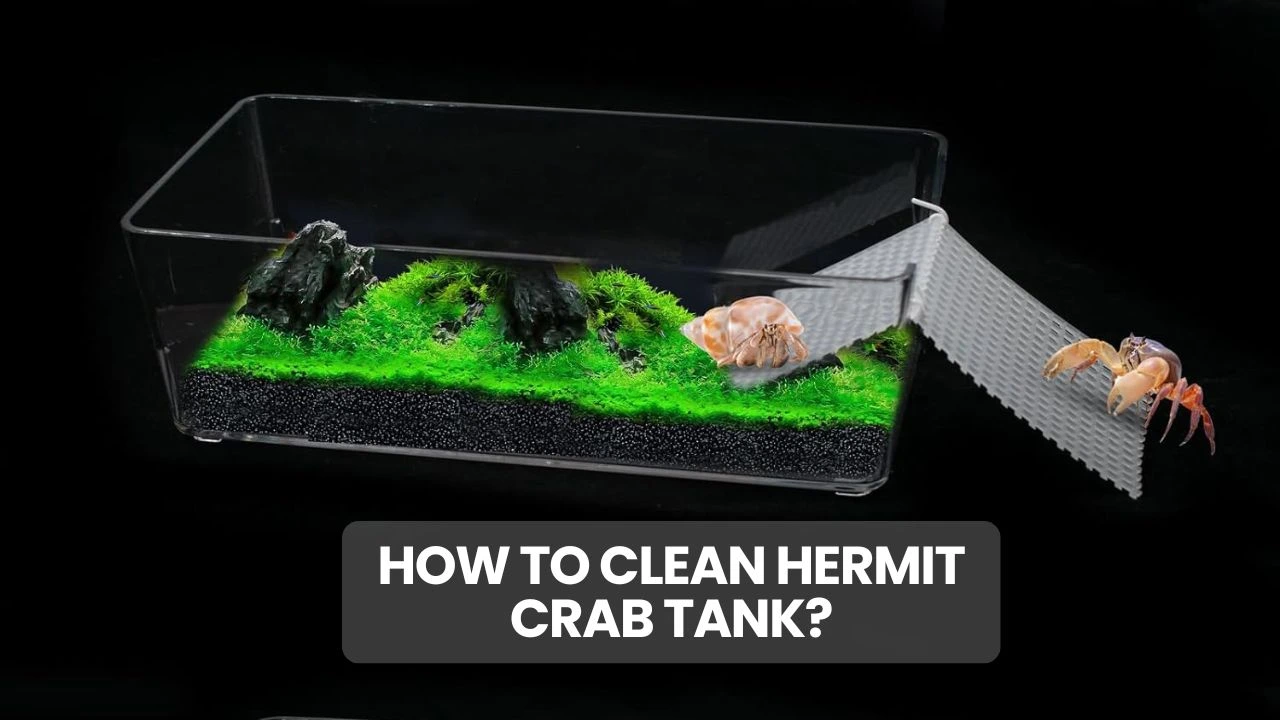
Hermit Crab Tank Cleaning: The No-Teardown Method
Cleaning a hermit crab tank comes down to daily spot cleaning and a weekly wash of dishes and glass. Do those two and the tank looks after itself.
The deep clean is where most guides go wrong. Tearing a tank down on a schedule is now considered a mistake, and the reason is something living in your substrate.
Hermit Crab Tank Cleaning Schedule:
| How often | Type | What to do |
|---|---|---|
| Daily | Spot clean | Remove old food and waste, refill water |
| Weekly | Light clean | Wash dishes, stir substrate, wipe glass |
| Only when needed | Deep clean | Full teardown and substrate change |
Hermit Crab Tank Cleaning Supplies:
Four things. A water conditioner removing chlorine, chloramine and heavy metals, white vinegar for grime, a cloth kept only for the tank, and a scoop.
Never bring these near the tank: bleach, scented soap, detergent, glass cleaner, or anything with fragrance. Crab gills absorb chemicals directly, and residue alone can kill.
Daily Hermit Crab Tank Cleaning:
Two minutes a day prevents almost everything.
- Remove uneaten food. It is the biggest cause of mold and mites.
- Scoop surface waste with a small sieve.
- Change both water dishes using dechlorinated water.
- Check the corners for fuzzy patches.
Weekly Hermit Crab Tank Cleaning
Wash the dishes in hot water, vinegar only for real buildup.
- Stir the top substrate so it does not compact, working around any buried crab.
- Wipe the glass with hot dechlorinated water.
- Check conditions. Humidity above 70 percent, ideally 75 to 85, temperature 75 to 85 degrees Fahrenheit.
Why Scheduled Tank Teardowns Backfire
Your substrate is not just sand. It holds beneficial microorganisms that break down waste and keep the tank stable.
Tearing it out destroys that colony, disrupts humidity and temperature, and can expose a buried molter. Experienced keepers run the same substrate for years. Deep clean when the tank needs it, not on a calendar.
When a Crab Tank Needs Teardown
Seven situations justify it, nothing else.
- Flooded substrate
- A bacterial bloom
- Severe mold spot cleaning cannot control
- Insect or mite infestation
- Parasites or disease
- A dead crab found late
- A second-hand tank or decor
Deep Cleaning a Crab Tank
Only with a trigger above, and only when no crab is buried.
- Move the crabs to a container with 4 inches of moist substrate, a hide, and water.
- Remove accessories to clean separately.
- Clear waste, old food and shed exoskeleton.
- Keep some old substrate. A scoop or two carries the beneficial bacteria.
- Wash the tank with hot dechlorinated water, or a 50/50 vinegar mix for grime. Never bleach.
- Rinse and dry completely.
- Rebuild with at least 6 inches of fresh damp substrate, mixed with the old.
- Return the crabs at 75 to 85 degrees Fahrenheit and humidity above 70 percent.
Cleaning Crab Shells and Dishes:
Spare shells. Soak in hot dechlorinated water, scrub, rinse, dry fully. Never soap.
Hides and wood. Hot water, or bake at 350 degrees Fahrenheit for 30 minutes if mold is present.
Dishes. Hot water daily, and skip sponges since they trap bacteria.
Using Vinegar in a Crab Tank:
Vinegar beats bleach, but it kills beneficial bacteria along with the bad, and a sterile tank stresses crabs. Use it on grime and mold only, never weekly, and rinse hard.
Dealing With Hermit Crab Tank Mold:
- Check daily. Corners, hides and substrate surface.
- Remove it on sight, scooping out moldy substrate or food.
- Spot treat with vinegar, affected areas only, then rinse.
- Fix the cause. Mold means too much moisture or leftover food. Allow airflow under the lid.
Conclusion:
Spot clean daily, wash dishes weekly, deep clean only when something goes wrong. Hot dechlorinated water for routine work, vinegar for real problems.
Never dig up a buried crab while cleaning. It is almost certainly molting, and that is one of the few things a cleaning routine can kill.
(FAQs):
A: Keep some back. Mixing old substrate into the new preserves beneficial bacteria and scent. Many keepers never fully replace it.
A: Avoid it. Crabs are extremely sensitive to chemicals. Hot dechlorinated water or a 50/50 vinegar mix works safely.
A: Clean around it, or wait. It is almost certainly molting, and disturbing it is often fatal.


https://shorturl.fm/WvRBX
https://shorturl.fm/lhzuM
https://shorturl.fm/YVeQc