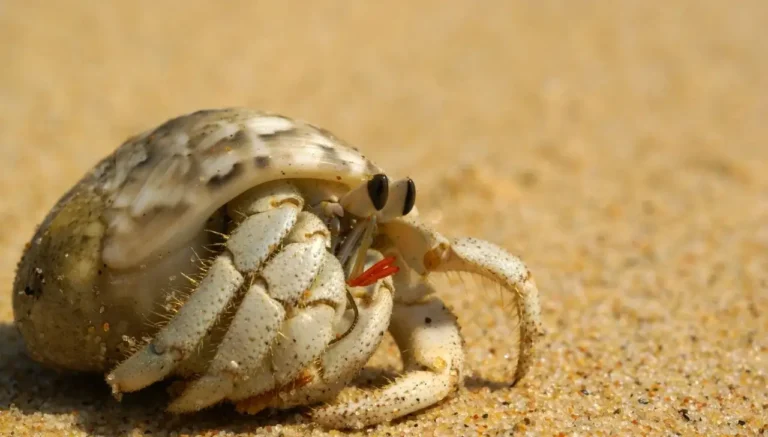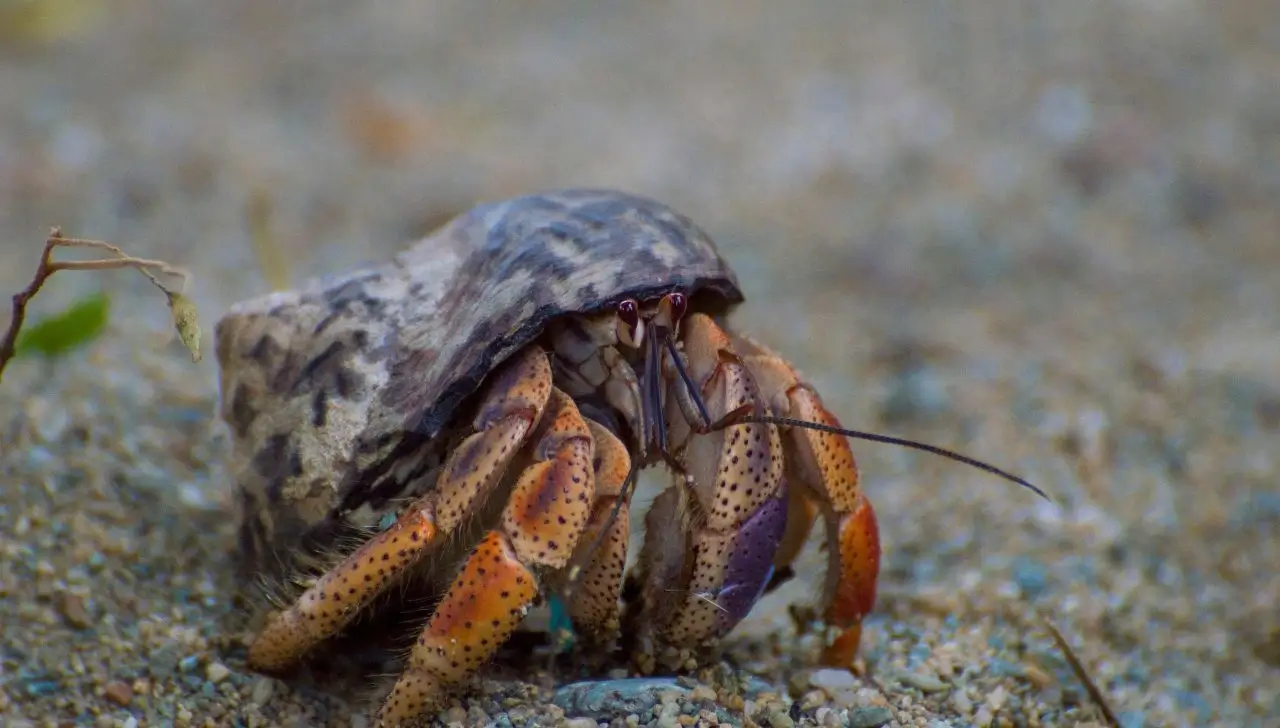
Why Is My Hermit Crab Not Eating? [The 10-Second Test]
Most hermit crabs that appear to stop eating are doing one of two things: molting, or feeding at night while you sleep. They are nocturnal and eat tiny amounts, so a full-looking dish means very little.
There is a simple overnight test that settles it, and it takes about ten seconds to set up.
Is It Really Not Eating?
Do this before anything else. Smooth the sand flat around the food dish in the evening, then look first thing in the morning.
Tiny footprints mean your crab is eating fine and you have nothing to fix. This one test resolves the worry for most owners.
Also check the timing of your feeding. Crabs are most active in the evening, so food put down in the morning has been sitting out all day before they wake up.
Why Hermit Crabs Stop Eating:
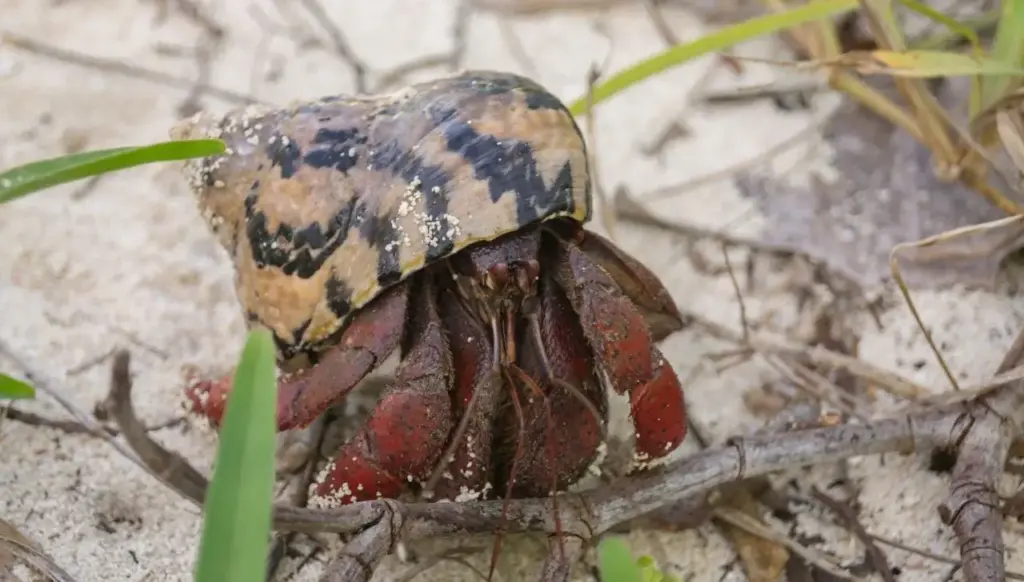
If the track test comes back clear, these are the usual causes.
- Molting. Crabs eat less before a molt and nothing during it, sometimes for weeks. Normal and healthy.
- Arrival stress. New crabs are worn out from shipping and store conditions, and may hide and eat little for weeks.
- Low humidity. Dry air makes a crab unwell and dulls its ability to find food by smell.
- Tank stress. Handling, bright light, noise, or a recent move all put a crab off food.
- Stale or repetitive food. They are picky and want variety. The same dry pellets every night stop tempting them.
Is Your Hermit Crab Molting?
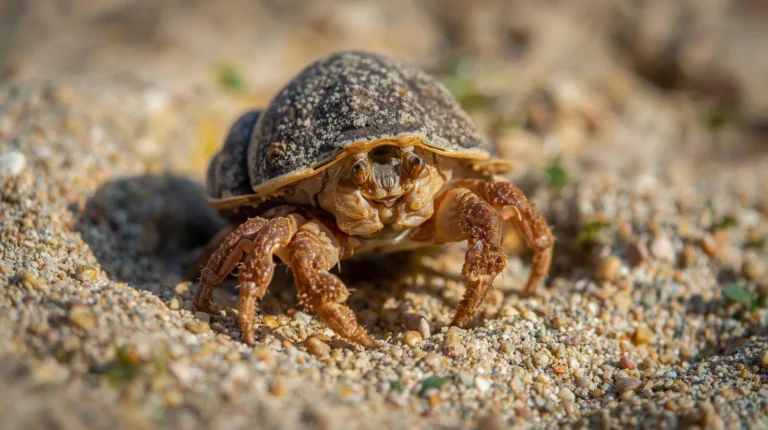
This is the single most common reason a healthy crab stops eating. Before molting it slows down, eats less, then burrows out of sight.
It can stay under for weeks eating nothing at all, and that is completely normal. Never dig it up. It will surface hungry when it is done.
How to Tempt a Hermit Crab:
Fix conditions first, then food.
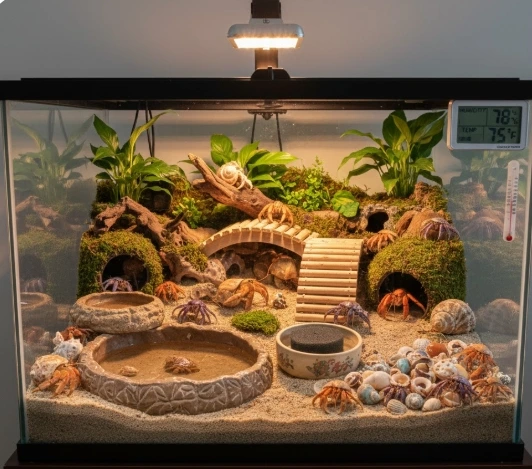
- Check humidity and heat. Keep humidity above 70 percent, ideally 75 to 85, and temperature between 75 and 85 degrees Fahrenheit. These affect appetite more than anything on the menu.
- Offer smelly fresh food. Plain scrambled egg with no salt, butter or oil, sweet corn, cooked sweet potato, mango, or unsweetened coconut all work well.
- Rotate the menu. Different food every night rather than the same thing. Aim for a few different types across a week.
- Keep portions small. Roughly the size of your crab’s claw, removed the next morning before it spoils.
- Check both water dishes. Fresh and salt, both dechlorinated. A missing salt dish dulls appetite.
- Cut the stress. Handle less, dim harsh lights, add hiding places.
Foods That Harm Hermit Crabs:
Worth knowing, because some of this is sold as crab food.
- Copper sulfate and ethoxyquin. Both are toxic to invertebrates and both appear in commercial pellets. Ethoxyquin can hide inside fish meal without being listed on its own.
- Anything salted or seasoned. Hermit crabs are very sensitive to salt. Human leftovers, cured meat, and processed snacks are out.
- Onion, garlic, and citrus. Commonly listed as foods to avoid.
- Unwashed produce. Pesticide residue is a real risk, so wash everything in dechlorinated water.
Single ingredient whole foods are the safest route. Labels saying complete diet or non-toxic guarantee nothing for invertebrates.
When to Actually Worry:
Most of the time a crab that is not eating is fine. A few signs mean look closer.
A strong rotting fish smell means the crab has died. Dropped legs or a crab lying limp and exposed on the surface are both serious.
Buried with no smell is almost always molting, not dying. Check for the smell before you do anything else, and see why hermit crabs die if you are worried about the other signs.
Conclusion:
A hermit crab that seems to have stopped eating is usually molting, still settling in, or quietly eating at night. Run the track test first, then check humidity, heat, water, and variety.
Give a new or molting crab time and privacy. Almost every crab starts eating again on its own.
(FAQs):
A: Longer than most owners expect. A healthy crab manages 2 to 3 weeks, and a molting one goes weeks underground eating nothing at all.
A: Once daily in the evening for adults, since that is when they wake up. Remove whatever is left the next morning.
A: Better not to. Handling adds stress, which is often the original problem. A healthy crab will not starve itself.
A: Some of it is not. Check the label for copper sulfate and ethoxyquin, and treat pellets as one part of a varied diet rather than the whole thing.