Why Did My Hermit Crab Die? Causes, Signs & Prevention
Losing a hermit crab happens to almost everyone who keeps them, and it is very often not your fault. Most deaths trace back to stress the crab arrived with, air that was too dry, or a molt that went wrong.
Before you go any further, there is one thing worth checking. A molting crab and a dead crab look almost identical, and people bury living crabs every year without realizing it.
Is It Dead or Molting?
Rule this out first. A molting crab can look exactly like a dead one, limp, pale, and out of its shell, but it is alive and must not be disturbed.
Smell is the reliable test. A crab that has actually died gives off a strong rotting fish odor within a day or two. There is no mistaking it.
No smell means wait. Leave a still or buried crab completely alone. Digging one up mid-molt is one of the few things that genuinely kills a healthy crab.
Why Hermit Crabs Usually Die:
Most deaths come down to five causes.
- Stress from the journey. Nearly all are wild caught and arrive dehydrated and weakened.
- Low humidity. Their gills have to stay damp, so dry air suffocates them slowly over days or weeks.
- Wrong temperature. Cold makes them sick. Heat kills much faster.
- A failed molt. Shallow substrate, disturbance, or poor conditions during molting are a common cause of death.
- No proper shells or water. A crab without a good shell, or without both water types, will not last.
Post Purchase Death Syndrome:
If your crab died within weeks of coming home, this is the most likely answer, and it was set in motion before you ever saw it.
They are caught in the wild, then shipped and stored in poor conditions before sale. Dehydration, wrong temperature, and rough handling do damage that shows up late.
The hobby used to call this Post Purchase Stress. The Crab Street Journal now calls it Post Purchase Death Syndrome, because the damage is physical rather than emotional. A new crab stays at risk until it completes its first successful molt in your care, no matter how good your setup is.
Low Humidity Kills Slowly:
This is the most common preventable cause. Hermit crabs breathe through modified gills that only work while damp, which is covered in how hermit crabs breathe.
Never let humidity fall below 70 percent, and aim for 75 to 85. Most homes sit near 40 to 50 percent, which is far too dry.
The damage is gradual. Gills dry over weeks and the crab suffocates with no warning until it is too late. A hygrometer and a sealed lid prevent it.
Molting Deaths in Hermit Crabs:
Molting is when a crab sheds its exoskeleton to grow, and it is the most dangerous period in its life. It stays soft and defenseless underground for weeks.
Give at least 6 inches of damp substrate so it can dig properly. Keep the tank warm and humid throughout. Never dig up a buried crab.
Less Obvious Hermit Crab Dangers:
Three things catch people out.
- Untreated tap water. Chlorine damages them. Use dechlorinated water in both dishes.
- Painted shells. The paint chips and the crab ingests it. Offer clean natural shells instead.
- Fumes and chemicals. Bug spray, air fresheners, cleaners, and paint fumes near the tank can kill quickly.
How to Protect Your Other Crabs:
If you still have crabs, this is your checklist.
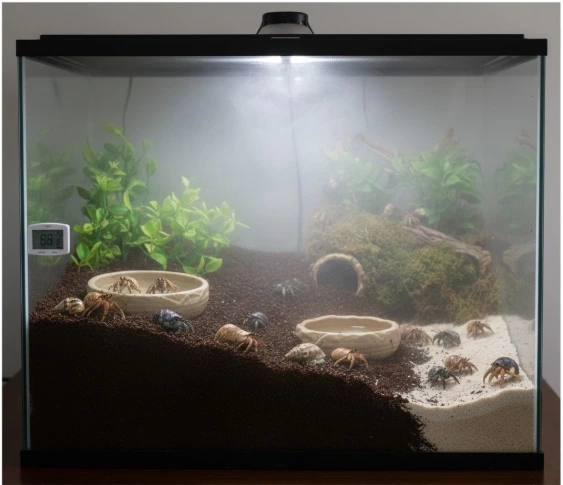
- Humidity above 70 percent, ideally 75 to 85, checked daily on a gauge.
- Temperature between 75 and 85 degrees Fahrenheit, held steady with a thermometer.
- At least 6 inches of damp substrate so every crab can bury and molt safely.
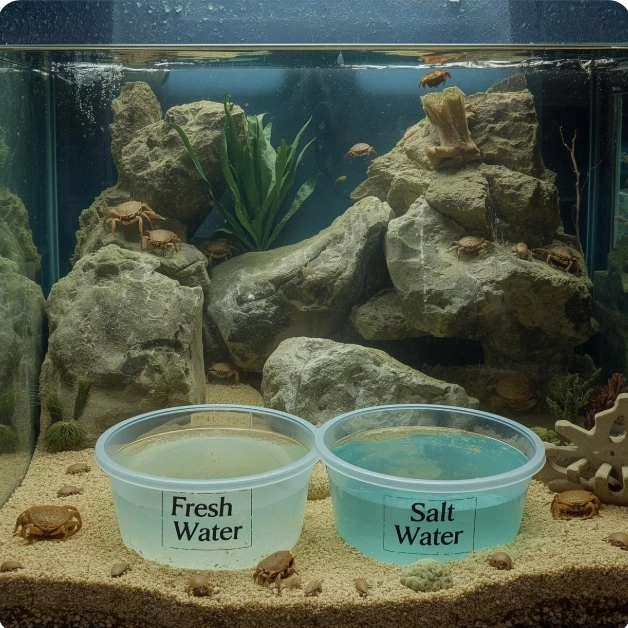
- Both water dishes, fresh and salt, dechlorinated, deep enough to soak in with an easy way out.
- Spare shells in several sizes so no crab is stuck without one.
- Never keep just one. Two is the minimum, three or more is better. They are social and get stressed housed alone.
Conclusion:
Do not be hard on yourself. Between the journey these animals make before reaching a shop, low humidity, and the risks of molting, many hermit crab deaths are already in motion before the crab is yours.
Check your humidity, temperature, substrate depth, and shells. In good conditions hermit crabs commonly live 15 to 25 years, and some reach 40.
(FAQs):
A: Smell is the test. A dead crab produces a strong rotting fish odor within a day or two. No smell means leave it undisturbed.
A: Yes, quickly. A decomposing crab fouls the air and water and stresses the survivors. Remove it and check your conditions.
A: Not directly, but isolation adds ongoing stress and they are social animals. Keeping at least three together is the standard advice.


2 Comments