How to Care for Hermit Crabs from the Ocean (Land vs. Sea)
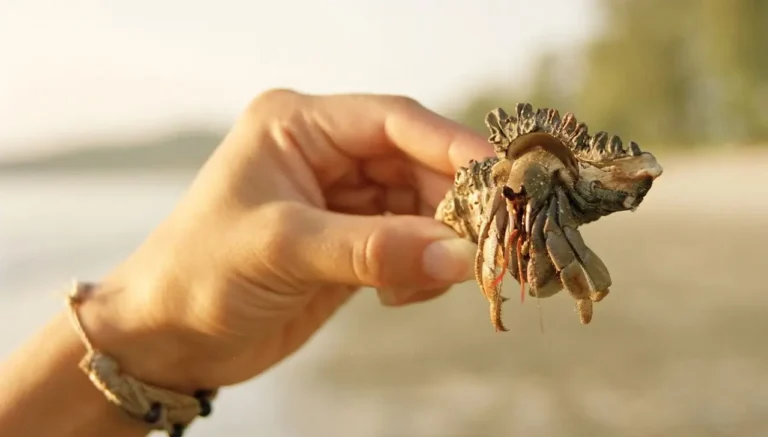
Your kid just came back from the beach with a hermit crab in a bucket. Or maybe you spotted one yourself in a tide pool and thought it would make a fun pet. Before you do anything else, you need to figure out one thing: is it a land hermit crab or a marine hermit crab? Because the answer to that question changes absolutely everything about how you care for it – and honestly, whether you should even bring it home at all.
Land Crab or Sea Crab? This Changes Everything
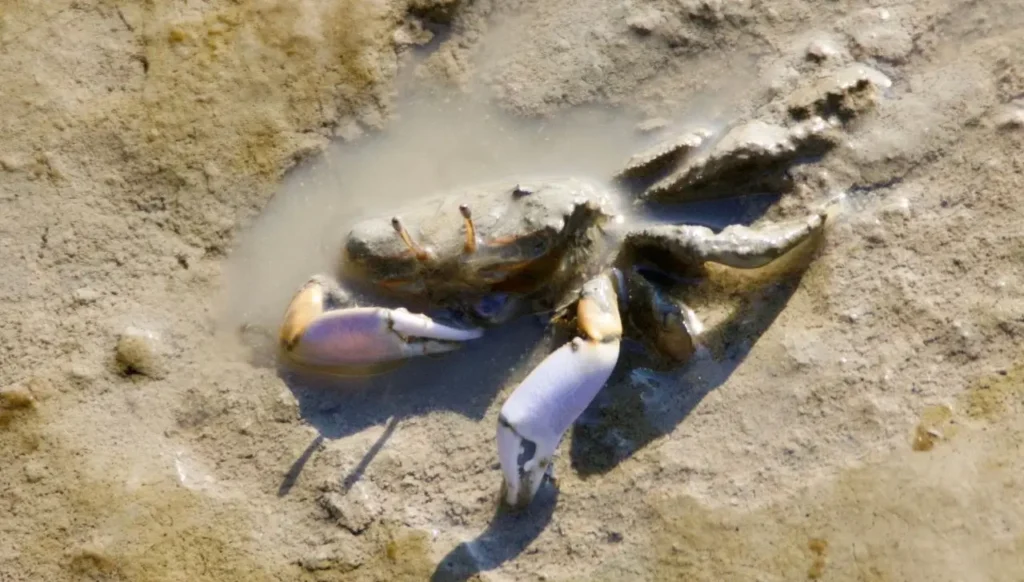
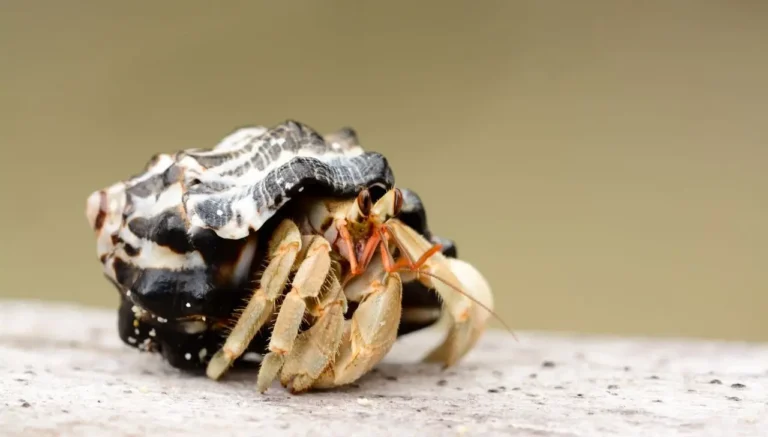
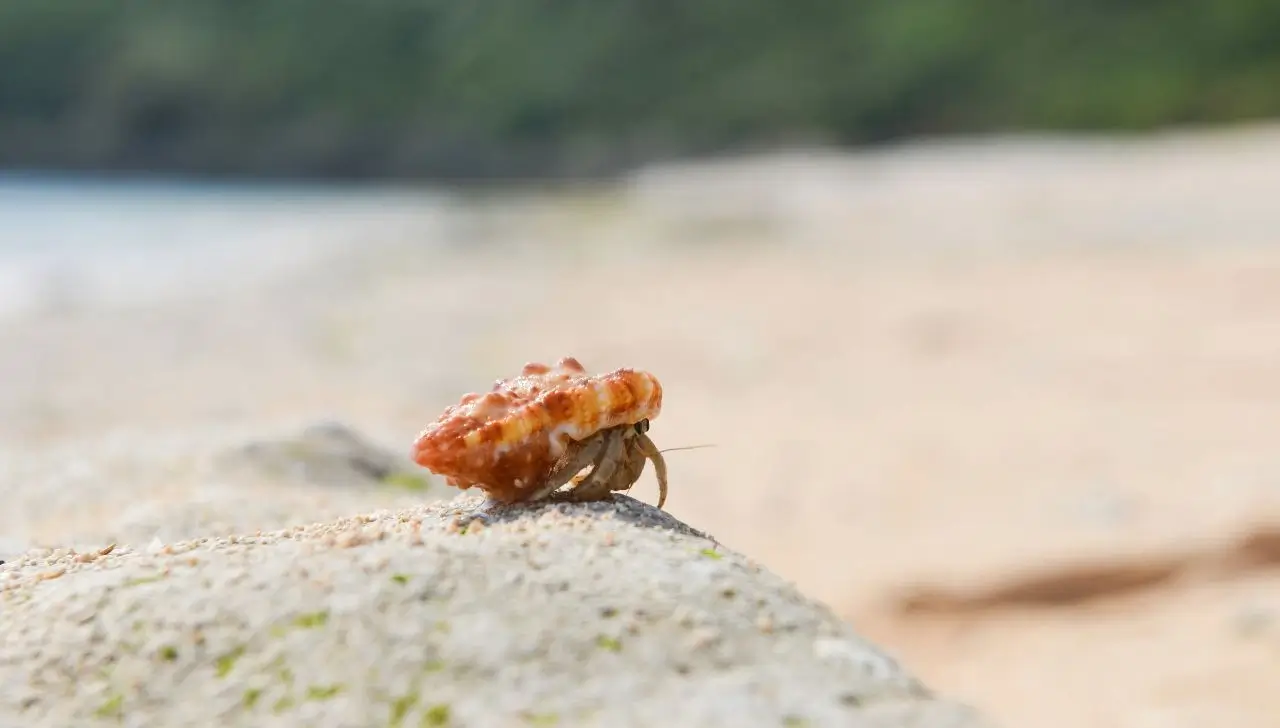
This is the distinction that most articles on this topic completely skip, and it is the most important one. If you found the crab walking on the sand above the waterline, it is almost certainly a land hermit crab – the same kind sold in pet stores. These crabs live on beaches and in coastal forests, visit the water to drink and reproduce, but spend most of their time on dry land. They breathe humid air through modified gills.
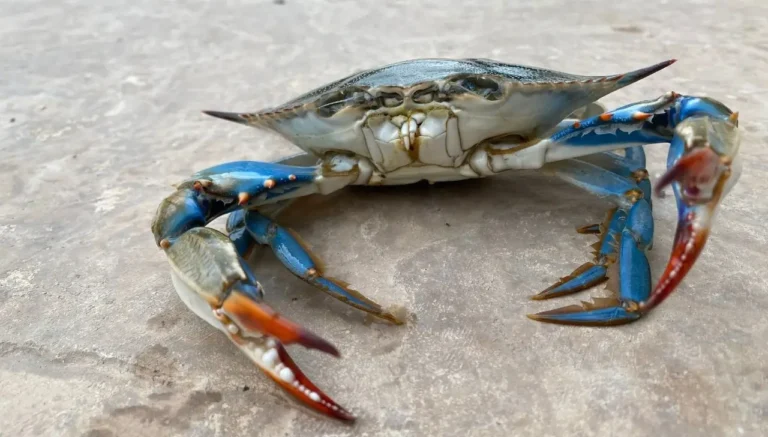
If you found the crab fully underwater in a tide pool, in the surf, or attached to rocks below the waterline, it is a marine hermit crab. These are fully aquatic animals. They breathe underwater through gills and will die if kept on dry land. They need a complete saltwater aquarium with filtration, live rock, cycled water, and stable salinity. That is an entirely different level of commitment, expense, and expertise.
My honest recommendation for marine hermit crabs found at the beach: put them back. Unless you already have a cycled saltwater tank running at home, you are not equipped to keep them alive. They are aggressive, grow quickly, and require marine aquarium conditions that most beginners are not prepared for. Several experienced keepers in the hermit crab community have tried rescuing marine species brought home from the beach and have openly said it rarely ends well without a proper setup already in place.
Bonus: How to Care for Hermit Crabs
If It’s a Land Hermit Crab: What to Do
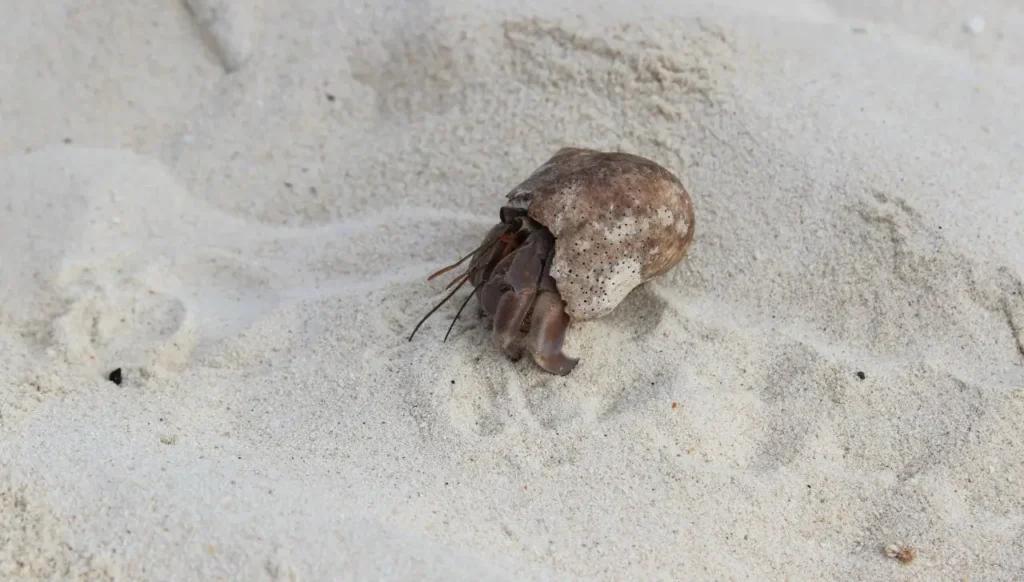
First, check your local laws. Many beaches and coastal areas have collection laws that make it illegal to take wildlife – including hermit crabs – home with you. If it is legal where you are, and you are committed to providing proper care, here is what a wild-caught land hermit crab needs:
A glass tank with a solid lid.
At least 10 gallons for one or two crabs, but 20 is better. The crab needs humidity to breathe, and only a glass enclosure with a sealed top can hold that moisture in. Do not use a plastic container, bucket, or open box – the crab will slowly suffocate.
Deep, damp substrate.
At least six inches of play sand mixed with coconut fiber at a 5:1 ratio, dampened to sandcastle consistency. The crab will want to bury itself almost immediately – partly to molt, partly to de-stress from the shock of being captured. Without a deep substrate, it cannot do either safely.
Both fresh and salt water.
Two separate dishes, deep enough to submerge in, with a way to climb out. Use dechlorinated water for the fresh dish and marine-grade aquarium salt (like Instant Ocean) for the salt dish. Never use table salt. The crab stores a custom mix of fresh and salt water inside its shell to keep its gills moist – this is not optional.
Heat and humidity.
Keep the tank between 75°F and 85°F with humidity at 70-80%. A heat mat on the back wall and a digital thermometer and hygrometer are essential. These crabs come from tropical beaches where the temperature and humidity rarely fluctuate. Dropping below 72°F or letting humidity fall under 70% puts them in danger.
Food.
Fresh fruit, vegetables, dried shrimp, and a piece of cuttlebone for calcium. Do not rely on commercial pellets – many contain preservatives that are harmful over time. Feed every evening and remove leftovers the next morning.
Spare shells.
At least three to five natural, unpainted shells in sizes slightly larger than what the crab is currently wearing. It may switch quickly if its current shell is damaged or too small.
Bonus: What Can Live with Hermit Crabs?
Expect It to Disappear for a While
A wild hermit crab that has just been taken from the beach is extremely stressed. It has been grabbed, carried, transported, and dropped into an unfamiliar environment. Do not be surprised if it buries itself the first night and does not come back up for weeks. This is completely normal – the crab is either de-stressing, molting, or both. The worst thing you can do at this point is dig it up. Leave it alone. Keep the conditions steady. Provide food and water near where it buried itself. It will resurface when it is ready.
One Crab Is Not Enough
In the wild, this crab was part of a colony of dozens or hundreds. Keeping it alone in a tank is like putting a person in solitary confinement and expecting them to thrive. If you are serious about caring for a hermit crab from the ocean, plan to get at least two more companions. Pet store crabs and wild-caught crabs of the same species (Caribbean or Ecuadorian) will coexist just fine – just give the new crab a quick dip in the tank’s salt water before introducing it so they all carry the same scent.
Bonus: How Many Hermit Crabs Should I Get?
The Honest Truth Most Guides Won’t Tell You
Caring for a hermit crab from the ocean is not easier, simpler, or cheaper than buying one from a pet store. It is actually harder, because the crab arrives far more stressed, has no acclimation period, and may have health issues you cannot see. Wild-caught crabs from the beach often die within the first month – not because they are weak, but because owners are not prepared for what they need.
If you found the crab and genuinely want to give it a good life, you are looking at the same setup required for any land hermit crab: a glass tank, deep substrate, heat, humidity, two types of water, real food, spare shells, and companions. There are no shortcuts. If you are not ready for that commitment, the kindest thing you can do is bring it back to the beach where you found it.
Conclusion
If you find a hermit crab at the beach, the first step is figuring out whether it is a land crab or a marine crab. Marine crabs go back in the water. Land crabs need the full setup – glass tank, deep substrate, heat, humidity, two water types, real food, shells, and friends. There are no half-measures. Either commit to proper care or bring it back to the beach. That crab was doing fine before you picked it up – the least you can do is make sure its new life is just as good.
FAQs:
A: If it is a land species and there are no local collection laws, technically yes. But it requires the same full setup as any pet hermit crab. If it is a marine species found underwater, it needs a cycled saltwater aquarium.
A: In many coastal areas, yes. Some beaches and wildlife preserves have strict collection laws. Always check local regulations before removing any wildlife from the beach. In Bermuda, for example, land hermit crabs are listed as a vulnerable protected species.
A: If you live near a clean ocean beach and can collect water far from runoff or pollution, some keepers do use natural seawater for the salt pool. However, most people find it easier and more consistent to mix their own using marine-grade salt and dechlorinated tap water.