Why Do Hermit Crabs Need Shells? (And How They Choose Them)
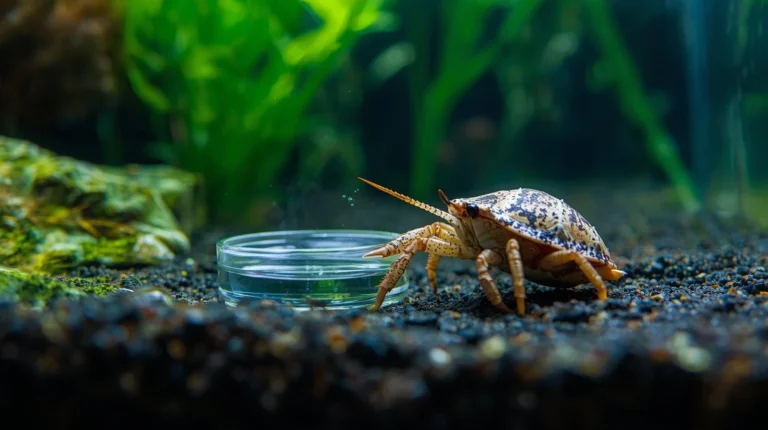
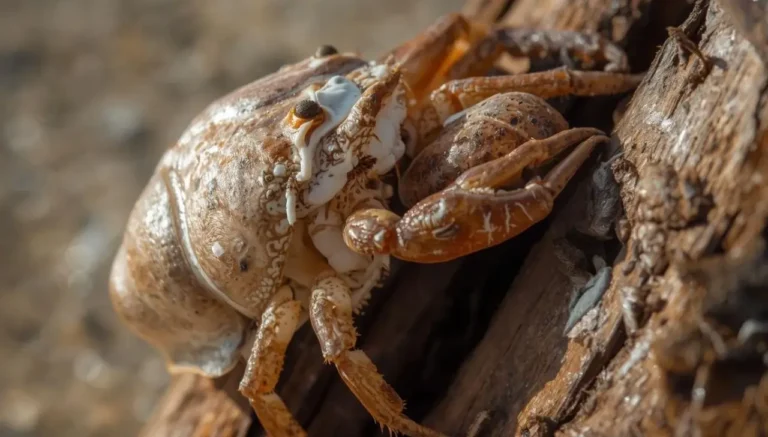
Hermit crabs need shells because they are born with soft, vulnerable, and coiled abdomens, lacking the hard protective exoskeleton that true crabs possess. They use abandoned snail shells as mobile homes for protection from predators, to prevent dehydration by keeping their gills moist, and to shield themselves from heat and harsh environmental conditions.
Why Do Hermit Crabs Have Shells?
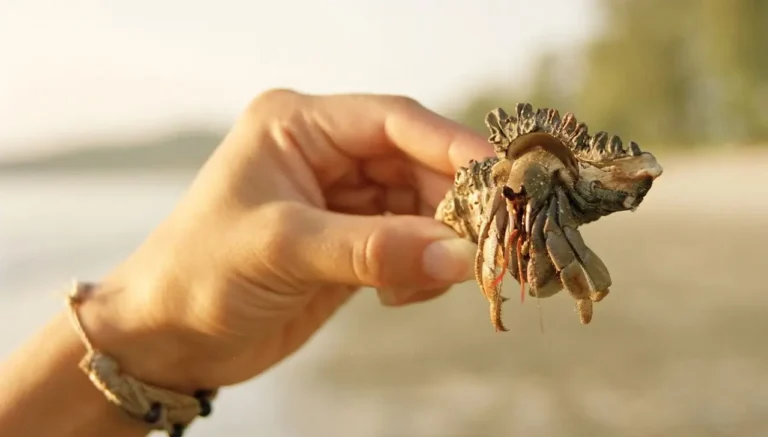
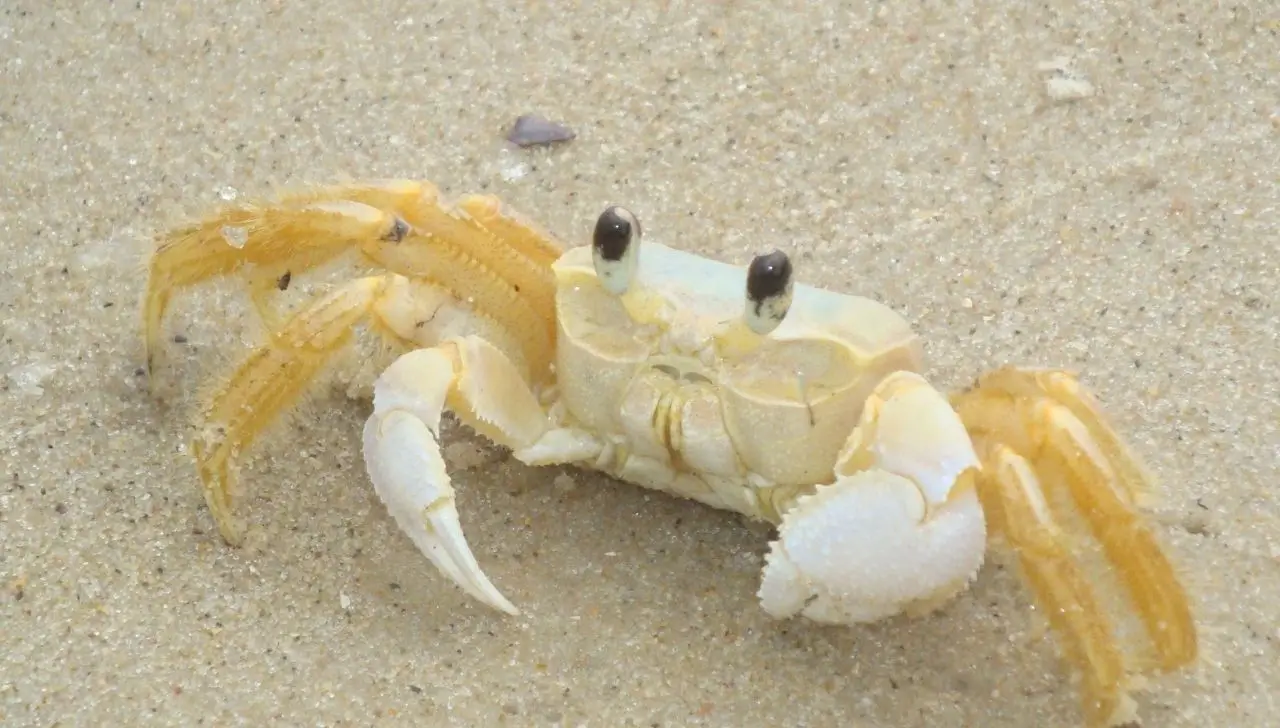
Hermit crabs are not like regular crabs. Their back half — the abdomen — is soft, curved, and completely unprotected. This is because their outer covering in that area is thin and not hardened the way it is in most other crustaceans (Wikipedia, 2025). To make up for this, hermit crabs borrow empty snail shells and carry them around as mobile homes. The shell serves three main purposes:
- Protection from predators. A hermit crab can pull its entire body inside the shell and block the opening with its large front claw, making it nearly impossible for a predator to reach it (Department of Environment and Natural Resources, Bermuda, n.d.).
- Protection from drying out. Shells trap moisture inside, which keeps the crab’s gills wet. Land hermit crabs actually breathe using modified gills, so without that stored water, they would suffocate (Pet Hermit Crabs, n.d.).
- Protection from the elements. In hot, dry, or windy conditions, the shell acts as a shield. Without it, the crab’s soft body would quickly lose water and overheat (Hermit Harbor, n.d.).
This dependence on shells is so strong that hermit crabs will almost never voluntarily leave their shell. As one researcher put it, a hermit crab would rather be torn apart than be pulled out of its home (Demaray, n.d.).
Bonus: Where Do Hermit Crab Shells Come From?
Where Do Hermit Crab Shells Come From?
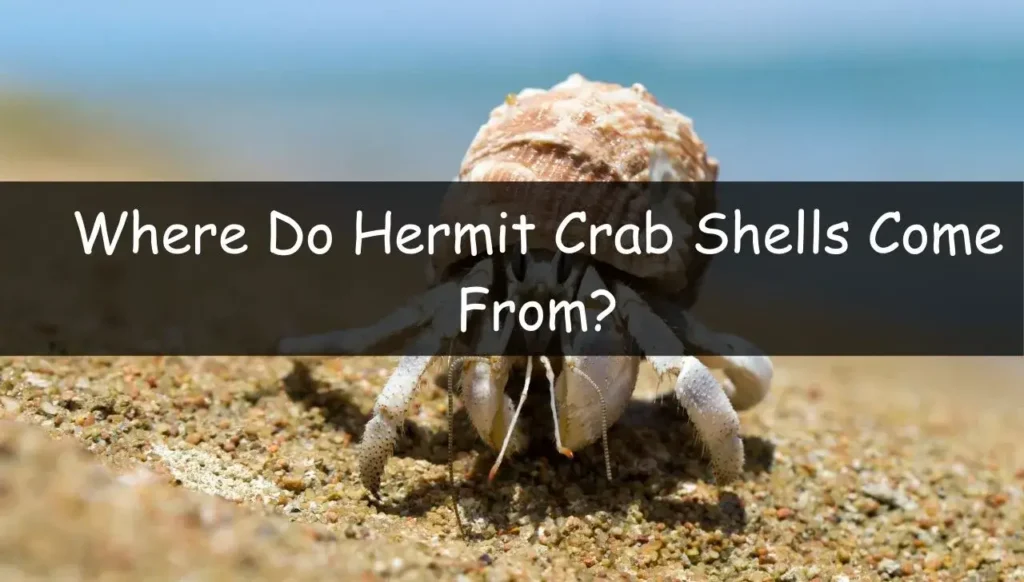
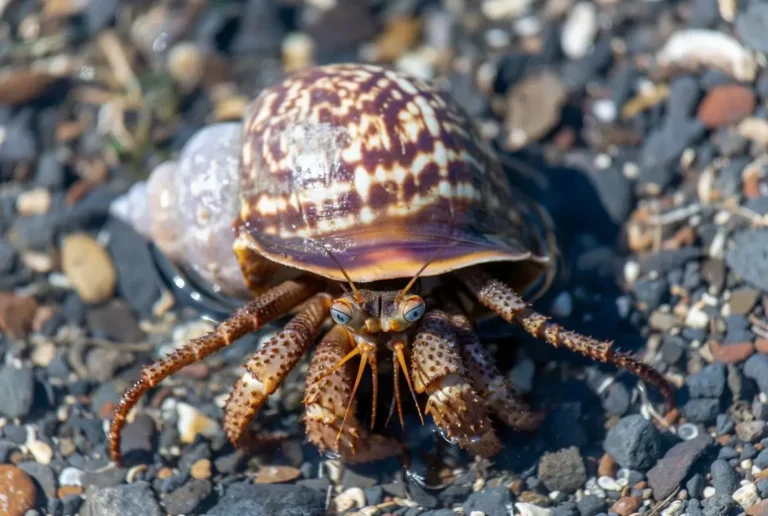
Hermit crabs do not make their own shells. Every shell a hermit crab wears was originally built by a sea snail. When that snail dies, the empty shell eventually washes up on shore or settles on the ocean floor, where a hermit crab can find it and move in (Hermit Harbor, n.d.). This has been going on for a very long time — fossil records show hermit crabs have been using borrowed shells for at least 150 million years (Beachcombing Magazine, 2022).
Why Do Hermit Crabs Change Shells?
The main reason is growth. Hermit crabs grow throughout their lives, and eventually their current shell becomes too tight. When that happens, they need to find a bigger one. Females also need extra room inside the shell during breeding season to hold their eggs (Beachcombing Magazine, 2022). Crabs may also switch shells if their current one is damaged, too heavy, or simply if they find a better option nearby.
How often they change depends on the species and how fast they are growing. Caribbean hermit crabs — the most common pet variety — tend to change shells fairly often, sometimes swapping with other crabs in the same tank (Shrimp and Snail Breeder, 2023).
Bonus: How Do Hermit Crabs Get Their Shells?
How Do Hermit Crabs Choose a New Shell?
Hermit crabs are surprisingly careful shoppers. According to Discover Wildlife (2023), a crab will use its eyes to judge a shell’s size, weight, and color, and then feel around the inside using its legs and antennae to check the shape, space, and condition. If a shell has cracks, holes, or is the wrong size, the crab will reject it and keep looking. Scientists have noted that this decision-making process is a remarkable display of thinking for an animal with such a small brain.
The Famous Shell Swap Line
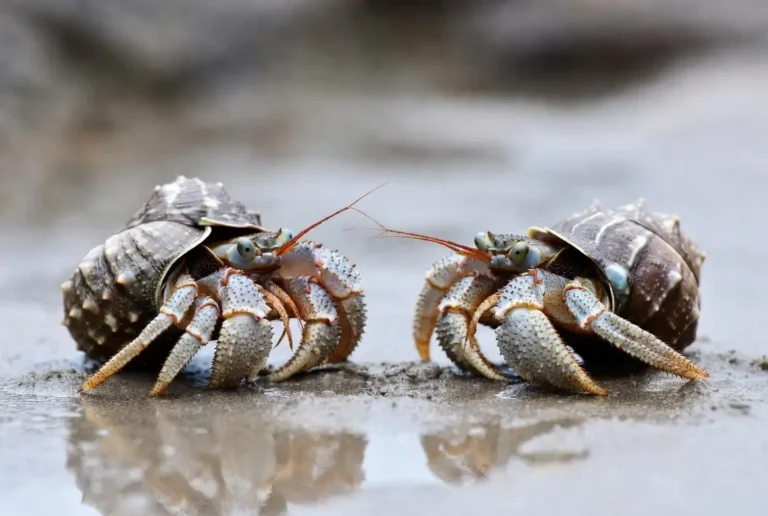
One of the most fascinating things about hermit crabs is how they trade shells as a group. When a new empty shell appears, nearby crabs will gather around it and line up from biggest to smallest. When the biggest crab claims the new shell and leaves its old one behind, the next crab takes that one, and so on down the line — all within seconds. Scientists call this a “vacancy chain,” a term originally used to describe how people exchange apartments and jobs(Chase, 2010, as cited in Scientific American, 2024).
Dr. Randi Rotjan of Tufts University, who documented this behavior in Caribbean hermit crabs, found that crabs even cling onto each other in a chain while waiting for the right-sized crab to arrive and start the swap (Scientific American, 2024). This means a single new shell can benefit an entire group of crabs at once — everyone gets an upgrade.
Bonus: How Do Hermit Crabs Breed and Reproduce?
Conclusion
Hermit crabs need shells for the same reason we need houses: protection, comfort, and survival. The difference is they carry theirs on their back and swap them in organized lines that would impress any real estate agent. If you keep hermit crabs as pets, always provide several natural, properly sized spare shells so they can upgrade when they need to.
FAQs:
Q1: Can a hermit crab survive without a shell?
A: Not for long. Without a shell, a hermit crab is exposed to predators, sunlight, and dehydration. Its soft body will dry out quickly, and its gills cannot stay moist enough to breathe (Pet Hermit Crabs, n.d.).
Q2: Why is my hermit crab out of its shell?
It’s usually stress—shell too small, painted, low humidity, or illness. Provide natural shells and check tank conditions
Q3: Should I give my hermit crab painted shells?
No. Painted shells can chip over time, and the paint or lacquer can be toxic to hermit crabs. Always provide natural, unpainted shells with no cracks or holes (Shrimp and Snail Breeder, 2023).