What Can Live with Hermit Crabs? (Tank Mates Guide)
Your hermit crab tank looks a bit empty and you are wondering: can anything else live in there? The honest answer might disappoint you. The best tank mate for a land hermit crab is simply more hermit crabs. That said, there are a small handful of creatures that can safely share the space – and a much longer list of animals that absolutely should not. This guide covers both, with no sugarcoating.
The Best Tank Mate: More Hermit Crabs
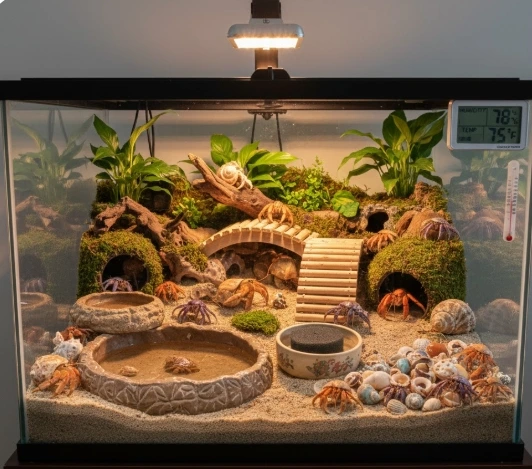
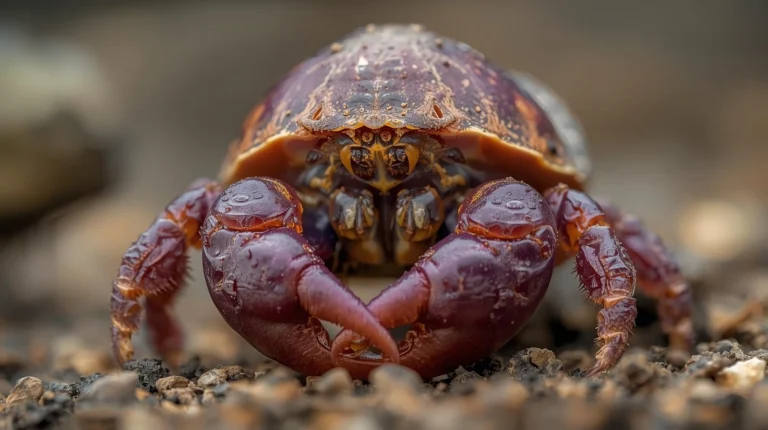
This is not a cop-out answer – it is genuinely the best option. Hermit crabs are social animals that live in colonies of dozens or even hundreds in the wild. A single crab kept alone often becomes stressed, inactive, and stops eating. Adding two or three more crabs of different sizes is the safest and most beneficial thing you can do. Same-sized crabs are more likely to fight over shells, so mixing sizes keeps things peaceful. Different species – like Caribbean, Ecuadorian, and Strawberry — can live together as long as the temperature and humidity overlap (aim for 78–82°F and 70–80% humidity to keep everyone comfortable).
Animals That CAN Safely Live with Land Hermit Crabs
The list is short, but these are proven to work:
- Isopods (pill bugs / roly-polies). These are the gold standard hermit crab tank mates. They are small crustaceans that thrive in the same warm, humid conditions. They eat leftover food, mold, and decaying organic matter, essentially acting as a free cleanup crew. Hermit crabs may occasionally eat one as a protein snack, but the isopods reproduce fast enough to maintain their population. They do not dig deep enough to disturb molting crabs. Many experienced keepers consider isopods a permanent part of a healthy tank.
- Springtails. Tiny arthropods that are almost invisible to the eye. Like isopods, they eat mold, fungus, and decaying food scraps. They thrive in moist substrate and help keep the tank clean. Hermit crabs generally ignore them. The only downside is that they can escape through small gaps in the lid, so make sure yours is well-sealed.
- Live plants. Not animals, but worth mentioning because they add life and function to the tank. Air plants, bromeliads, spider plants, moss, and wheatgrass sprouts all do well in hermit crab conditions. Crabs will climb on them, hide behind them, and eat them – which is fine. Just avoid any plants treated with pesticides or fertilizers.
That is essentially the complete list for land hermit crabs. Isopods, springtails, and plants. Everything else introduces risk.
What About Marine (Saltwater) Hermit Crabs?
If you are keeping marine hermit crabs in a saltwater aquarium, your options are much wider. Peaceful fish like clownfish, gobies, cardinalfish, damselfish, and small wrasses generally coexist well with aquatic hermit crabs. Cleaner shrimp are another good match – they eat algae and debris and are fast enough to avoid any pinching. Snails can work too, but be aware that hermit crabs may attack them for their shells, so keep plenty of empty spares available.
Avoid aggressive fish like cichlids, triggers, and large wrasses, which will harass or eat your crabs. Goldfish are a common suggestion online but they require completely different water conditions and should never be housed with marine hermit crabs.
Animals That Should NEVER Live with Land Hermit Crabs
This list is long for a reason. Most other animals either have different environmental needs, pose a direct threat, or will be threatened by the crabs:
- Frogs and toads – different humidity and temperature needs. They can also injure or eat small crabs, and the crabs may pinch them.
- Lizards and geckos – completely different environmental requirements. Many are predators that will try to eat the crabs. Others will be stressed by the high humidity hermit crabs need.
- Snakes – wrong environment, wrong temperament, wrong everything. A snake in a hermit crab tank is a disaster waiting to happen.
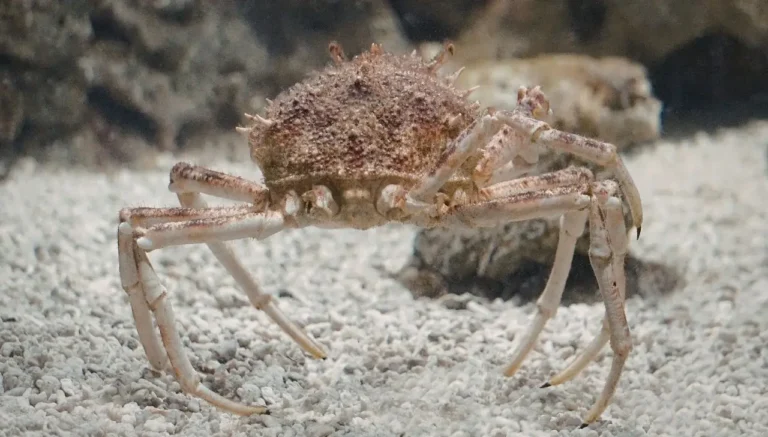
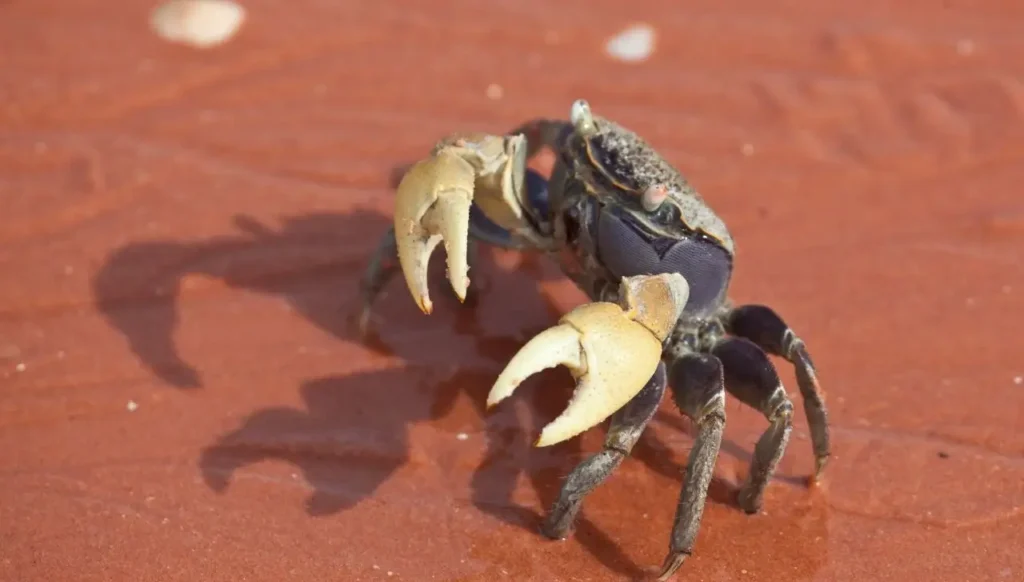
- Other species of crabs (fiddler crabs, red crabs, etc.) – different crabs have different salinity, temperature, and territory needs. Mixing species usually leads to aggression, stress, or one species eating the other during a molt.
- Crickets, beetles, centipedes, praying mantis – these can stress your crabs, overpopulate the tank, and worst of all, attack or eat a crab while it is molting and defenseless underground.
- Fish in the water dishes – the water pools in a land hermit crab tank are far too small and uncycled to support fish. They would die quickly and foul the water.
- Hamsters, mice, or any mammal – completely incompatible environments and a recipe for injury on both sides.
The Real Risk: Molting
The biggest reason the tank mate list is so short comes down to molting. When a hermit crab molts, it buries itself underground for weeks or months and is completely soft, immobile, and defenseless. Any animal that digs, scavenges, or is attracted to the scent of a molting crab can kill it without you ever knowing. Even well-meaning tank mates can stumble across a molting cave and cause fatal damage. Isopods and springtails are safe because they are too small to harm a crab and do not dig deep enough to reach molting chambers. Almost everything else is a gamble.
Conclusion:
For land hermit crabs, the safe tank mate list is short: more hermit crabs, isopods, springtails, and live plants. That is it. Everything else either threatens the crabs, gets threatened by them, or needs a completely different environment. If your tank feels empty, add more crabs and some climbing structures before you add another species. Your crabs will be happier and safer for it.
FAQs:
Q1: Can hermit crabs live with snails?
A: Marine hermit crabs can live with snails in a saltwater aquarium but keep extra shells available since crabs may try to steal snail shells. For land hermit crabs, snails are not a good match – the environments are too different.
Q2: Can different species of hermit crabs live together?
A: Yes. Caribbean, Ecuadorian, Strawberry, and most other Coenobitic species can share a tank as long as the temperature and humidity overlap. Get different sizes to reduce shell competition.
Q3: Do hermit crabs get lonely without tank mates?
A: Yes. A single hermit crab kept alone often becomes stressed, inactive, and unhealthy. In the wild they live in large groups. Always keep at least two or three together.