How to Keep Humidity Up in a Hermit Crab Tank (7 Proven Methods)
Humidity is not optional for hermit crabs -it is life or death. They breathe through modified gills that must stay moist to absorb oxygen. When humidity drops below 70%, those gills start drying out and the crab slowly suffocates. The worst part is that it happens silently over days or weeks, so by the time you notice something is wrong, the damage is already done. Here are seven proven ways to get your tank’s humidity to 70-80% and keep it there.
Why Humidity Matters This Much
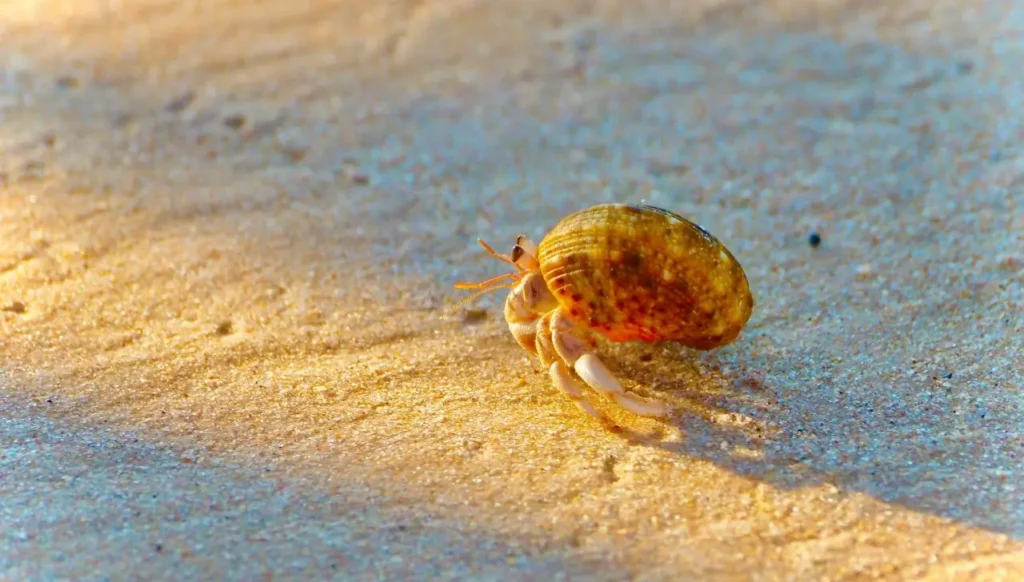
Unlike fish that breathe underwater or lizards that breathe dry air, hermit crabs are stuck in the middle. Their gills need humid air to function – not water, not dry air, but moisture-heavy air between 70% and 80% relative humidity. Drop below that range and the gills begin to stiffen and dry. The crab cannot get enough oxygen. It becomes sluggish, stops eating, and eventually dies. Most first-year hermit crab deaths trace back to humidity problems, and owners never realize it because there are no obvious symptoms until it is too late.
Bonus: How to Care for Hermit Crabs
7 Ways to Raise and Maintain Humidity
1. Seal the lid.
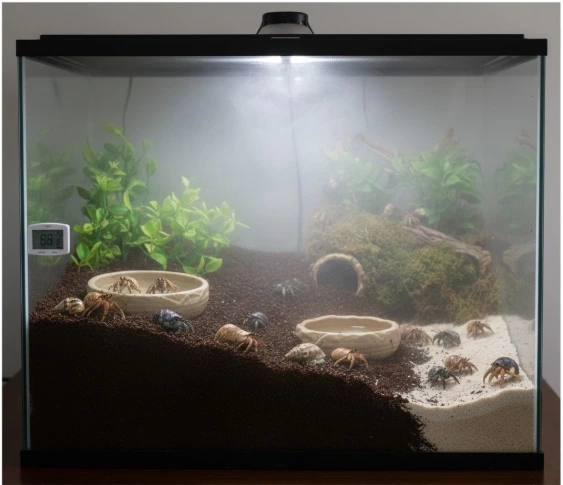
This is the single most impactful change you can make. Mesh and screen lids let all the moisture escape. You need a solid glass, plexiglass, or plastic lid that covers the top completely. If your tank came with a mesh lid, lay a sheet of plexiglass or even plastic wrap over it. Leave a tiny gap – about half an inch – on one side for air exchange, but no more than that. A sealed lid alone can fix 80% of humidity problems overnight.
2. Keep the substrate damp.
Your sand and coconut fiber mix should always feel like wet sandcastle sand – holds its shape when squeezed but no water drips out. Damp substrate is the biggest ongoing source of humidity in the tank. If it dries out, your readings will drop fast. When you notice the top layer drying, mist it lightly with dechlorinated water.
3. Use deeper water dishes.
Bigger, deeper water pools evaporate more surface area into the air, which naturally raises humidity. Shallow bottle caps do almost nothing. Use dishes deep enough for your crabs to submerge in – the evaporation alone will make a noticeable difference, especially if the heat mat is nearby.
4. Add a moss pit.
Take a small container – a tupperware lid, coconut half, or shallow dish – and fill it with damp sphagnum moss. Place it in the tank. Moss holds moisture like a sponge and releases it slowly into the air. It also gives your crabs a cozy spot to hang out. Re-dampen the moss every few days when it starts to dry.
5. Add a bubbler to a water dish.
Drop a small aquarium air stone into one of your water pools and connect it to a basic air pump. The bubbling action increases the surface agitation and pushes more moisture into the air. This is especially effective in larger tanks where passive evaporation is not enough on its own.
6. Position the heat mat correctly.
Stick the heat mat to the back wall of the tank, not underneath it. When the heat mat warms the air near the water dishes and damp substrate, it drives evaporation upward into the tank. Heat rising through the substrate from below does not have the same effect and can actually dry it out from underneath.
7. Mist as a quick fix, not a long-term solution.
Spraying the tank with dechlorinated water will spike the humidity for a few hours, but it drops back down quickly. Misting is useful in emergencies or as a supplement, but if you are misting three times a day just to stay above 70%, something structural is wrong – usually the lid.
Bonus: How to Set Up a Hermit Crab Tank
What NOT to Do
A few common mistakes that actually make things worse:
- Do not use a sponge in the water dish. It breeds bacteria and mold and does not meaningfully raise humidity.
- Do not use a heat lamp. Heat lamps blast dry heat into the tank and crash humidity fast. Stick with a heat mat.
- Do not leave the lid off for “fresh air.” Hermit crabs need humid air, not fresh air. An open lid is the fastest way to kill them.
Conclusion:
Seal the lid, keep the substrate damp, use deep water dishes, and add a moss pit. That combination will hold 70-80% humidity in most tanks without constant misting. Your crabs’ gills depend on it.
Bonus: What Size Tank Do Hermit Crabs Need?
Frequently Asked Questions
Q1: What should the humidity be for hermit crabs?
A: Between 70% and 80% at all times. Use a digital hygrometer placed at substrate level to monitor it accurately.
Q2: Why does my humidity keep dropping?
A: Almost always the lid. A mesh or screen top leaks moisture constantly. Seal it with glass, plexiglass, or plastic wrap and the problem usually fixes itself.
Q3: Can humidity be too high for hermit crabs?
A: Crabs tolerate high humidity well, but above 85% consistently can cause mold in the tank. If you see mold growing, increase airflow slightly by widening the lid gap a fraction.