What Does a Molting Hermit Crab Look Like?
You just spotted something strange in your hermit crab tank – what looks like a pale, lifeless crab lying next to a shell. Your first thought is that your crab died. But before you panic, you need to know what a molting hermit crab actually looks like. Because nine times out of ten, what you are seeing is totally normal.
What a Hermit Crab Looks Like Before Molting?
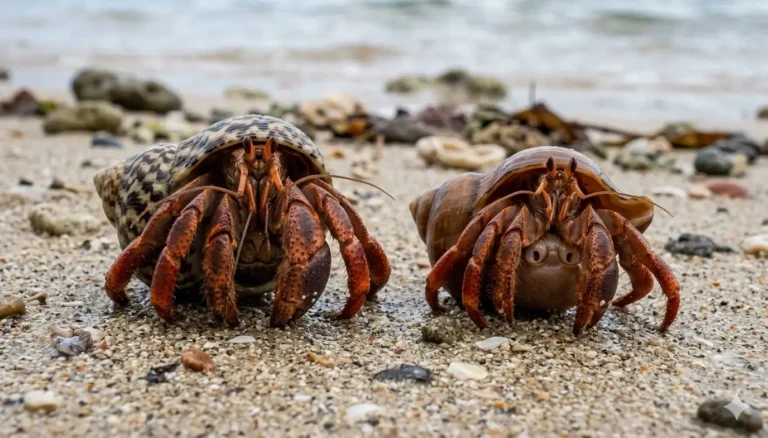
In the days and weeks leading up to a molt, your crab will start looking a bit off. Here is what to watch for:
- Dull, faded exoskeleton. The outer skin loses its shine and starts looking ashy and worn out, almost like it is flaking. This is because the old skin is separating from the new one growing underneath.
- Cloudy eyes. Their normally shiny, dark eyes take on a milky or grayish look.
- A dark bubble on the belly. If you can see the left side of the abdomen, you might notice a small gray or blackish pouch. That is the molt sac – a storage pocket full of water and fat the crab will live on while underground.
- Gel limbs. If the crab is missing a leg or claw, you might spot a tiny, clear, jelly-like nub growing where the limb used to be. That is a replacement limb getting ready to form during the molt.
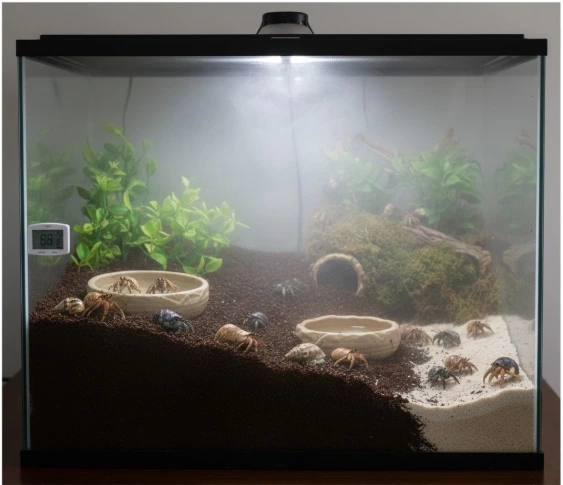
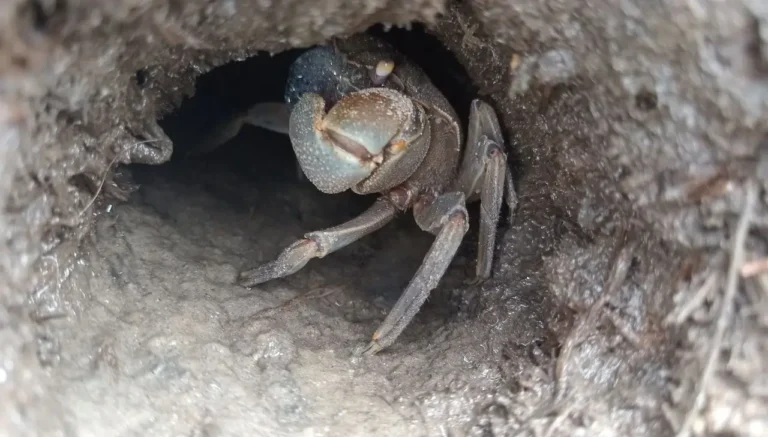
After showing these signs, the crab will dig down into the substrate and disappear. This is why hermit crabs bury themselves – they need darkness, moisture, and safety to molt.
Bonus: Hermit Crab Molting
What Molting Looks Like Underground?
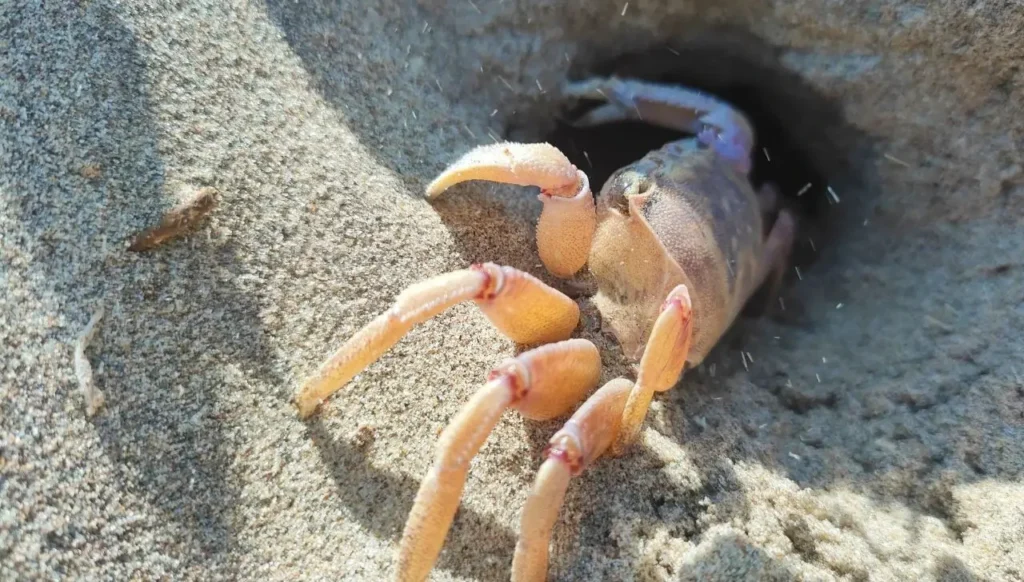
You will not see the actual molt happen because the crab is buried in the sand inside a small cave it digs for itself. The shedding part takes less than an hour. The crab splits out of its old skin, starting from the legs and working its way out. Right after, it is extremely soft, wet, and slimy – almost like a gummy version of itself. It cannot move much at this stage and is completely helpless.
This is exactly why you should never dig up a buried crab. If you touch it while it is this soft, you can tear its new skin, crush its body, or stress it to death. The crab stays in its shell during the entire process, so it is not out wandering around exposed.
What the Shed Exoskeleton Looks Like (Don’t Throw It Away)
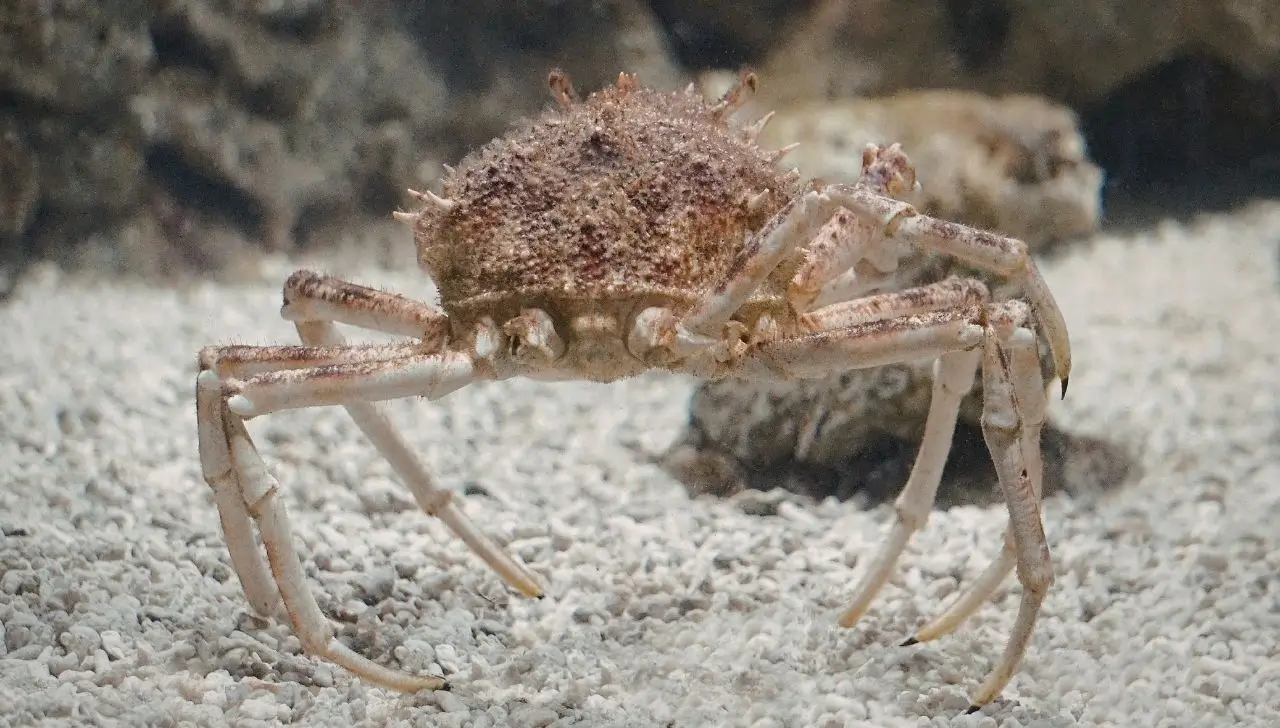
This is the part that scares most people. The shed exoskeleton looks exactly like a dead hermit crab. It has legs, claws, eye stalks, and a body shape. It is whitish or pale orange, hollow, and limp. If you did not know better, you would swear your crab died.
Here is the quick test: gently squeeze it. If it crumbles easily and feels hollow and papery, it is just the old skin. The real crab is still inside its shell nearby, alive and recovering. Leave the exoskeleton right where it is. The crab will eat it over the next few days to get back the calcium and minerals it needs to harden its new body.
Bonus: How to Tell If Your Hermit Crab Is Molting
What a Hermit Crab Looks Like After Molting
Once the crab resurfaces, it will look noticeably different – and better. Here is what to expect:
- Brighter, richer colors – reds look redder, purples look deeper. Everything looks fresh.
- Extra hairy legs and body. Those tiny hairs are called setae and they help the crab feel its surroundings. They are most visible right after a molt.
- Sharp, black claw and leg tips – almost like freshly sharpened nails.
- New limbs. If the crab was missing a leg before, there may be a brand new one in its place. It might be slightly smaller than the others at first but will grow to full size over the next few molts.
- More energy. Many crabs become noticeably more active after molting. Shedding a tight, old skin does wonders for their mood.
Bonus: How Long Does Hermit Crab Molting Take?
Conclusion:
A molting hermit crab looks dull and tired before, invisible during, like a “dead crab” right after (that is just the old skin), and brighter and healthier once it resurfaces. If you see a pale, hollow crab-shaped thing in your tank – do not panic and do not throw it out. Your crab just got a brand new body.
FAQs:
Q1: What happens if you touch a molting hermit crab?
A: Their new exoskeleton is paper-thin and wet right after shedding. Touching, picking up, or moving the crab can tear the new skin, cause disfigurement, or kill it from stress. Never handle a crab that is mid-molt.
Q2: Why does my hermit crab look smaller after molting?
A: This is normal. Right after molting, a crab can appear a little smaller before its new body swells and hardens to its actual new size. Within a few days to a week, it will look the same size or slightly bigger than before.
Q3: Why did my hermit crab change color after molting?
A: Completely normal. Colors can shift lighter or darker after a molt. Most crabs come out looking brighter and more vivid because the old, faded skin is gone and the new one is fresh.