How to Tell If Your Hermit Crab Is Molting
Your hermit crab has not moved in days, it is buried in the sand, and you are convinced something is wrong. Before you panic, there is a very good chance it is just molting. The tricky part is that molting can look a lot like sickness or even death to someone who has never seen it before. Here is exactly how to tell if your hermit crab is molting, what to look for, and what to do about it.
Signs Before the Molt Starts
Most hermit crabs give off a few clues in the days or weeks before they go underground. You will not always see every sign, but even two or three of these together is a strong hint:
- Eating and drinking a lot more than usual. They are building up a reserve of fat and water to survive weeks without food.
- A small gray or dark bubble on the belly. This is their molt sac, a little pouch on the left side of the abdomen where they store nutrients. If you can see it, a molt is almost certainly coming.
- Digging constantly. They may spend hours pushing sand around, testing different spots, and tunneling toward the bottom of the tank.
- Becoming sluggish and inactive. A crab that was previously active but has suddenly slowed down is likely conserving energy.
- Dull, ashy exoskeleton and cloudy eyes. The old skin starts to look faded and worn out right before it is shed.
- Gel limbs. Tiny, clear, jelly-like nubs where a missing leg or claw used to be. This means the crab is preparing to regrow that limb during the molt.
Bonus: Hermit Crab Molting
Signs the Molt Is Happening
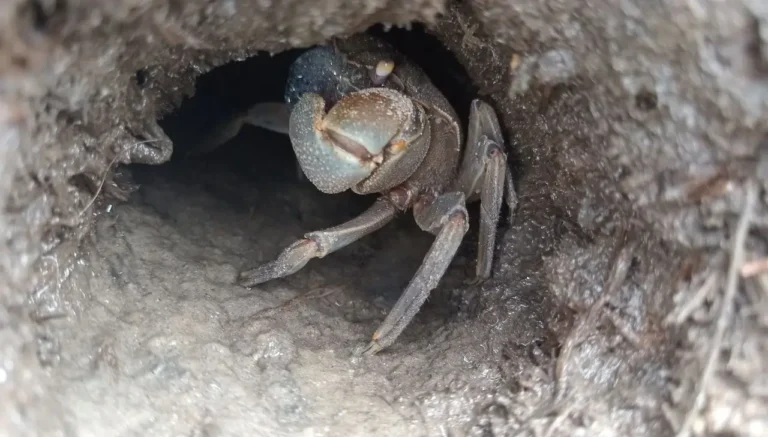
Once a hermit crab starts molting, it will bury itself completely and you will not see it for a while. That is normal.
The clearest sign that a molt is underway – rather than something worse – is that the crab dug itself down on its own. A sick or dying crab usually stays on the surface and becomes limp. A molting crab actively digs, disappears, and backfills the tunnel behind it.
If the crab is on the surface and not moving, look at its position. A molting crab’s legs will usually be tucked in or partially curled. A dead crab’s legs dangle loosely and the body slides out of the shell.
And the biggest giveaway: a dead crab smells terrible within a day or two. A molting crab may have a faint smell, but nothing overwhelming.
Bonus: How Long Does Hermit Crab Molting Take?
You Found a “Dead Crab” – But Is It?
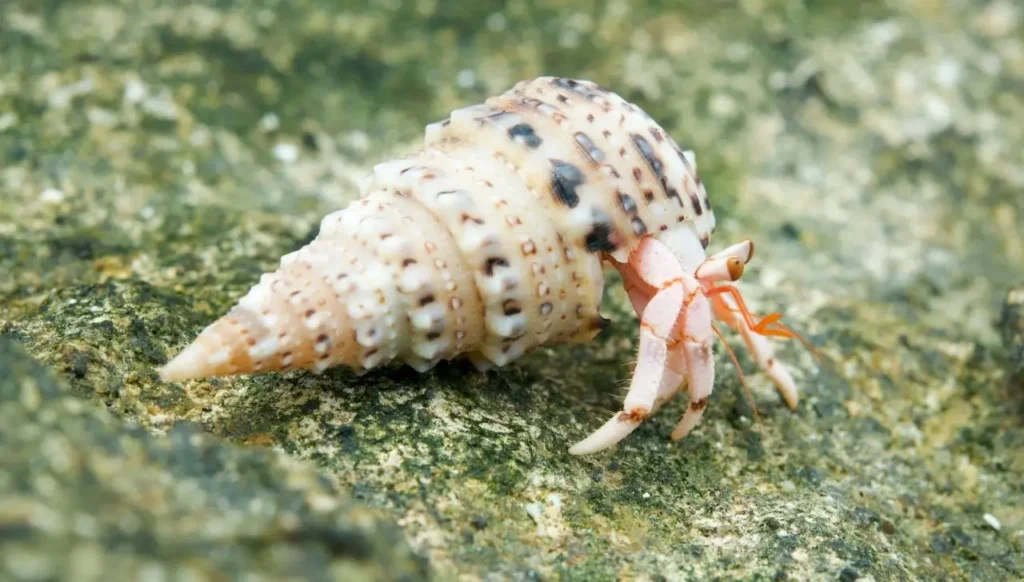
This is where most new owners get scared. You spot something that looks exactly like a lifeless hermit crab lying next to the shell.
Before you bury it in the backyard, check one thing: gently squeeze it. If it is hollow, dry, and crumbles easily, that is just the shed exoskeleton – the old skin. The real crab is still alive inside its shell, soft and recovering underneath.
Do not remove the exoskeleton. The crab needs to eat it. It is packed with calcium that helps harden the new skin. Taking it away removes a critical food source during the most vulnerable time of the crab’s life.
Bonus: How to Tell If a Hermit Crab Is Dead
What to Do (and What NOT to Do)
Do:
- Leave the crab completely alone.
- Keep the tank conditions steady – temperature 75–85°F, humidity 70–80%.
- Make sure food and water are available near where the crab buried itself.
- Smooth the sand over gently so other crabs do not dig down and bother it.
Do not:
- Dig the crab up.
- Pick it up.
- Poke it.
- Move it to a different spot.
- Shine a flashlight on it.
Any of these can stress the crab enough to kill it mid-molt. Its new exoskeleton is paper-thin and incredibly fragile right after shedding. Even gentle handling can cause tears or fatal injury.
Conclusion
If your hermit crab has buried itself, is showing pre-molt signs, and there is no awful smell – it is molting. The hardest part is doing nothing. But doing nothing is exactly what your crab needs from you right now.
Frequently Asked Questions
Q1: How long will my hermit crab stay buried while molting?
A: Small crabs usually take one to three weeks. Medium crabs three to six weeks. Large crabs can be underground for two to four months. There is no exact timeline, so patience is key.
Q2: My crab just arrived from the pet store and immediately buried itself. Is that a molt?
A: Very likely. New crabs often molt right away to repair stress damage from being captured, shipped, and kept in bad conditions. Give it time and do not disturb it.
Q3: How do I know if my crab is molting and not dead?
A: Wait and smell. A dead crab produces a strong, rotten fish odor that gets worse each day. A molting crab does not. If there is no terrible smell after a week or two, your crab is almost certainly alive and molting.