Hermit Crab Molting: Everything You Need to Know
If your hermit crab has buried itself, stopped moving, and you are starting to worry – relax. It is probably molting. Hermit crab molting is a completely normal process where the crab sheds its old outer skin and grows a new, larger one underneath. It looks alarming the first time, but it is actually a sign your crab is healthy and growing.
What Is Hermit Crab Molting?
Hermit crabs have a hard outer covering called an exoskeleton. It does not stretch. So when the crab grows, it has to crack open the old exoskeleton, wiggle out, and wait for the new soft one underneath to harden. The actual shedding takes less than an hour, but the full cycle – preparing, shedding, recovering, and hardening – takes weeks or months.
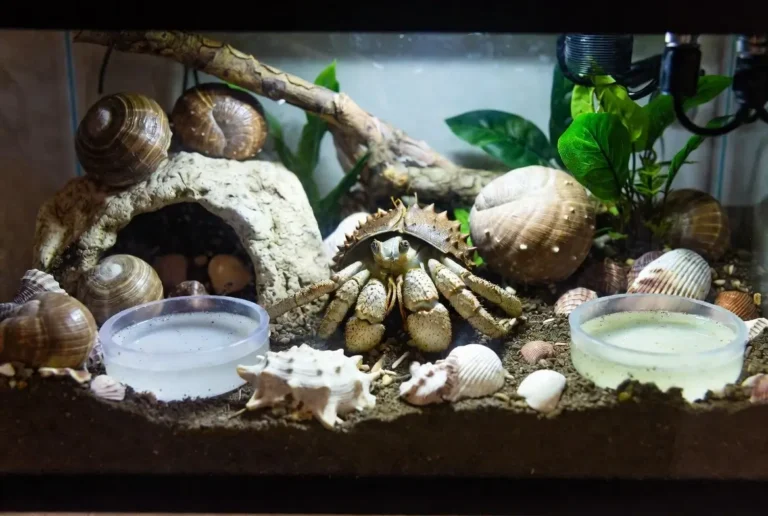
They almost always do this underground. They dig down, create a small cave, and stay buried until the whole thing is finished. Darkness helps trigger the process, which is why deep substrate and leaving them alone matters so much.
Signs Your Hermit Crab Is About to Molt
Not every crab shows all of these, but watch for:
- Eating and drinking much more than usual – stocking up on energy for weeks underground
- Constant digging, especially near the bottom of the tank
- Moving slowly or barely moving at all
- A small gray bubble on the left side of the belly – this is where they store water and nutrients for the molt
- Dull, ashy-looking exoskeleton and cloudy eyes
- Tiny gel-like nubs where a missing leg used to be – a new limb is about to grow in
Bonus: How to Tell If Your Hermit Crab Is Molting
How Long Does Hermit Crab Molting Take
It depends on size. Small crabs can finish in one to three weeks. Medium crabs take three to six weeks. Large and jumbo crabs can stay underground for two to four months, and in rare cases even longer.
There is no exact schedule – every crab is different, and newly purchased crabs often take extra time because they are recovering from the stress of being shipped and kept in pet store conditions.
Bonus: How Long Does Hermit Crab Molting Take?
What Does a Molting Hermit Crab Look Like?
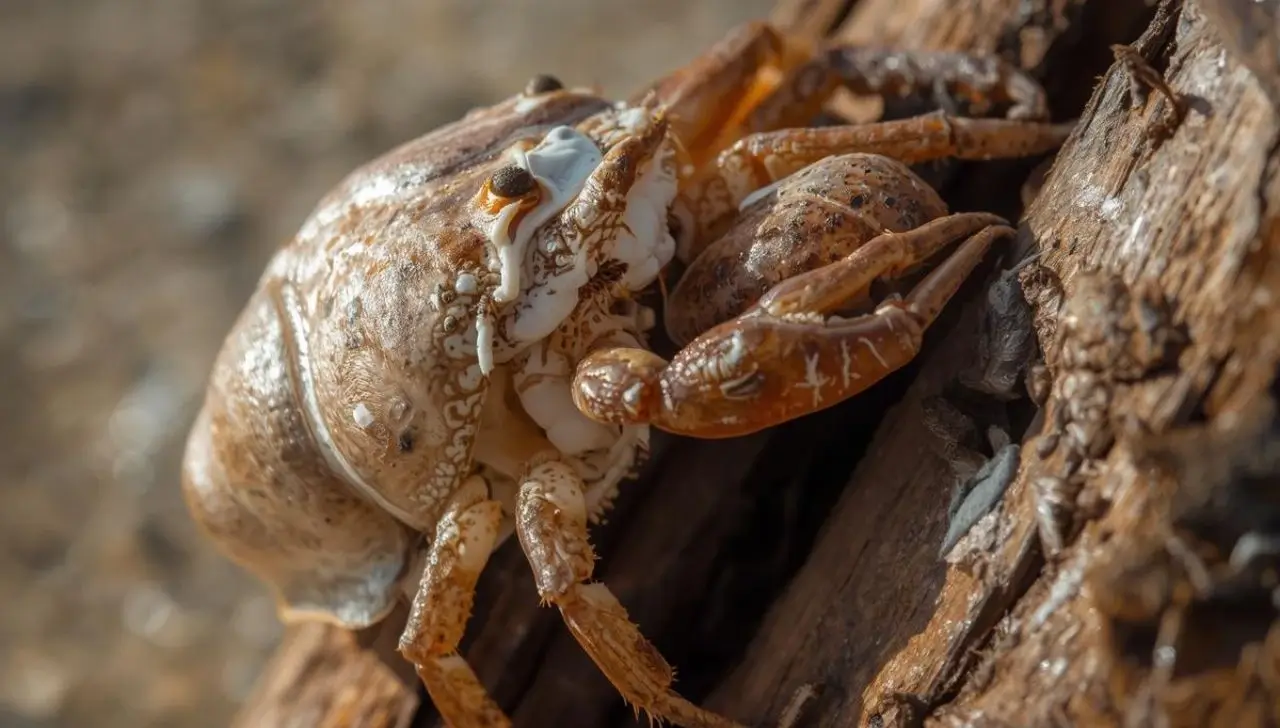
You usually will not see the molt happen because it takes place underground. But if you spot what looks like a dead, hollow crab near the shell, do not throw it away. That is the shed exoskeleton, not a dead crab.
It will be whitish, hollow, and crumble easily if gently squeezed. Leave it in the tank – the crab will eat it over the following days. It is packed with calcium and nutrients the crab needs to harden its new skin.
What to Expect After Molting
When your crab resurfaces, it will look noticeably different. Brighter colors, extra hairy legs, sharp black claw tips, and possibly a brand new leg where one was missing before.
It may also seem more energetic and active. A freshly molted crab basically has a brand new body.
The One Rule: Do Not Disturb
Digging up a molting hermit crab is the number one cause of molt-related death. Right after shedding, the crab is incredibly soft and fragile. Even a gentle touch can tear its new skin or cause fatal stress.
Keep the temperature at 75–85°F, humidity at 70–80%, and make sure food and water are available. That is all you need to do. The best help you can give a molting crab is no help at all.
Bonus: Why Do Hermit Crabs Need Shells?
Conclusion
Hermit crab molting may look alarming, but it is a natural and essential part of their growth. Understanding the signs, timeline, and what to expect helps you avoid common mistakes – especially disturbing your crab during this fragile stage. As long as you provide proper humidity, temperature, nutrition, and deep substrate, your hermit crab will molt safely. Patience is key – the less you interfere, the better your crab will thrive.
Frequently Asked Questions
Q1: How often do hermit crabs molt?
A: Small crabs molt every one to three months. Medium crabs every two to five months. Large crabs every four to twelve months. Younger crabs molt more often because they grow faster.
Q2: My crab buried itself the day I brought it home. Is it molting?
A: Almost certainly. New hermit crabs often molt right away to repair damage from being captured and kept in poor pet store conditions. Leave it alone and wait.
Q3: Can hermit crabs die while molting?
A: Yes. Failed molts happen due to poor nutrition, wrong humidity, being disturbed, or being too weak from stress. Proper tank conditions and patience are the best prevention.