How to Tell If a Hermit Crab Is Dead (vs. Molting)
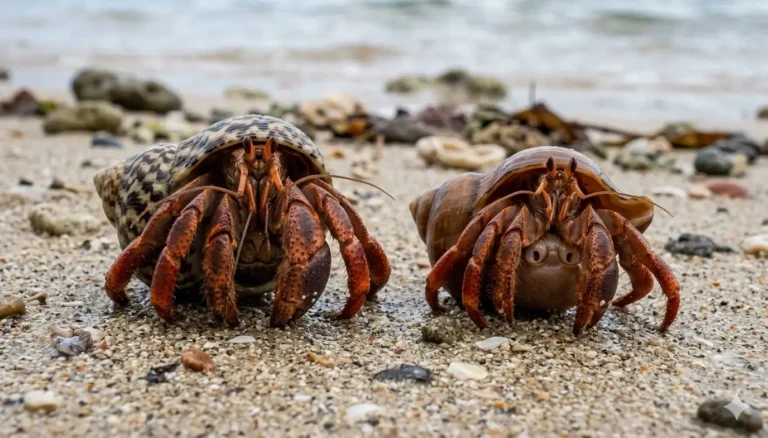
How do you tell if a hermit crab is dead? It is not as simple as it sounds. Hermit crabs can stay completely still for days or even weeks at a time – and that is perfectly normal when they are molting (shedding their old skin to grow).
The problem is that a dead hermit crab and a molting hermit crab can look almost identical. This guide walks you through the clear signs of death, how to tell the difference from molting, and the one mistake that kills more hermit crabs than anything else
Signs That a Hermit Crab Is Dead
There are several signs that suggest a hermit crab has died. One sign alone is not always enough, but if you notice two or more, the crab may be dead.
A strong rotten fish smell.
This is the most reliable sign. When a hermit crab dies, its body begins to break down and creates a strong odor. The Hermit Crab Association (n.d.) describes it as a strong rotting fish smell that gets worse over time. A slight fishy smell can sometimes happen during molting, but a powerful, unpleasant smell usually means the crab has died.
The body falls out of the shell.
If you gently tilt the shell and the crab’s body slides out easily, it is likely dead because it cannot hold the shell anymore. A living crab — even a weak one — usually grips the inside tightly (Happy Hermie, 2023).
Limp, dangling legs.
If the legs hang loosely outside the shell and feel lifeless when gently touched, it is a strong sign of death. Molting crabs usually keep their legs tucked or curled (Petacrab, n.d.).
Cloudy or sunken eyes.
Healthy hermit crabs have shiny dark eyes. Dead crabs often have eyes that look gray, cloudy, or sunken (Happy Hermie, 2023).
Gray or black coloring.
If the body, especially the abdomen, turns dark gray or black, decomposition may have started.
Mold on the body.
If mold appears on the crab after it has been left undisturbed for some time, it confirms the crab has died (Hermit Crab Association, n.d.).
Bonus: Why Do Hermit Crabs Need Shells?
Is My Hermit Crab Dead or Molting?
Many hermit crab owners worry about this. A molting crab may stay still, hide underground, and even give off a small smell. Because of this, it can be difficult to know what is happening.
According to the Hermit Crab Association (n.d.), you cannot always tell just by looking.
Here are some clues:
A molting crab often buries itself in the sand and stays there for two to eight weeks, sometimes longer for larger crabs. During molting, the crab sheds its old skin. The shed skin looks like a white, empty version of the crab’s body. If you see this near a hiding crab, it is likely just the shed skin – not a dead crab (Shrimp and Snail Breeder, 2025).
A dead crab usually has a very strong rotting smell, a body that falls out of the shell, and no response at all when gently touched. The abdomen may also turn black as decomposition begins.
The golden rule: when in doubt, wait.
Place the crab in a quiet, dark place with food, water, and extra shells. Do not poke it or dig it up. If the crab is molting, disturbing it can kill it. If it has died, the smell will eventually make it clear (Hermit Crab Association, n.d.).
Bonus: Hermit Crab Molting
The Mistake That Kills More Crabs Than Anything
The biggest mistake is digging up or handling a crab that might be molting.
When hermit crabs molt, their new skin is very soft. Touching them, moving them, or exposing them to other crabs during this time can cause serious stress, injury, or infection.
The Hermit Crab Association (n.d.) even describes hermit crab care as a kind of “boot camp for patience.”
The safest thing to do is leave the crab alone and wait. If it is alive, it will eventually come out. If it has died, the smell will confirm it.
How to Tell If a Hermit Crab Is Dying?
Sometimes you can notice warning signs before a hermit crab dies.
Watch for these signs:
Leaving its shell and not returning.
This is a serious warning sign and often means the crab is stressed, overheated, or irritated by the shell (Happy Hermie, 2023).
Very little movement while staying on the surface.
If the crab stays above the sand, barely moves, and shows no interest in food or water, it may be struggling.
Sudden color changes.
A crab that becomes unusually pale or gray without molting may be unhealthy.
Falling over often.
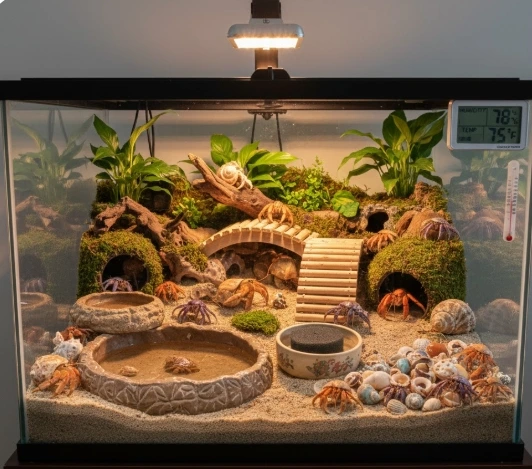
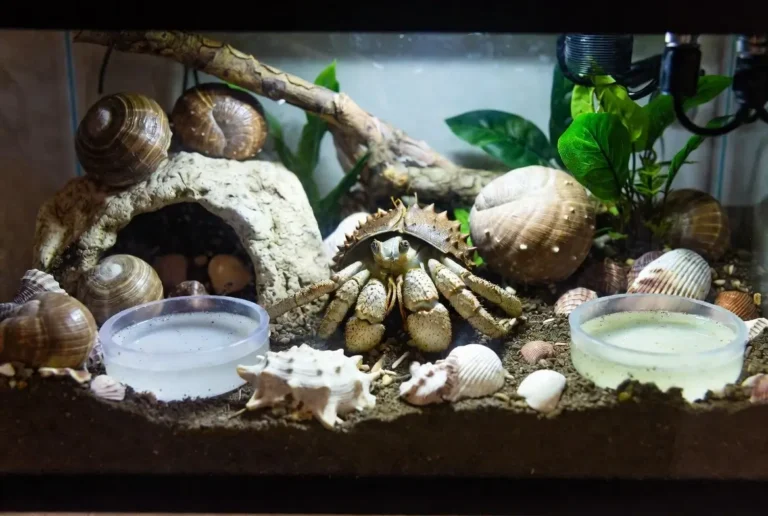
If the crab cannot hold its shell properly or keeps falling, it could be weak or sick. If you notice these signs, check the tank conditions right away. The temperature should be 75–85°F, and humidity should be 70–80%. Make sure the crab has both fresh water and salt water and avoid using painted shells.
Conclusion
Telling the difference between a dead hermit crab and a molting one takes patience, not prodding. The smell test is your most reliable tool: a strong, worsening rotting fish odor means death; no overwhelming smell means there is still hope. When in doubt, leave the crab alone, keep conditions right, and wait. Patience is the best thing you can offer a hermit crab – whether it is molting or dying.
Bonus: How Do Hermit Crabs Breed and Reproduce?
FAQs
Q1: What does a dead hermit crab look like?
A: Limp legs, dull eyes, and the body sliding out of the shell when tilted. The clearest sign is a strong rotting fish smell.
Q2: How long should I wait before deciding my crab is dead?
A: Wait at least 1–2 months. Hermit crabs may be molting and stay motionless for weeks. No smell usually means it could still be alive.
Q3: Can I save a dying hermit crab?
A: Sometimes. Fix tank conditions (humidity, temperature, water, shells) and place the crab in a quiet, proper habitat to recover.