What Do Hermit Crab Eggs Look Like? (Color Stages + What to Do)
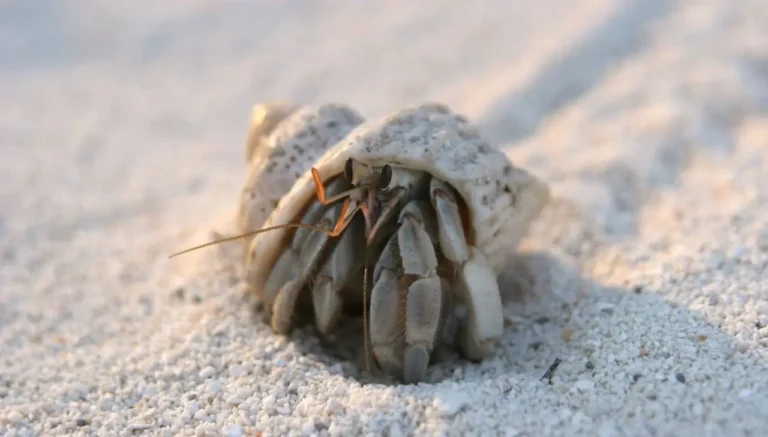
If you have been keeping hermit crabs for a while and you spot something odd tucked inside a female’s shell – a cluster of tiny colored balls attached to her belly – you are probably looking at eggs. It is a rare and exciting thing to see in a home tank. Most pet owners never know their crabs have mated at all until they notice the eggs. Here is exactly what hermit crab eggs look like, how they change color as they grow, and what to do if you find them.
The Short Answer
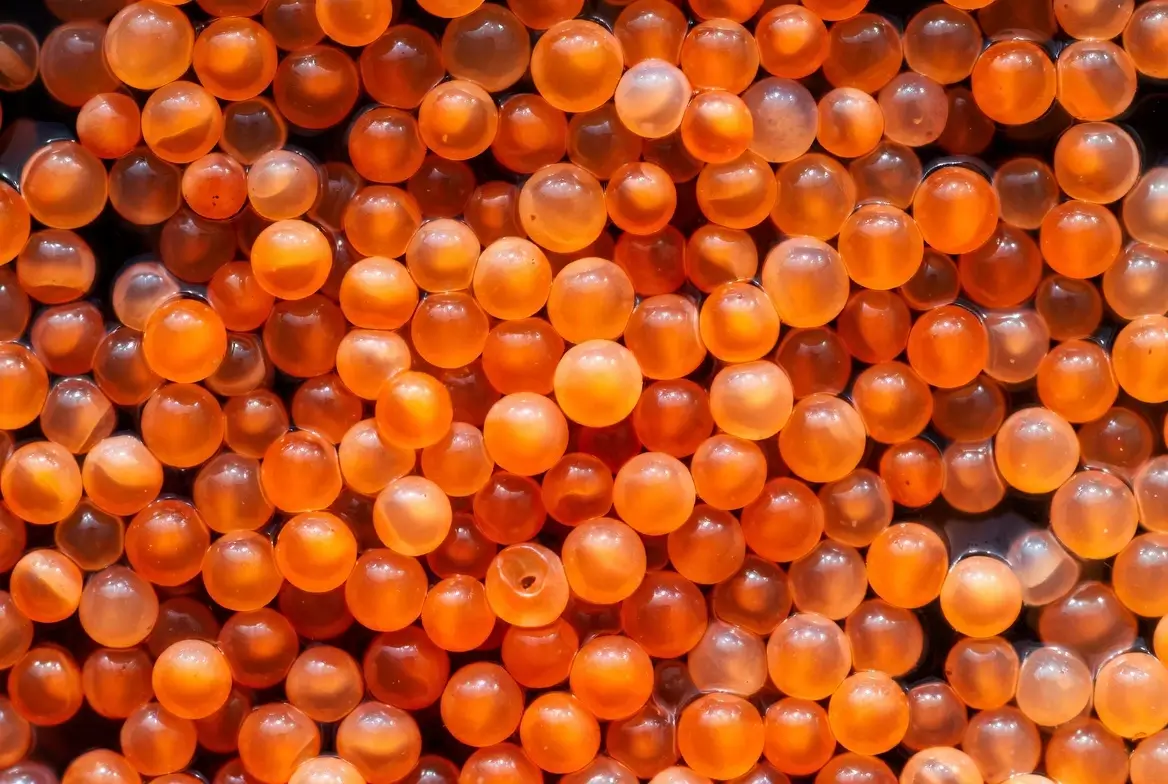
Hermit crab eggs are tiny round balls, about the size of a pinhead, clustered together in a mass attached to the female’s belly inside her shell. They look a lot like small fish eggs. Fresh eggs are bright orange or brick red. As they develop over the next few weeks, they slowly darken to brown, then gray. When the eggs turn dark gray, they are almost ready to hatch. A single female can carry anywhere from a few hundred to 50,000 eggs at a time, depending on her size.
Bonus: How Do Hermit Crabs Breed and Reproduce?
The Color Stages: What Each Color Means
The color of the eggs tells you how far along they are in development. Here is what to look for:
- Bright orange or brick red. These are freshly laid eggs. The bright color comes from the yolk inside, which feeds the growing baby. At this stage, the eggs were just fertilized and have about 3 to 4 weeks before they are ready to hatch.
- Dark orange to brownish. The eggs are about halfway through development. The babies inside are using up the yolk, which is why the bright color starts to fade. This usually happens around week 2.
- Brown to dark brown. The eggs are getting close. The yolk is almost gone and the babies are nearly formed. You might notice the female spending more time near the salt water pool.
- Dark gray. The eggs are ready to hatch. The yolk is completely used up, which is why they look gray instead of orange. The female will release them into salt water within the next day or two. If you are trying to breed, this is the stage where you need to be ready with your larval tank.
Where to Find the Eggs on the Crab
Hermit crab eggs are not laid on the ground or in the sand like some animals. The female carries them inside her shell, attached to small feathery parts on the left side of her belly called pleopods. The eggs are stuck to the pleopods with a glue-like substance that keeps them safe and in place while she walks around. You will usually only see the eggs when the female comes out of her shell to eat, drink, or switch shells. Sometimes you can spot the egg mass peeking out from inside the shell if the female is relaxed and comes far enough out.
Bonus: How to Breed Hermit Crabs
How Many Eggs Do They Carry?
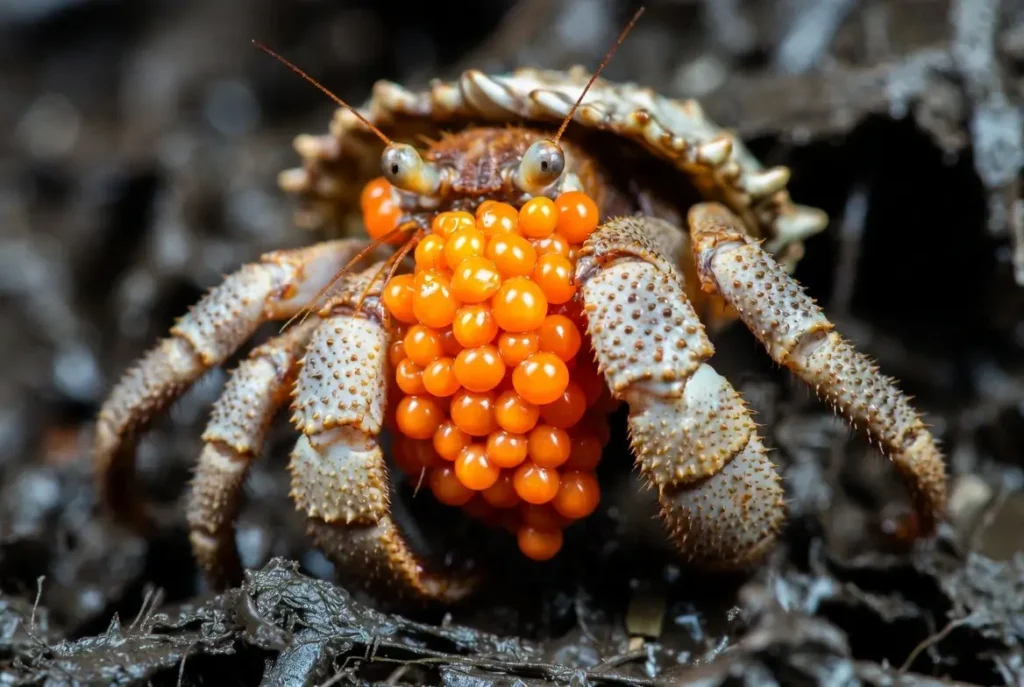
The number depends on the size of the female. Smaller crabs may carry a few hundred eggs. Larger females can carry thousands – some reports say up to 50,000 in a single batch. The reason for so many eggs is simple: very few of the babies will survive to become adult crabs. In the wild, the tiny larvae are eaten by fish, washed away by currents, or fail to find food. It is a numbers game, and nature makes up for the low survival rate by producing huge numbers of eggs.
Do Hermit Crabs Lay Eggs on Land?
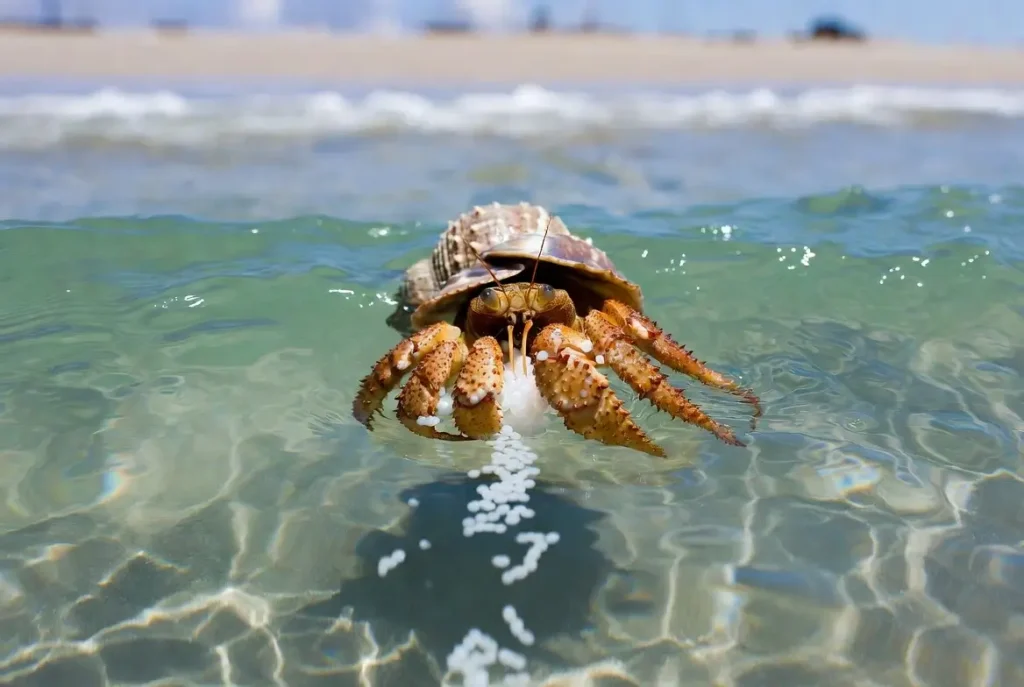
No. Hermit crabs do not lay eggs on land the way a bird or lizard does. The female carries the eggs on her body inside her shell. When they are ready to hatch, she walks to the edge of the ocean (or in a tank, to the salt water pool) and releases them into the water. The eggs burst open on contact with the salt water, releasing thousands of tiny swimming larvae called zoea. So you will never find a nest of hermit crab eggs in the sand or substrate. If you see small white or clear specks in your tank, those are more likely mites, springtails, or bits of substrate – not eggs.
Bonus: How to Tell Hermit Crab Gender
What to Do If You Find Eggs
If you notice your female hermit crab carrying eggs, here is what to do:
- Do not panic. Mating and egg-carrying happen naturally in healthy tanks with males and females. It is a sign that your crabs are comfortable.
- Do not disturb her. Do not pick her up, flip her over, or try to look closer. Stress can cause her to drop the eggs too early.
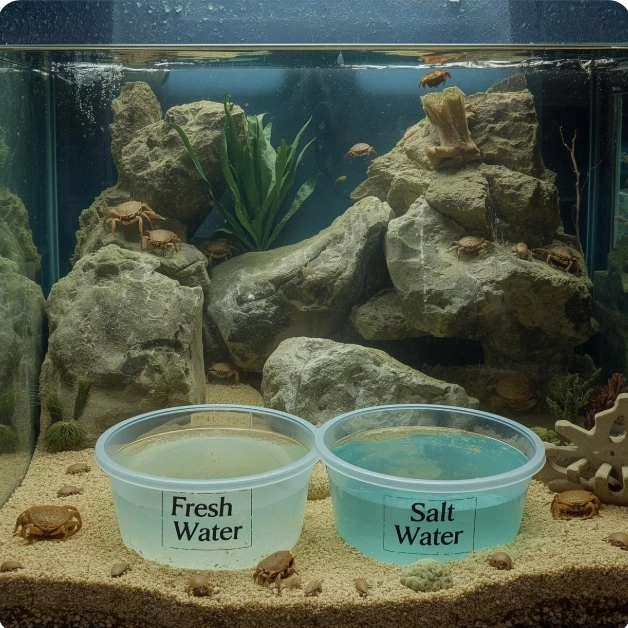
- Make sure the salt water pool is deep and clean. She will need to release the eggs into salt water when they are ready. Keep the pool clean and deep enough for her to get in easily.
- Decide if you want to try breeding. Raising the larvae is extremely difficult and needs special equipment. If you are not set up for it, the eggs will hatch into the salt water pool and the zoea will not survive in the tank. This is sad but normal – it is what happens in the wild too, where most larvae do not make it.
- If you want to try raising them, get a Kreisel tank or jar kreisel ready with marine salt water, live algae, and baby brine shrimp. You will need to move the larvae to this tank as soon as they hatch. The zoea need to be fed every few hours for the next several weeks.
Things People Confuse with Eggs
Not everything that looks like eggs in your tank is actually eggs. Here are things people commonly mistake for hermit crab eggs:
- Small white specks in the water pool. These are usually mites, springtails, or tiny bits of sand. Hermit crab eggs are attached to the female’s body, not floating in the water.
- Brownish clumps in the substrate. This is almost always a mix of coconut fiber and crab waste. Hermit crabs do not lay eggs in the sand.
- Tiny balls near a shell. Could be crab poop (feces looks like small dark balls) or bits of food. Real eggs are only found attached to a female’s belly inside her shell.
Conclusion:
Hermit crab eggs are tiny round balls attached to the female’s belly inside her shell. They start bright orange, darken to brown, then turn gray when they are ready to hatch. A female can carry hundreds to thousands of eggs at once. She does not lay them in the sand – she carries them on her body and releases them into salt water when it is time. If you spot eggs on your crab, leave her alone, keep the salt water pool clean, and enjoy watching one of the coolest things you will ever see in a home tank.
Frequently Asked Questions
A: They start bright orange or brick red and slowly darken to brown, then dark gray over about 3 to 4 weeks. Gray eggs are about to hatch.
A: About 3 to 4 weeks from when the eggs are first fertilized. The female carries them on her belly inside her shell the whole time.
A: You can try, but it is extremely hard. The babies hatch as tiny swimming larvae that need salt water, live food, and constant care for weeks. Very few people have ever done it successfully at home.
.