How to Breed Hermit Crabs (The Hard Truth)
Let me be upfront: breeding hermit crabs is one of the hardest things you can try in the pet world. For years, people thought it was impossible. Every single pet store hermit crab is wild caught – not a single one was born in a tank. Only a handful of people worldwide have ever raised baby hermit crabs from eggs all the way to the land stage. It takes special equipment, a huge time commitment, and a willingness to lose most of the babies along the way. That said, if you want to understand how it works, this guide breaks down the full process from mating to tiny crabs walking on land.
How Hermit Crabs Mate
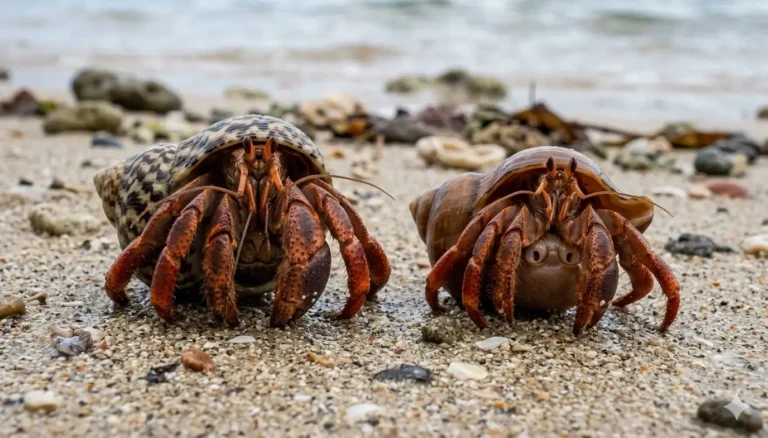
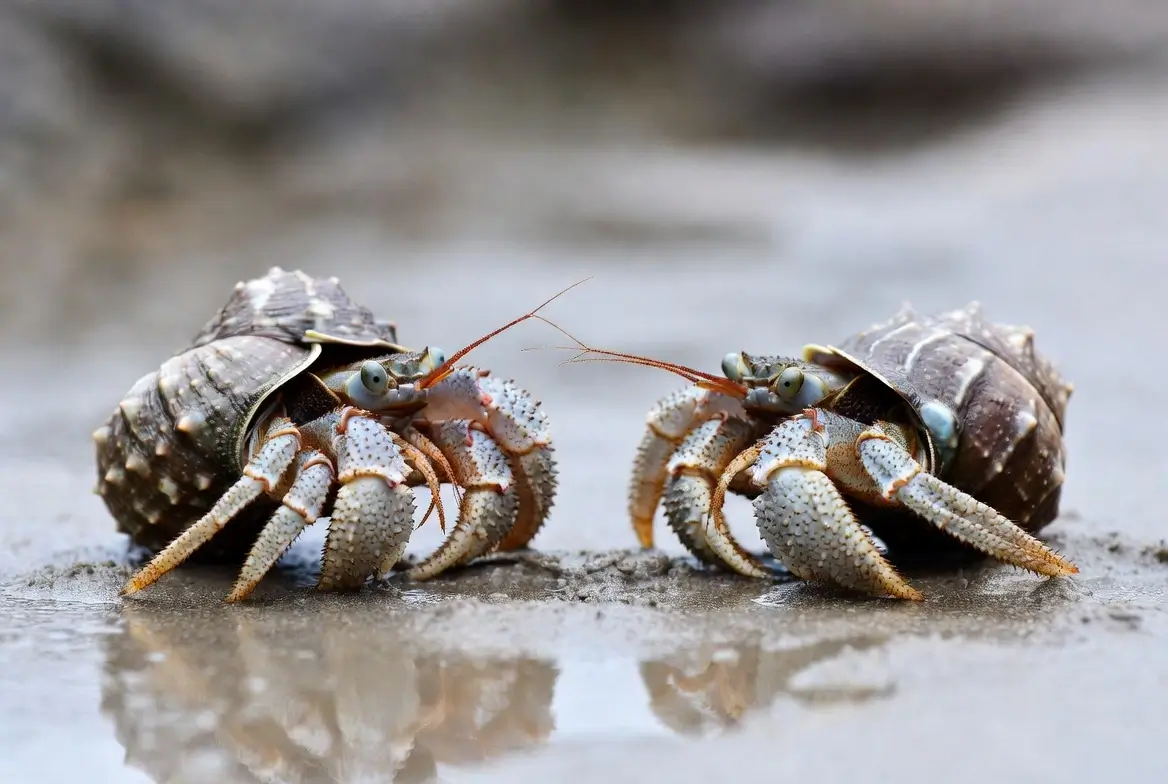
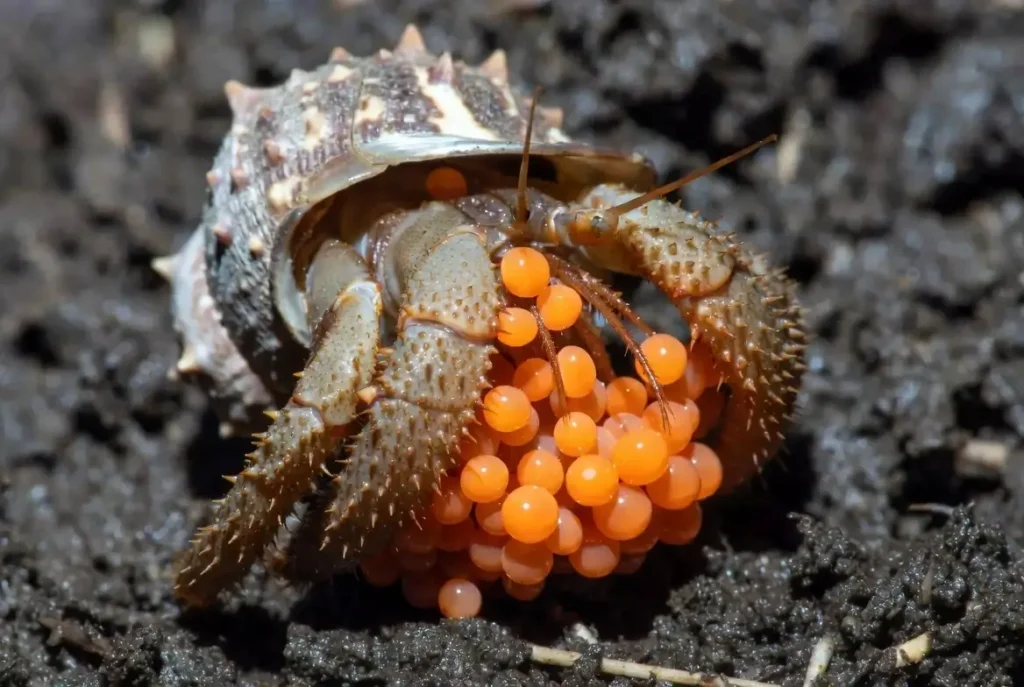
Hermit crabs need to be at least two to three years old before they can mate. The male will grab onto the female’s shell and carry her around for hours or even days before mating. When they are ready, both crabs come partly out of their shells, mate, and then go right back inside. The female then carries the fertilized eggs on small leg-like parts under her belly, tucked inside her shell. You might not even notice the eggs unless you look carefully when she comes out to eat or drink.
The eggs start out a bright orange color and slowly darken to brown or gray over several weeks. This means the babies inside are developing. Most mating happens between February and August, with June and July being the most common months. When the eggs are ready to hatch – usually about a month after mating – the female walks to the salt water pool and releases them.
Bonus: How Do Hermit Crabs Breed and Reproduce?
What Happens When the Eggs Hatch
This is where things get really difficult. When the eggs hit the salt water, they burst open and release thousands of tiny swimming larvae called zoea. These zoea are so small you can barely see them without a magnifying glass. They look nothing like crabs – they are tiny, clear, and swim around like plankton. Here is the hard part: zoea are fully aquatic. They live in salt water and cannot survive on land. They need to go through several molts over the next few weeks, growing a little bit bigger each time, before they can come to land.
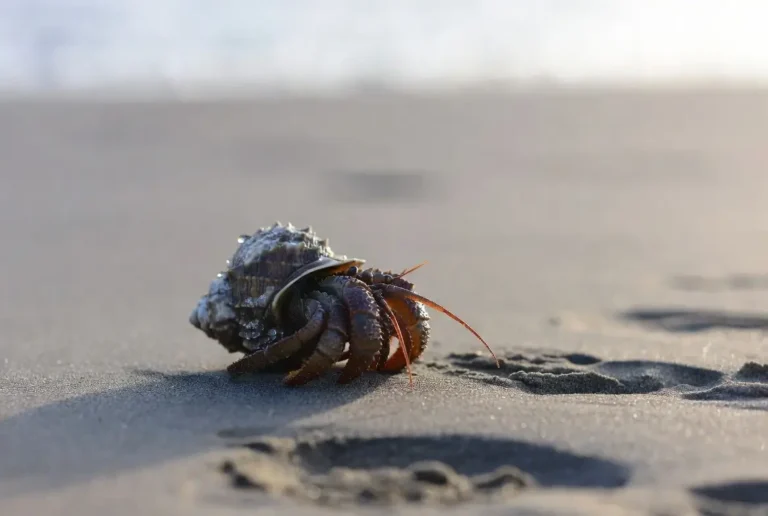
In the wild, the female releases the zoea into the ocean. The waves carry them out to sea where they float with the plankton, eating tiny organisms and growing. After several weeks and multiple molts, they reach a stage called megalopa – a bigger form that starts to look more like a crab. The megalopa finds a tiny shell (smaller than a grain of rice), puts it on, crawls out of the water onto the sand, and starts breathing air. It is now a tiny land hermit crab.
Why It Is So Hard to Do in Captivity
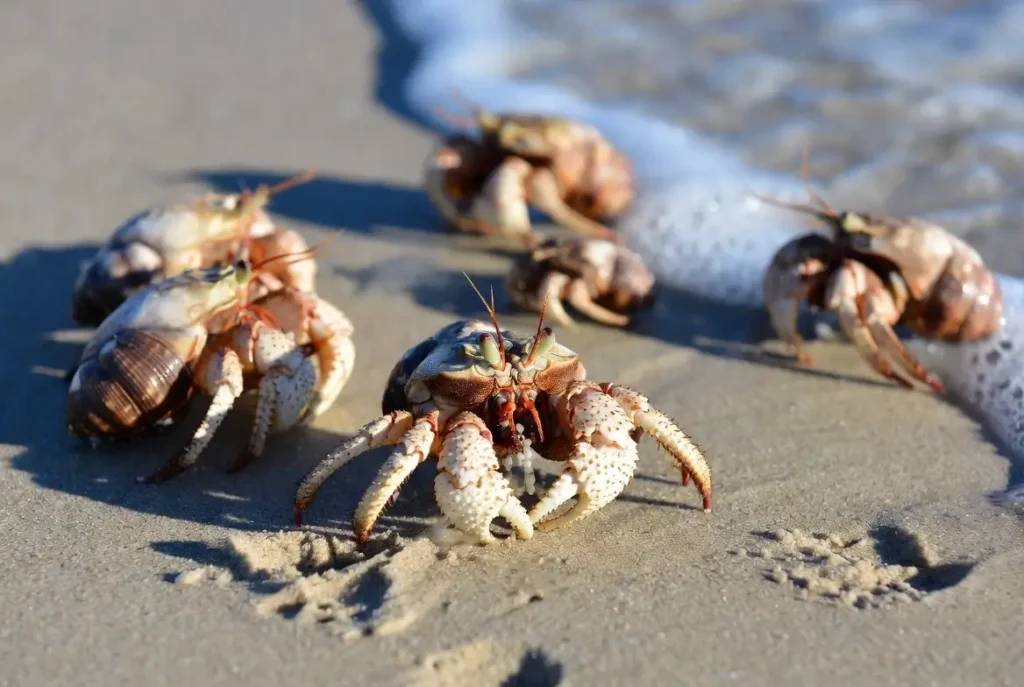
Trying to copy this ocean-to-land journey in your home is where most people fail. Here is why:
- The zoea needs special salt water. It has to be marine-grade salt water with the right salinity, temperature, and pH. Even small changes can kill them.
- They need to be fed every few hours. Zoea eat live algae, baby brine shrimp, and other tiny foods. You are basically running a microscopic restaurant around the clock.
- Water must stay clean. You are feeding heavily in a tiny tank, so the water gets dirty fast. But regular filters can suck up and kill the larvae. You need special low-flow setups.
- You need a special tank. Serious breeders use something called a Kreisel tank – a round tank with gentle water flow that keeps the larvae floating, just like ocean currents would. A normal fish tank does not work well.
- Most will die. Even with perfect care, a huge number of zoea will not make it. Each molt is a risk, and many do not survive the change from water to land. This is normal – it happens in the wild too.
- Tiny shells are hard to find. When the megalopa stage is ready to come to land, it needs shells smaller than a pea. Finding or making shells that tiny is a challenge on its own.
What You Need to Try It
If you still want to give it a shot, here is the basic equipment list:
- A healthy colony of adult crabs – at least 3 to 5 adults in a well-maintained tank with proper temperature, humidity, food, and both fresh and salt water pools.
- A Kreisel tank or jar kreisel – a special round container with gentle water flow for raising the larvae. Some breeders make DIY versions from jars.
- Marine salt mix – like Instant Ocean, to make the salt water for the larvae tank.
- Live food cultures – Nannochloropsis (green algae water), baby brine shrimp, and other phytoplankton. You need to keep these cultures alive and growing.
- A transition tank – a small tank with a sand slope going from water to land, where megalopa can crawl out and become land crabs.
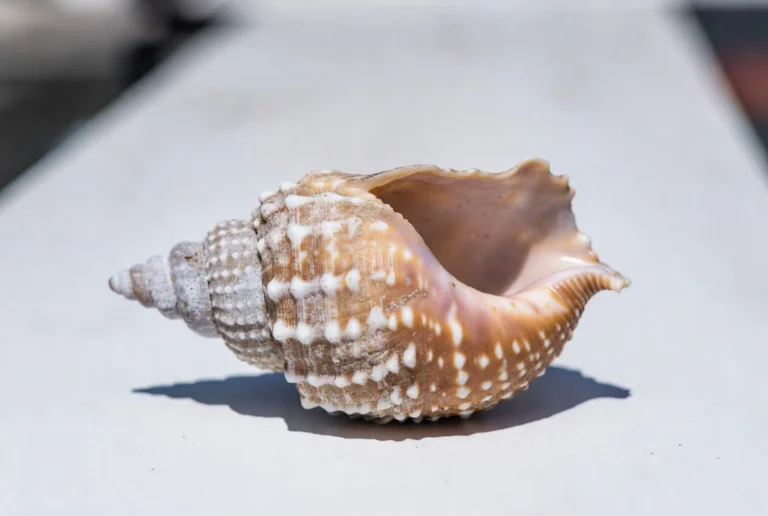
- Very tiny shells – shells with openings around 1 to 3 millimeters for the brand new baby crabs.
- A lot of time – the zoea stage lasts several weeks. During that time, you are feeding every few hours and doing small water changes daily.
Why Breeding Matters for Hermit Crabs
Right now, every pet hermit crab on the planet was taken from the wild. That means wild populations are being drained to supply pet stores, and many of those crabs die within the first year because owners do not know how to care for them. If more people can learn to breed hermit crabs in captivity, it could reduce the need for wild-caught crabs and help protect wild populations. The few breeders who have succeeded are sharing their methods openly, hoping more people will try. It is still very early – this is a field where we learn something new every season.
Conclusion:
Breeding hermit crabs is not a beginner project. It takes special equipment, constant feeding, and a lot of patience. Most of the babies will not survive, and that is normal. But if you are serious about it, the information is out there and a small community of breeders is happy to help. Even if you never breed them yourself, understanding the process gives you a much deeper respect for these animals and why they deserve better care than most pet stores provide.
FAQs:
Q1: Can hermit crabs breed in a normal tank?
A: They can mate and produce eggs in a normal tank, yes. But raising the babies requires a separate saltwater setup. Without it, the zoea will die in the tank’s saltwater pool within a day or two.
Q2: How do I tell if my hermit crab is carrying eggs?
A: Look under the shell when the female comes out to eat. You may see tiny round eggs attached to small legs on the left side of her belly. Fresh eggs are bright orange, and they darken to gray or brown as they mature.
Q3: Has anyone actually bred hermit crabs at home?
A: Yes, but very few people. A small number of hobbyists around the world have raised zoea all the way to the land stage. They share their methods online so others can learn. It is still very rare and very difficult, but it is no longer impossible.