How Does a Crab’s Mouth Work? Detailed Guide
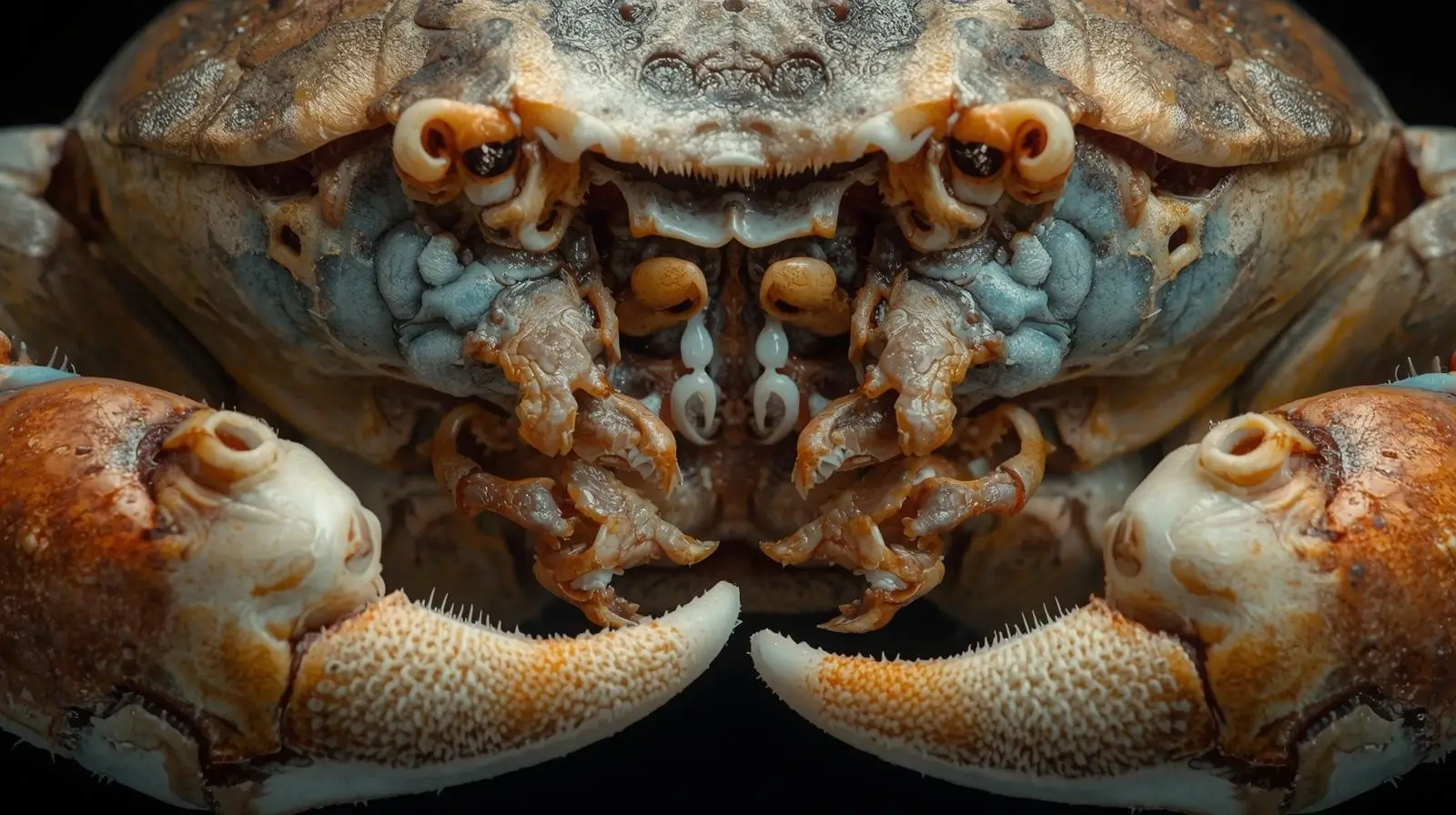
A crab doesn’t chew food the way we do. It has no jaw and no teeth. Instead, it uses a set of small parts that work together to grab, hold, crush, and push food into its body. The whole system sits on the underside of the crab, tucked away and protected while it feeds.
It starts with the claws. A crab picks up food and brings it toward the mouth. From there, several tiny parts take over, each with a different job, all working at the same time to break food down before it reaches the stomach.
How a Crab’s Mouth Works and Its Parts?
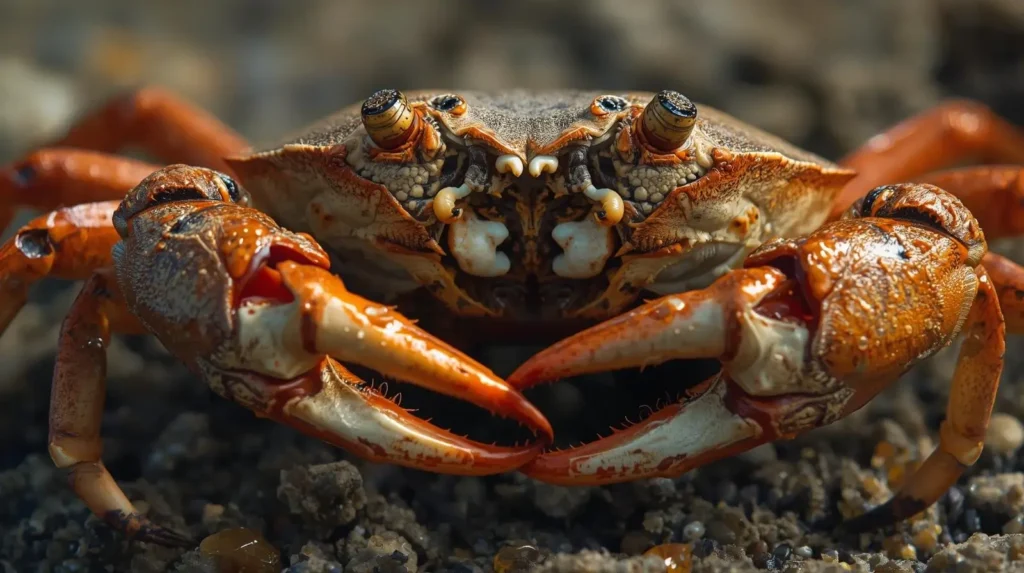
Mandibles are the main tools for breaking food apart. They’re hard, strong plates at the center of the mouth. Since crabs don’t have teeth, the mandibles do all the grinding. They move side to side instead of up and down, creating a chewing-like motion that crushes hard shells and tears softer food into smaller bits.
Maxillipeds are small, leg-like parts around the mouth. Most crabs have 3 pairs of them. They grab food from the claws, hold it steady, and push it toward the mandibles – like a set of tiny hands catching, sorting, and guiding everything into place.
The labrum is a small flap that covers the mouth opening. It works like a lid, keeping food from falling out while the mandibles grind it up.
Palps are sensory parts near the mouth that pick up taste and texture. They help the crab figure out if something is good to eat or should be dropped – a built-in safety check.
How These Parts Work Together
Feeding follows a clear order every time. The crab spots food using its eyes and antennae, then grabs it with its claws. The claws tear bigger pieces into smaller chunks and pass them to the maxillipeds. The maxillipeds hold the food steady and push it toward the mandibles, which grind it into tiny pieces small enough to swallow. The palps check the food along the way, and the labrum keeps everything in place.
Soft food gets through in seconds. Harder items like small shells take longer because the mandibles need more time to crush them.
Where Is the Mouth?
The mouth sits on the underside of the body, right below the front of the shell. It’s hard to see because the maxillipeds cover it when the crab isn’t eating. This spot keeps the mouth safe from predators while the crab feeds along the ocean floor.
Small sensory hairs around the mouth help the crab find nearby food even before it grabs it, making feeding faster and more accurate.
Conclusion:
A crab’s mouth is a team of small parts that each do a different job. The claws grab food, the maxillipeds hold and guide it, the mandibles crush and grind it, the palps check its taste and feel, and the labrum keeps it all in place. It’s a simple setup, but it works so well that crabs have been eating this way for millions of years.
FAQs:
Q1: Do crabs have mouths?
A: Yes, but they’re small and hidden on the underside of the body. The maxillipeds cover the mouth most of the time, so it only shows when the crab is eating.
Q2: Do crabs have teeth?
A: Not like ours. The mandibles do the grinding and crushing. Some crabs have ridges on their mandibles for tougher items. Some also have teeth inside their stomach called a gastric mill that grinds food further after swallowing.
Q3: What does a crab eat?
A: Crabs eat algae, plankton, small fish, worms, shrimp, clams, and dead plants or animals. Most are omnivores that eat whatever they find on the sea floor.